Few live-service shooters embrace historical authenticity as heavily as Enlisted, the large-scale WWII squad-based FPS developed by Darkflow Software and published by Gaijin Entertainment. Designed around combined-arms combat, persistent progression, and asymmetric squad warfare, the game has long occupied a niche between simulation and arcade shooter.
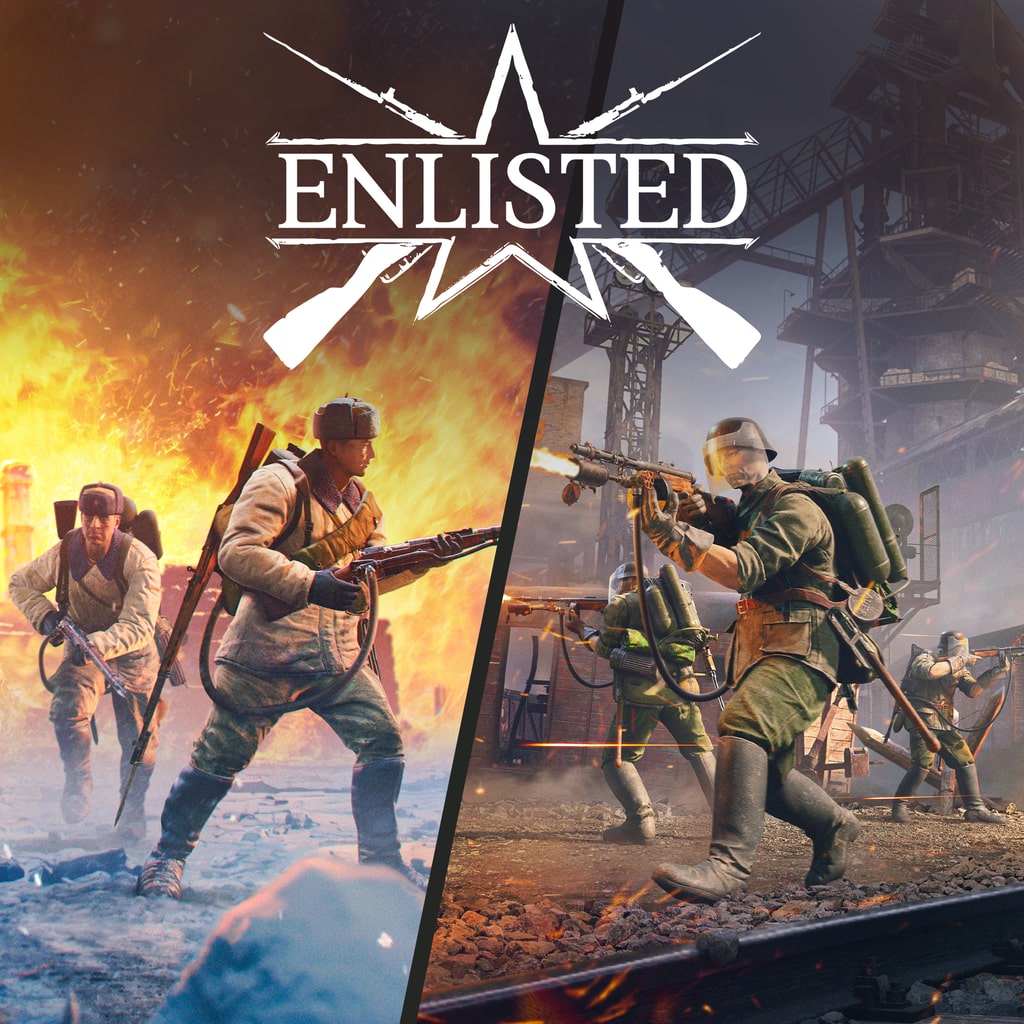
The recently released “Fight Fire With Fire” bundle, available on all major platforms, continues the game’s tradition of offering premium squad packs—this time featuring experimental flamethrower hybrid weapons for both Soviet and German forces. It is a content update that is as much spectacle, power fantasy, and monetised progression boost.
While it delivers undeniable battlefield flair, it also prompts familiar questions about balance, monetisation, and how far Enlisted can push its historical sandbox before it begins to fray.
A Bundle Built on Controlled Excess
At its core, the “Fight Fire With Fire” bundle introduces two premium squads: the USSR’s 346th Infantry Division and Germany’s 205th Infantry Division. Both are built around hybrid flamethrower weapon systems that combine conventional firearms with incendiary close-quarters capabilities.
The Soviet squad equips soldiers with modified Mosin M91 rifles fitted with underbarrel flamethrower attachments, alongside AVT-40 rifles for sustained firefights. The German squad, meanwhile, features Suomi KP/-31 submachine guns adapted with experimental flamethrower systems, backed by FG 42 rifles for versatility.
On paper, this sounds like chaos—and in practice, it definitely is.
These squads are designed for aggressive assault gameplay. They excel in close to mid-range engagements, particularly in urban environments where their incendiary capabilities can drive enemies out of entrenched positions. The moment-to-moment gameplay becomes a cycle of suppression, ignition, and rapid push momentum.
It is not subtle, but it is effective.
Flamethrowers as Tactical Identity
Flamethrowers in Enlisted have always occupied a unique role between utility and psychological warfare. They are not precision instruments; they are area denial tools designed to breach defensive lines and force enemy repositions.
What makes this bundle intriguing is the hybridisation of roles. Instead of dedicating a soldier solely to a flamethrower kit, these squads incorporate incendiary systems directly into primary rifles. This produces a dual-function combat cycle: sustained ranged fire followed by immediate close-quarters environmental suppression.
Practically, this means players are constantly switching mental approaches. They suppress enemies with regular fire, then instantly switch to clearing confined spaces with flame bursts. It creates a rhythm that is more dynamic than traditional flamethrower units, which often seem situational or niche.
Nonetheless, this versatility comes with a drawback: clarity. Combat readability diminishes in chaotic fights where flame effects, bullet tracers, and squad AI overlap. It can be difficult at times to precisely interpret what is happening on screen, especially in dense urban maps.
Squad Structure and Progression Impact
Each premium squad comprises four flamethrower soldiers and a level IV engineer, with the flexibility to include anti-tank or specialised units. Soldiers arrive fully perked, high-ranking, and ready to perform in mid-to-late game scenarios.
From a progression perspective, this is where the bundle becomes most influential—and most contentious.
These squads offer a substantial advantage in both soldier development and research progress due to their +100% experience gain bonus. When combined with premium account benefits, the acceleration effect becomes quite notable.
For new players, this can significantly reduce the grind. For veterans, it provides an effective way to advance faction progress or test high-tier loadouts without lengthy setup times.
However, it also sustains a familiar tension within Enlisted: the balance between earned progression and paid acceleration. While the squads themselves are not strictly “pay-to-win,” their immediate impact and enhanced progression rates tend to shift the experience towards a monetised edge, especially in competitive matchmaking settings.
Historical Flair vs Gameplay Spectacle
One of the more interesting aspects of this bundle is its loose connection to experimental WWII-era weapon ideas. The Suomi KP/-31 with an underbarrel flamethrower draws from late-war improvisational designs, while the Mosin M91 hybrid shows a speculative adaptation of infantry weapons for close-quarters combat.
This gives the bundle a semi-authentic feel that aligns with Enlisted’s broader approach to WWII storytelling—where historical accuracy meets sandbox experimentation.
However, the line between believable experimentation and pure spectacle is becoming increasingly unclear. These weapons are less about accurate historical simulation and more about offering visually striking, high-impact gameplay roles.
This isn’t necessarily a bad thing, but it does distance the game further from its simulation origins and brings it closer to arcade-style, monetised loadout design.
Battlefield Performance and Playstyle Identity
On the battlefield, both squads excel in structured assault scenarios. Urban maps, trench systems, and interior-heavy objectives become their playground. The flamethrower integration allows for rapid area clearing, forcing defending players into reactive positioning.
The Soviet squad feels slightly more stable due to the Mosin platform’s balanced engagement range, while the German squad leans into aggressive SMG rush tactics with higher sustained fire output.
AI squad behaviour remains consistent with Enlisted’s standard system—functional but occasionally unpredictable. In chaotic firefights, squadmates can either perform surprisingly well or become liabilities depending on terrain and line-of-sight conditions.
The real strength of these squads lies in player-led aggression. When controlled actively, they are devastating. When left to AI autonomy, their effectiveness drops noticeably.
Presentation and Audio Design
Visually, the flamethrower effects are the highlight of the bundle. Fire propagation, smoke density, and environmental lighting all contribute to a heightened sense of battlefield intensity.
Audio design reinforces this impact. The crackle of ignition, the burst of fuel discharge, and the muffled chaos of burning interiors create a strong sensory feedback loop. It is intentionally overwhelming, and it works in service of the bundle’s core identity: controlled destruction.
However, this intensity can occasionally overwhelm situational awareness, particularly in already chaotic multiplayer engagements where multiple squads are deploying overlapping effects.
Monetisation and Player Perception
As with many premium squad bundles in Enlisted, the “Fight Fire With Fire” pack sits at the crossroads of content expansion and monetisation strategy. It provides tangible gameplay variety but also underscores the game’s dependence on purchasable squad advantages and progression acceleration.
The inclusion of 500 Gold and high-level pre-equipped squads eases the grind considerably but also raises ongoing concerns about the long-term balance between free and paid players.
It is less about fairness on its own and more about accumulation—each bundle gradually reshaping the progression landscape.
Final Verdict
The “Fight Fire With Fire” bundle is one of Enlisted’s most visually and mechanically explosive squad packs so far. Its hybrid flamethrower systems add a satisfying layer of tactical aggression, especially in close-quarters combat, and its premium progression bonuses make it highly efficient for advancement.
However, it also highlights the ongoing tension within the game’s design philosophy: historical realism versus monetised spectacle, and earned progression versus paid acceleration.
It is fun, powerful, and visually striking—yet also symbolic of a broader live-service balancing act that Enlisted continues to manage.