Indie games often thrive where big-budget releases hesitate: in personality, experimentation, and charm. Pawsky, developed by SimDevs, is a small-scale title that understands this instinctively. It doesn’t chase spectacle or sprawling scope; instead, it focuses on mood, simplicity, and an oddly soothing sense of progression. What emerges is a game that feels modest yet intentional — a reminder that enjoyment doesn’t always come from complexity.
At first glance, Pawsky appears deceptively simple. Its presentation suggests a light, almost casual experience, but spending time with it reveals a carefully structured game built around patience, exploration, and gentle challenge. It’s not a title designed to dominate your attention for weeks, but one that invites you to slow down and engage on its own terms.
A Game About Movement and Momentum
Pawsky’s core gameplay revolves around movement and spatial awareness. You guide the titular character — a small, endearing creature — through compact environments that emphasize precision and timing. Controls are responsive and intuitive, allowing players to focus less on fighting the interface and more on mastering the game’s rhythm.
The challenge isn’t rooted in punishing difficulty, but in learning how Pawsky moves. Momentum matters. Mistimed jumps or rushed decisions can send you back a step, but rarely feel unfair. The game is careful not to punish curiosity too harshly, encouraging experimentation instead of rigid perfection.
This design philosophy gives Pawsky a surprisingly meditative quality. There’s satisfaction in repeating sections, improving execution, and gradually developing a feel for how the character interacts with the world. It’s the kind of gameplay loop that rewards calm focus rather than twitch reflexes.
Level Design That Respects the Player
The game’s levels are compact, but thoughtfully constructed. Rather than sprawling stages packed with distractions, Pawsky favors focused spaces built around a clear mechanical idea. Each area introduces a variation — a new obstacle, a shift in timing, or a subtle environmental twist — and then allows the player to internalize it before moving on.
This approach keeps the experience feeling fresh without overwhelming the player. The learning curve is gentle, and while later sections demand more precision, the game never loses its sense of fairness. Checkpoints are sensibly placed, ensuring frustration rarely overstays its welcome.
Importantly, Pawsky doesn’t rely on gimmicks. There are no mechanics introduced purely for spectacle. Everything serves the game’s core focus on movement and control, giving the experience a cohesive identity that many small indie titles struggle to achieve.
Atmosphere Over Narrative
Pawsky is not a narrative-driven game in the traditional sense. There’s no heavy dialogue, no explicit lore dumps, and no dramatic cutscenes demanding emotional investment. Instead, the game tells its story through atmosphere.
Environmental details, subtle animations, and the tone of the soundtrack all contribute to a quiet sense of place. The world feels gentle but slightly melancholic, as if something has been lost or left behind — though the game never spells this out. This ambiguity works in its favor, allowing players to project their own interpretations onto the experience.
It’s a minimalist approach that fits the game perfectly. Pawsky doesn’t need exposition; its emotional weight comes from mood and consistency, not words.
Visual Style: Simple but Purposeful
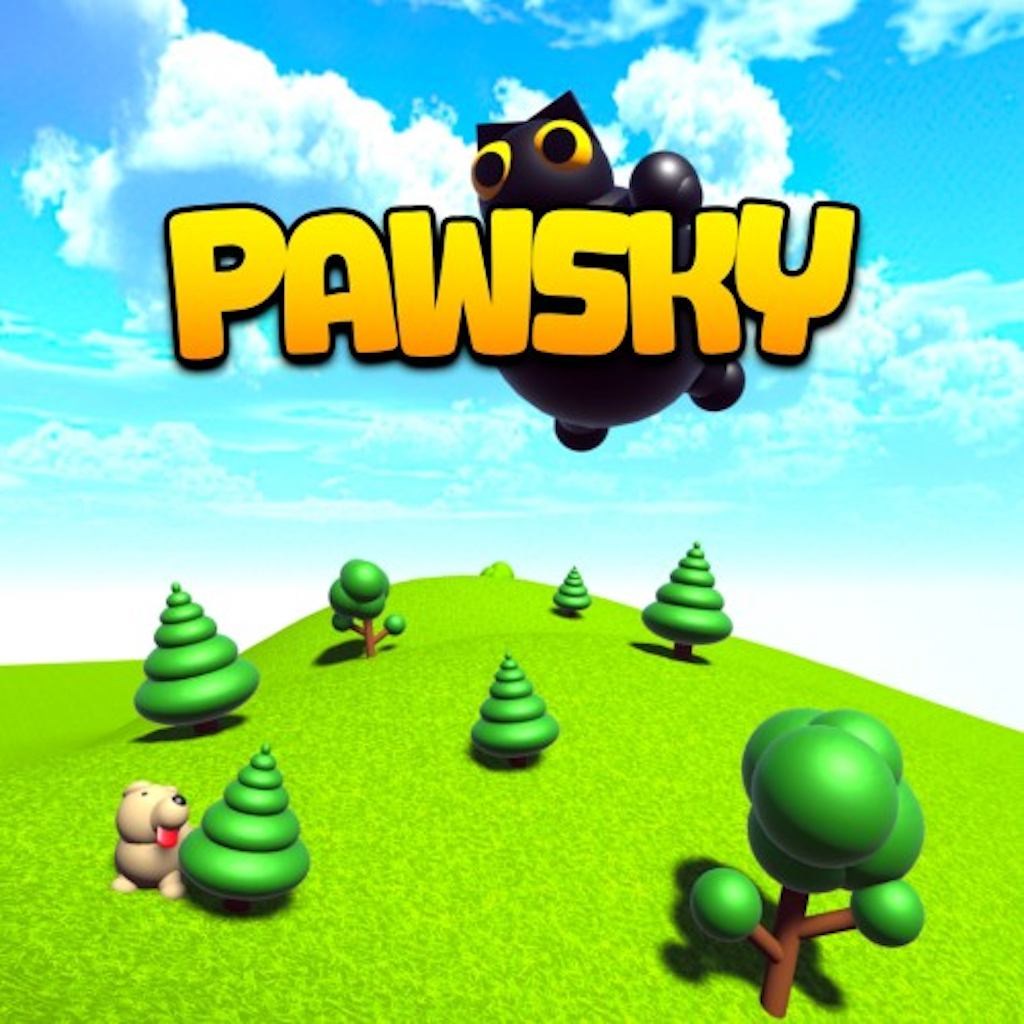
Visually, Pawsky embraces restraint. The art style is clean, readable, and intentionally understated. Characters and environments are stylized rather than detailed, favoring clarity over complexity. This makes gameplay easy to parse while reinforcing the game’s calm, almost cozy atmosphere.
Animations deserve special praise. Pawsky’s movements are expressive and fluid, giving the character a surprising amount of personality without relying on exaggerated visuals. Small touches — idle animations, subtle reactions to the environment — help the world feel alive despite its simplicity.
While the visuals won’t wow players looking for technical spectacle, they are cohesive and well-suited to the game’s tone. Everything feels like it belongs, and nothing distracts from the core experience.
Sound Design That Enhances Focus
Sound plays a crucial role in Pawsky’s identity. The soundtrack is subdued and melodic, designed to complement concentration rather than dominate attention. Music swells gently during moments of progress and fades into the background when precision is required.
Sound effects are equally restrained but effective. Each jump, landing, or interaction provides just enough feedback to reinforce player actions without becoming repetitive or noisy. The overall audio design reinforces the game’s meditative pacing, encouraging players to settle into a rhythm rather than rush through levels.
Short but Satisfying
One of Pawsky’s most notable traits is its length. This is not a sprawling adventure, and players can reasonably expect to see most of what the game has to offer within a relatively short time. For some, this may feel limiting — especially at a time when value is often equated with sheer hours played.
However, Pawsky understands its scope and never overstays its welcome. There’s a quiet confidence in knowing when to end, and the game leaves a positive final impression rather than wearing out its ideas. Replayability comes less from branching content and more from the desire to refine performance and revisit favorite moments.
Where Pawsky Stumbles
Pawsky’s commitment to simplicity may not resonate with everyone. Players seeking deep mechanics, complex progression systems, or narrative-driven experiences may find it too minimal. There are moments where additional variety — an extra mechanic or environmental twist — could have added more long-term engagement.
Additionally, while the controls are generally solid, precision-focused games inevitably magnify small imperfections. Occasional misreads in movement or timing can be frustrating, even if they’re rare.
These issues don’t undermine the experience, but they do limit its appeal to a more specific audience.
Final Verdict
Pawsky is a thoughtful, understated indie game that succeeds by knowing exactly what it wants to be. It prioritizes mood, movement, and player comfort over complexity and spectacle, resulting in an experience that feels quietly rewarding rather than loudly impressive.
It won’t redefine its genre, but it doesn’t need to. Pawsky stands as a carefully crafted reminder that small games can leave a lasting impression — not by overwhelming the player, but by inviting them to slow down and enjoy the journey.