
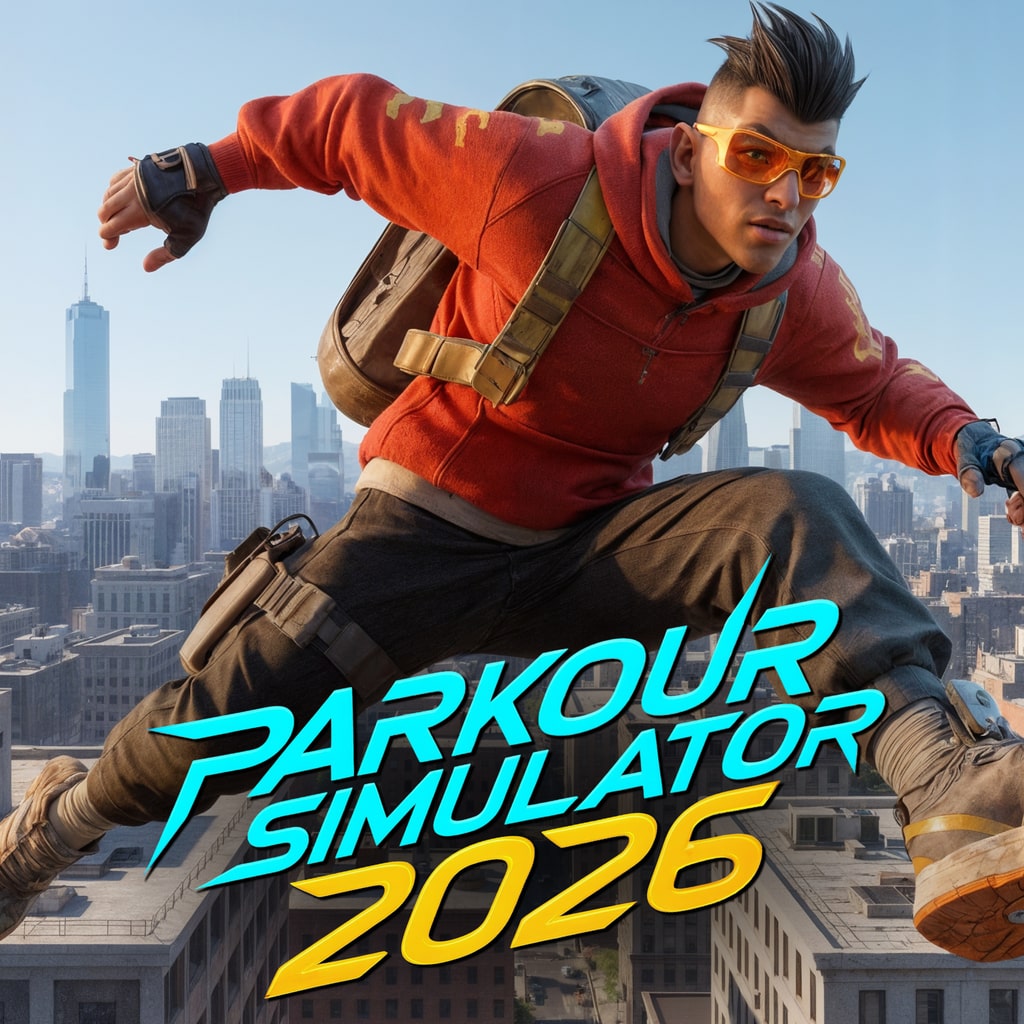
Parkour in games has always occupied a curious space between exhilarating movement and mechanical frustration. Too often, titles promise fluid traversal but deliver awkward controls and janky collisions. Parkour Simulator 2026 bucks that trend with a refreshing emphasis on how it feels to move rather than simply where you move. It’s a title that treats momentum as a central character, turning walls, railings, and spikes of urban geography into conduits of expression rather than obstacles to be clicked past. After dozens of hours exploring its sandbox spaces, mastering its movement vocabulary, and chasing mastery in increasingly nigh-impossible runs, Parkour Simulator 2026 emerges as one of the most thoughtfully tuned movement games in recent memory — not perfect, but exhilarating in nearly every measure that matters.
Core Concept and Identity
At its core, Parkour Simulator 2026 is not simply about navigation but movement mastery. Rather than structuring success around combat or narrative beats, the game’s design treats locomotion as its own reward. Walls, ledges, gaps, and rooftops are all nodes in a web of energy; how you connect them defines your experience.
From the outset, the game trusts its players. There are no gimmicky auto-parkour shortcuts or context-sensitive wheels that turn every jump into a guaranteed success. Instead, movement is procedural, physics-informed, and responsive: sprint, jump, wall run, vault, roll — all mapped to clear inputs that respond to speed, angle, and momentum. Each move feels grounded in intention, and the sensation of fluid motion — linking a wall run into a drop pivot into a roll — is addictive.
What the game does best is remove the sense of artificial “blocks” between player intent and on-screen action. This differentiates it from many competitors in the genre and gives Parkour Simulator 2026 a rare and enviable identity: it feels like parkour.
Movement Mechanics: Fluidity as Design
Movement should feel alive, and in Parkour Simulator 2026 it does. Sprinting isn’t simply a button press; it builds momentum, curves between obstacles, and changes how your character sticks to surfaces. Vaulting feels tactile; the angle of your approach matters. Wall runs are not passive animations but balance-challenging states that require precision and timing. Rolls dissipate momentum gracefully, keeping you in motion rather than jarring your rhythm to a halt.
This sense of physicality is central. The game’s physics engine is not a brute-force system overloaded with gimmicks, but a carefully tuned framework where inertia, gravity, and acceleration all register in how the player feels and performs. It’s especially notable in transitions — the moment between leaving a ledge and touching another surface — where the game strikes a fine balance between predictability and organic motion.
The result is movement that feels expressive rather than clunky, and it encourages players to imagine their own lines rather than follow prescribed routes.
World Design: A Canvas for Motion
World design in Parkour Simulator 2026 serves movement rather than restricting it. Urban environments are sprawling, open, and layered: rooftops interlock with fire escapes, alleyways conceal vertical shafts, and abandoned industrial zones provide ramps, beams, and catwalks ripe for exploration. The city feels like a playground rather than a series of corridors.
Rather than linear level design, the game features zones that invite you to discover and define your own routes. Optional challenges scattered throughout these spaces — time trials, forbidden run checkpoints, distance trials — provide measurable goals, but you’re never prevented from simply moving for movement’s sake. The joy of chaining together a long sequence of fluid moves often outweighs the satisfaction of beating a timer.
The game’s world is also visually distinct. Each district — from graffiti-covered backstreets and neon-washed commercial districts to industrial skeletons and rooftop gardens — feels unique without sacrificing the spatial coherence critical for intuitive navigation. Colour coding is used subtly to highlight flow corridors and interactive surfaces, aiding readability without descending into artificial guidance.
Challenges, Progression and Replayability
Unlike games that tie progression to combat or quests, Parkour Simulator 2026 uses movement challenges as its primary currency of rewards. Time trials test your precision, route mastery tests your adaptability, and creative challenges invite you to explore inventive lines of traversal.
This challenge suite is broadly satisfying. Early trials act as de facto movement tutorials, introducing mechanics and surfaces without ever pausing the flow. Later challenges escalate in complexity, requiring not just instinctive movement but thoughtful planning. The leaderboard systems — both local and global — further extend replayability, inviting players to refine their lines and shave fractions of seconds off runs.
Progression is woven cleverly into challenges and personal mastery rather than loot drops or stat boosts. You unlock new cosmetic outfits, minor control refinements (like aim assistance for special moves), and aesthetic shards that customise your parkour runner’s appearance — not their mechanical edge. This ensures that movement skill rather than gear or buffs determines success, reinforcing the game’s identity.
Replayability is rich because each run is a form of self-expression. Even once challenges are mastered, the pleasure of improvisational motion sustains engagement.
Audio and Atmosphere
Audio design might be the unsung hero of Parkour Simulator 2026. Footsteps, cloth rustling, wall scuffs, and impact sounds all contribute to a sensation of grounded motion that complements the visuals. A well-executed traction roll or wall run makes satisfying contact audio, reinforcing physical presence.
The soundtrack leans into ambient beats and rhythmic cues that rise during high-speed runs, subtly reinforcing player momentum without overwhelming focus. During quieter exploration, tracks fade into atmospheric washes that echo the wider urban soundscape. The audio successfully avoids distraction, instead enhancing the feel of movement.
Accessibility and Control Options
For a game built around nuanced movement, accessibility is thoughtfully considered. Various control presets accommodate keyboard players and gamepad users, and adjustable sensitivity for camera and movement responsiveness ensures comfort across playstyles.
Beginners can opt into assistive options that offer forgiving wall grabs, enhanced auto-adjust positioning, and forgiving corner transitions. These help flatten the initial learning curve without diminishing the satisfaction of mastery for more experienced players. For purists, these assists can be dialled down or turned off entirely.
The only notable absence is a more robust tutorial visualiser — a replay system showing ideal run paths or ghosting against personal bests could enhance learning further. Still, the game’s approach to accessibility overall strikes a sensible balance.
Critiques and Limitations
Despite many strengths, Parkour Simulator 2026 isn’t flawless.
- Repetition Over Time: While the core mechanics are satisfying, the game’s pacing occasionally leans toward repetition in its latter stages. Some challenge variations cycle familiar obstacles without introducing fresh mechanical twists.
- Minimal Narrative: Players seeking story context or character emergence may find the game’s narrative light. World flavour comes from environmental storytelling and incidental audio logs, but there’s no central narrative thrust beyond self-defined mastery.
- Visual Clarity in Complex Zones: In highly dense urban zones with overlapping geometry, readability can suffer momentarily. Careful camera positioning mitigates this, but misreads can still happen in tight platforming sequences.
None of these issues fatally undermine the experience, but they are measurable bumps in an otherwise polished journey.
Final Verdict
Parkour Simulator 2026 is a standout in the movement game space. It revels in the joy of motion without sacrificing mechanical integrity, presenting a system where momentum, timing, and intent matter above all else. Its world design supports expressive traversal, its challenge systems reward refinement, and its audio/visual presentation underscores the poetry of movement rather than distracting from it.
For players seeking an experience that honours the mechanics of movement as much as the motion itself, Parkour Simulator 2026 delivers on its promise with grace and intensity.













[…] Developed and published by Lu Ming, a highly prolific developer primarily active on the PlayStation storefront, specialising in budget-tier simulation, action, and sandbox titles. In 2026 alone, he has maintained a high output of releases across PlayStation 4 and PlayStation 5, including Car Dealer Garage Simulator 2026, Wash Cleaner Simulator, Silent Evil Dead Horror Syndrome, Ragdoll Playground Sandbox, Longboard Skate Downhill Simulator and Parkour Simulator 2026. […]