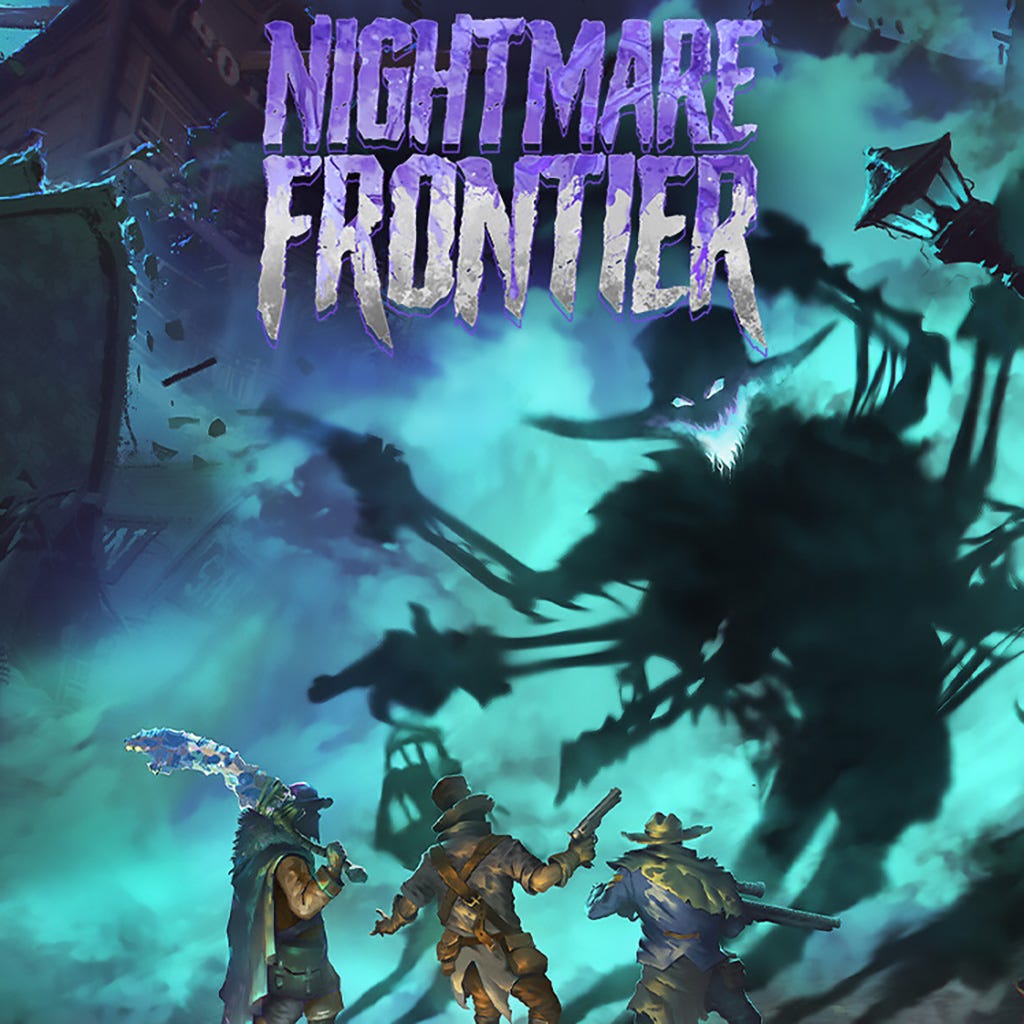
The tactical strategy genre has rarely lacked grim settings. We’ve marched through alien invasions, zombie outbreaks and war-torn futures countless times over the years. Nightmare Frontier stands apart by asking a simple but effective question: what if the monsters weren’t simply invading the world, but were born from humanity’s deepest fears? That unsettling concept forms the foundation for one of the most distinctive strategy games in recent memory.
Developed by Ice Code Games, the studio behind Hard West 2, Nightmare Frontier blends turn-based tactics with extraction-shooter philosophy in a way that feels surprisingly natural. Instead of fighting through missions until every enemy falls, each expedition becomes a calculated gamble. Do you press deeper into the City in search of greater rewards, or retreat while your squad is still breathing? That constant tension fuels almost every decision, transforming even small victories into meaningful triumphs.
Set within an alternate early twentieth-century frontier consumed by supernatural horror, the game follows a group of ordinary scavengers lured by promises of unimaginable wealth. Hidden beneath those promises lies something far darker. The mysterious Doc believes the Nightmare itself can become humanity’s future, and as each district is explored, the line between scientific ambition and outright madness becomes increasingly blurred. It is an intriguing mystery that unfolds gradually, rewarding players who enjoy piecing together lore rather than having every answer handed to them.
Gameplay
Nightmare Frontier immediately distinguishes itself through its blend of tactical combat and extraction mechanics. At first glance, it resembles games such as XCOM, with squads moving across detailed battlefields, one careful step at a time. The similarities end once the fighting begins. There are no percentage-based hit chances here, no frustrating ninety-five per cent misses, and no dice rolls determining your fate. Every action succeeds exactly as expected, placing responsibility squarely on the player’s shoulders.
This deterministic approach gives combat an almost puzzle-like quality. Every battlefield becomes a collection of opportunities waiting to be discovered. A stray bullet can ricochet off a metal object into another enemy. A burning stove can become a deadly trap with a well-timed shove. Clever positioning allows teammates to chain attacks together, extending turns and eliminating entire groups before they have a chance to retaliate. Every encounter encourages experimentation without ever feeling random.
The absence of chance also makes mistakes far more personal. When a scavenger falls, it is rarely because luck turned against you. More often, it is because you overlooked an environmental hazard, underestimated an enemy’s movement, or became too greedy while chasing another piece of valuable loot. That accountability makes victories immensely satisfying, but it also ensures defeats sting far more than they might elsewhere.
Combat remains consistently engaging because each enemy behaves differently. Learning how individual monsters attack, move and interact with the battlefield gradually becomes as important as improving your squad. Rather than relying on inflated statistics, Nightmare Frontier challenges players through intelligent encounter design that evolves throughout the campaign.
The Fear System
Perhaps the game’s most fascinating mechanic centres on Fear itself. Every rescued scavenger carries one of sixteen unique fears, and each fear determines which horrifying Dreadweavers appear during future expeditions. Suddenly, recruitment becomes about far more than finding another capable fighter. Every new face can potentially change the entire nature of subsequent missions.
This creates fascinating strategic decisions before combat even begins. Building the right team means considering not only class abilities and equipment, but also the psychological baggage each character brings into battle. Bringing one scavenger may introduce giant, revolver-wielding spiders, while another invites terrifying puppet creatures armed with razor-sharp scissors. Few games have managed to integrate character psychology so directly into gameplay.
Thematically, the system works brilliantly as well. Nightmare Frontier constantly reminds players that monsters are manifestations of human weakness rather than random supernatural beasts. It creates an atmosphere in which fear itself becomes both the narrative and mechanical driving force behind every expedition.
Risk Versus Reward
Extraction shooters have grown increasingly popular in recent years, yet few have attempted to translate that formula into a turn-based strategy. Nightmare Frontier proves the concept works remarkably well.
Each procedurally generated district offers valuable resources, powerful equipment and rare monster components. However, venturing deeper steadily raises the Nightmare Level, introducing stronger enemies while increasing the value of potential rewards. Every decision becomes a balancing act between ambition and survival.
Limited backpack space adds another welcome layer of tension. Players constantly weigh whether another valuable weapon is worth sacrificing precious healing supplies or crafting materials. The temptation to keep exploring is always present, especially when the next encounter might contain exactly the item needed for future upgrades.
Unfortunately, losing an entire squad means surrendering everything collected during that run. While this mechanic creates genuine tension, it occasionally borders on frustrating after particularly lengthy expeditions. Spending significant time gathering resources only to lose everything after a single poor decision can feel unnecessarily punishing, especially during the early hours while learning the game’s many systems.
Progression and Hideout Management
Returning safely to the Hideout offers a welcome chance to breathe after each nerve-racking expedition. Here, monster parts, scavenged equipment and Nightmare Essence become valuable resources that strengthen future raids.
The upgrade system offers impressive flexibility across several development trees. Players unlock increasingly bizarre equipment by combining supernatural monster remains with everyday objects, creating weapons and tools that perfectly complement the game’s strange world. The resulting technology feels wonderfully unsettling without tipping into absurdity.
Managing the scavenger roster also becomes increasingly important. Injuries, equipment choices and individual strengths all demand careful consideration before launching another expedition. There is genuine satisfaction in slowly transforming an inexperienced collection of survivors into a highly efficient team capable of tackling the City’s greatest horrors.
Progression rarely feels meaningless, as every successful raid unlocks something tangible. Whether expanding crafting options, improving equipment or strengthening squad capabilities, there is always another worthwhile goal waiting just beyond the next expedition.
Visuals and Audio
Nightmare Frontier creates an atmosphere that perfectly complements its unsettling premise. Its alternate frontier setting feels both familiar and deeply corrupted, blending weathered wooden settlements with impossible eldritch horrors lurking just beyond the shadows. Every district has its own visual identity while maintaining a consistent sense of creeping dread.
Character models are expressive enough to convey personality without distracting from the tactical viewpoint, while enemy designs are consistently imaginative. The Dreadweavers avoid generic monster tropes, instead resembling twisted physical manifestations of deeply personal nightmares. Their grotesque appearances remain memorable long after individual encounters have ended.
The soundtrack deserves equal praise. Rather than relying solely on loud orchestral pieces, much of the music favours restrained tension, allowing silence and unsettling ambient effects to build suspense naturally. Combined with eerie environmental sounds and satisfying weapon effects, the audio design constantly reinforces the feeling that something terrible is waiting just beyond your field of vision.
Final Verdict
Nightmare Frontier takes familiar strategy mechanics and reshapes them into something genuinely original. Its combination of deterministic tactical combat, extraction-based progression and psychologically driven enemy design creates a compelling gameplay loop that rewards careful planning while constantly tempting players to risk everything for greater rewards.
Its difficulty can occasionally feel overwhelming, particularly for newcomers unfamiliar with extraction mechanics. Losing valuable loot after a failed expedition remains painful, and the procedural nature of equipment drops sometimes slows progression more than necessary. Even so, those frustrations are largely the by-product of systems designed to maintain meaningful tension rather than artificial difficulty.
Ice Code Games has crafted a strategy experience that respects player intelligence. Every victory feels earned because success depends entirely on observation, preparation and tactical thinking rather than favourable percentages or lucky rolls. Combined with its wonderfully eerie setting and refreshingly inventive mechanics, Nightmare Frontier stands as one of the more distinctive tactical releases in recent years.
Fans of deep strategy games willing to embrace meaningful risk will find plenty to admire here. Nightmare Frontier does not simply ask whether you can survive its horrors. It constantly asks whether your courage is worth more than your greed, and that question lingers long after the final extraction.