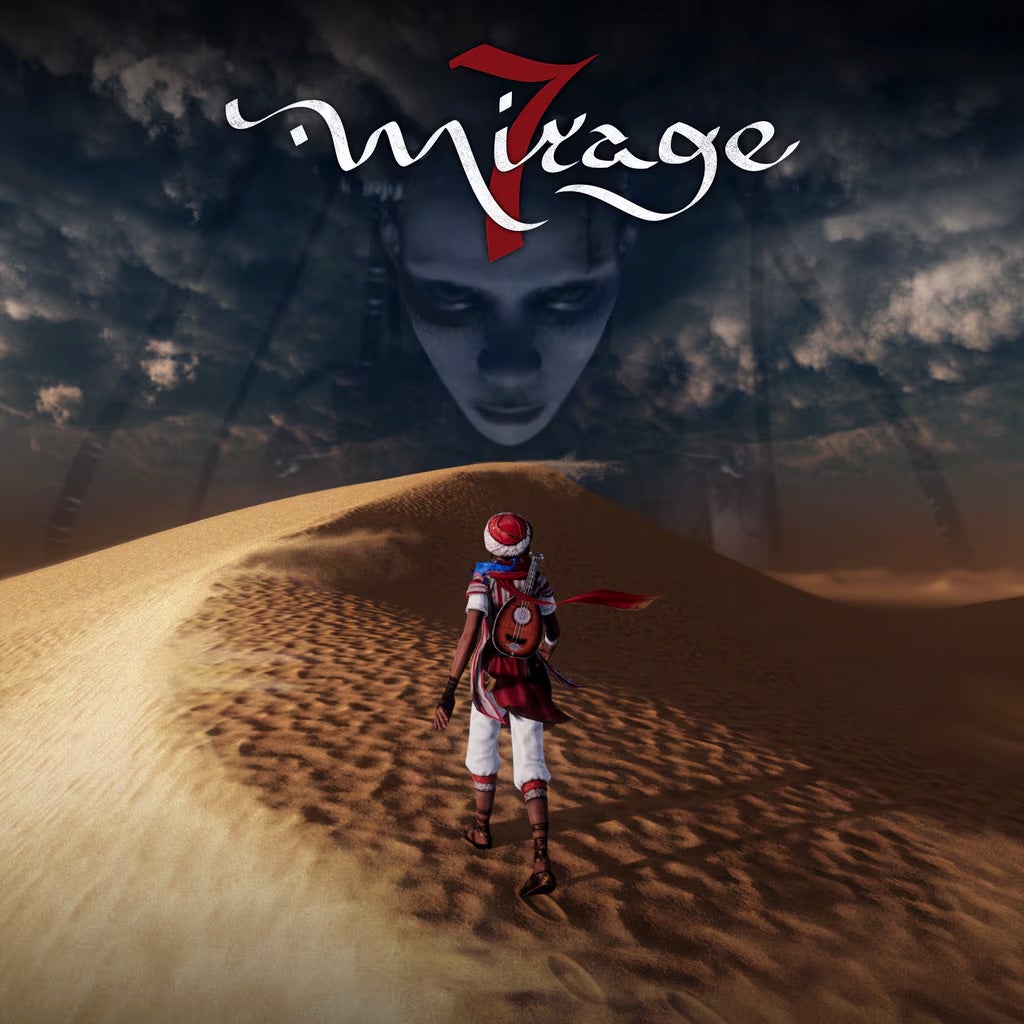
Fantasy games often draw inspiration from well-known medieval European tropes, but occasionally a title emerges that explores mythology and storytelling from a different cultural perspective. Mirage 7, developed by Drakkar Dev and published by Blowfish Studios, aims to do just that.
Released on 6 March 2026, Mirage 7 combines Arabian-inspired folklore with unexpected science-fiction elements to create what the developers describe as a dark fairy-tale adventure. Players assume the role of Nadira, a determined explorer embarking on a perilous journey across a mystical desert landscape in search of the legendary Princess Taishma—believed to be the only person capable of resurrecting Nadira’s fallen sister.
Inspired by the short story Miraggio, the game blends exploration, combat, puzzles, and narrative choices into a modest yet ambitious action-adventure experience.
While Mirage 7 occasionally struggles with pacing and mechanical complexity, it succeeds in creating a unique atmosphere and telling a story rooted in themes of grief, bravery, and sacrifice.
A Dark Journey Across the Desert
Mirage 7 begins with a tragic premise.
After the mysterious death of her younger sister, Nadira sets out across a vast desert region in search of Princess Taishma, a mythical figure rumoured to possess the power to restore life.
This journey quickly becomes far more complicated than expected. The desert holds ancient ruins, hostile creatures, and powerful supernatural forces linked to forgotten legends.
Along the way, Nadira encounters several unusual characters. Some offer assistance, while others seem to have their own hidden agendas.
Among the most memorable figures is the Witch of Jala, a cryptic presence whose motives remain unclear for much of the story. Another key character is the Vizier, voiced by Andy Mack, who provides guidance while subtly hinting at deeper secrets behind the desert’s strange phenomena.
The narrative gradually shifts from a simple rescue quest into something far more mysterious, blending folklore with hints of advanced technology buried beneath the desert sands.
This combination of fantasy and science fiction is one of Mirage 7’s most intriguing aspects.
Nadira and Jiji
Central to the gameplay is the relationship between Nadira and her small companion Jiji, a loyal lizard who accompanies her throughout the adventure.
Jiji is much more than a cosmetic companion. Many puzzles and environmental challenges require the player to utilise the unique abilities of both characters.
Nadira herself manages most exploration and combat. Armed with a dagger and slingshot, she must defend herself against hostile creatures such as venomous cave spiders and supernatural spirits that haunt the ruins.
Jiji, meanwhile, can access narrow spaces, activate mechanisms, and interact with objects beyond Nadira’s reach.
This dual-character dynamic creates a series of puzzles that depend on cooperation between the two. Switching between Nadira and Jiji—or coordinating their actions—forms the core of many environmental challenges.
The system functions well most of the time, although some puzzles rely heavily on trial and error rather than clear environmental clues.
Combat and Survival
Mirage 7’s combat system is relatively simple but effective within the game’s modest scope.
Nadira’s dagger enables close-range attacks, while her slingshot offers a safer option for engaging enemies from a distance.
Encounters frequently involve dodging enemy attacks and carefully timing counterattacks. The game does not aim for rapid-paced action but instead emphasises deliberate combat where positioning and timing are more important than speed.
Enemies range from animal-like creatures inhabiting desert caves to supernatural spirits linked to ancient legends.
Although the variety of enemy types is somewhat limited, their design fits well within the game’s dark fairy tale tone.
Crafting also contributes to survival. Throughout the world, players collect materials to craft tools, ammunition, or helpful items essential for exploration.
These systems introduce light survival elements without overwhelming the main adventure.
Puzzle Design and Exploration
Puzzle solving is a fundamental aspect of Mirage 7’s core gameplay.
The desert settings are rich with ancient mechanisms, concealed chambers, and environmental hazards that demand keen observation.
Some puzzles involve operating machinery left by unknown civilizations, while others depend on natural elements like wind currents, light reflections, or environmental dangers.
These challenges range in difficulty. Many are straightforward and rewarding, though some later puzzles become notably more complex.
Since Jiji’s abilities often aid in solving these puzzles, the game consistently highlights the importance of teamwork between Nadira and her companion.
Exploration, though mainly linear, includes occasional branching routes that reward curious players with hidden items or lore fragments.
These optional discoveries help expand the game’s mysterious backstory.
A World of Folklore and Technology
Visually, Mirage 7 presents a captivating world inspired by Arabian folklore and desert mythology.
Golden dunes extend across the horizon, while ancient ruins suggest long-lost civilizations buried beneath the sand.
What makes the setting particularly compelling is the gradual integration of science-fiction elements. Strange devices, glowing structures, and unexplained technologies start appearing as Nadira ventures further into the desert.
This blend of fantasy and sci-fi adds an intriguing layer to the world-building.
The environments themselves are immersive, although the visual quality varies depending on the platform. On PlayStation 5 and Xbox Series X|S, lighting effects and environmental details appear more refined than on last-generation systems.
Character animations are adequate but occasionally stiff, reflecting the game’s indie production scale.
Music and Voice Acting
The game’s soundtrack plays a key role in establishing its atmosphere.
Ambient music based on Middle Eastern instruments blends with darker orchestral sounds to create a sense of mystery throughout the journey.
The score changes dynamically during combat encounters or emotional story moments, helping to emphasise the game’s themes of loss and perseverance.
Voice acting also enhances the narrative experience. Nadira, voiced by Blair Greene-Osako, delivers a performance that is grounded and captures the character’s determination and vulnerability.
Andy Mack’s portrayal of the Vizier adds an enigmatic presence that keeps players questioning his true intentions.
Difficulty and Accessibility
Mirage 7 includes three difficulty modes, allowing players to tailor the experience to their preferred level of challenge.
Lower difficulty settings focus more on exploration and narrative, while higher settings demand more careful combat and resource management.
This flexibility ensures that both casual players and more experienced action-adventure fans can enjoy the game.
Pros & Cons
Pros
- Unique blend of Arabian folklore and science-fiction themes
- Atmospheric desert environments and strong world-building
- Engaging partnership between Nadira and Jiji
- Solid puzzle design with varied environmental mechanics
- Strong musical score and voice acting
Cons
- Combat system lacks depth over longer play sessions
- Limited enemy variety
- Occasional trial-and-error puzzles
- Some animations feel stiff
Final Verdict
Mirage 7 may not be the most technically ambitious action-adventure game of the year, but it stands out thanks to its distinctive setting and heartfelt narrative.
The blend of Arabian-inspired mythology with subtle science-fiction elements creates a world that feels mysterious and visually striking. Meanwhile, Nadira’s journey—driven by grief and determination—provides a compelling emotional foundation for the adventure.
While the combat and puzzle mechanics occasionally reveal their indie limitations, the game’s atmosphere, storytelling, and character dynamics drive the experience forward.
Mirage 7 ultimately succeeds as a thoughtful and atmospheric fantasy adventure that offers something slightly different from the usual genre conventions.