There is something immediately likeable about Mel The Cat. Perhaps it is the bright orange feline at the centre of the adventure, perhaps it is the colourful little worlds she finds herself trapped in, or perhaps it is simply that this is a game that knows exactly what it wants to be. There are no sprawling maps to memorise, complicated skill trees to understand, or dozens of systems fighting for your attention. Instead, Mel The Cat strips the 2D platformer back to its most basic ingredients and asks one simple question: can you get Mel safely from one side of the level to the other?
Developed by Ember Box Studio and published on the Nintendo Switch by Brainium Games, Mel The Cat is a compact precision platformer built around 40 handcrafted levels. Mel must run, jump, avoid deadly traps, dodge enemies, and ultimately reach the exit portal, with instant respawns ensuring that failure never becomes too much of a punishment. It is a very straightforward formula, but there is an undeniable appeal in its simplicity. For players looking for a quick platforming fix, this is the sort of game that can be picked up for a few minutes and can just as easily turn into an afternoon spent trying to clear one more troublesome level.
Meet Mel
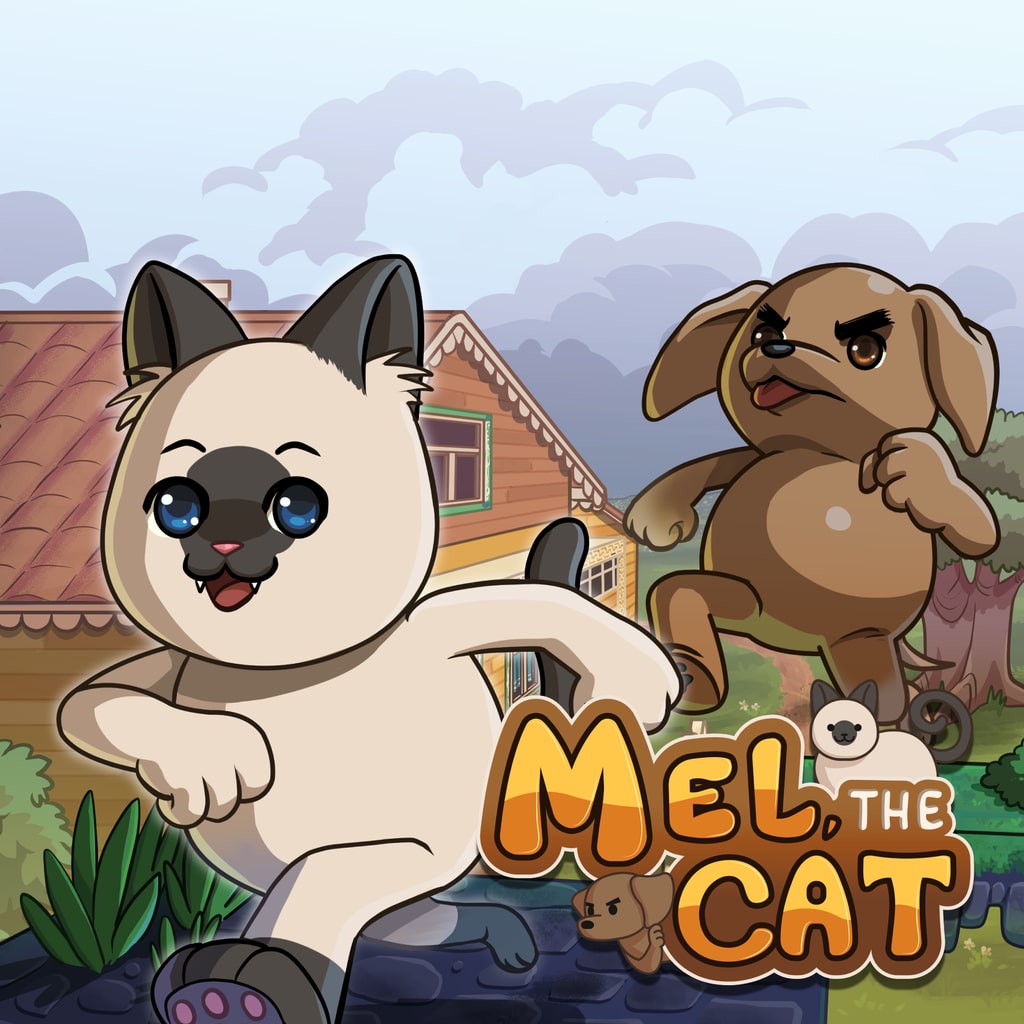
Before Mel The Space Cat took our feline hero into science fiction territory and Mel The Pyramid Cat sent her into ancient tombs, there was simply Mel The Cat. It is the starting point for the series, and perhaps because of that, everything feels deliberately uncomplicated. Mel is an orange cat trying to find her way home, and the journey ahead is filled with the sort of obstacles that have tormented platforming characters for decades.
Spikes lie in wait for an unfortunate misstep. Moving hazards patrol specific areas, enemies wander through the levels, and progress requires carefully timed jumps. None of these mechanics are particularly revolutionary, but that is not really the point. Mel The Cat is more interested in taking familiar platforming ingredients and assembling them into short, approachable challenges that almost anyone can understand within seconds.
There is also a certain charm in watching such a small, cute character deal with hazards that would probably make most sensible cats turn around and go home. Mel simply keeps going. That determination gives the adventure a little personality, even though the story itself remains deliberately lightweight.
Small Levels, Quick Challenges
The 40 levels are the heart of the experience, and their bite-sized structure suits the game beautifully. Rather than asking you to commit to lengthy stages, each level presents a compact challenge that can generally be understood very quickly. You can look at the arrangement of platforms and hazards, work out your route, and then make your attempt.
Of course, understanding a level and successfully completing it are two different things. Some of the later challenges require much better timing than the early stages, particularly when moving hazards and enemies are introduced. The game gradually asks a little more from you without burying the basic controls beneath unnecessary complexity.
That simplicity is one of the game’s biggest strengths. You do not need to spend time learning elaborate combinations or studying a huge tutorial. You run, you jump, you avoid things that look dangerous, and you keep moving towards the exit. Sometimes a game does not need to be more complicated than that.
Failure Is Part of the Fun
Precision platformers live or die by how they handle failure, and Mel The Cat gets an important part of that equation right. Instant respawning means that when Mel inevitably encounters a spike or mistimes a jump, you are back in control almost immediately. There is no lengthy punishment sequence and very little interruption to the flow of the game.
That might sound like a small design decision, but it makes a substantial difference. When failure is painless, you are more willing to experiment. You can try a different jump, adjust your timing, or take another route without feeling you have wasted several minutes of progress.
It also makes the game considerably more welcoming to players who are not particularly experienced with platformers. Someone familiar with precision platforming might fly through the earlier levels, while a less confident player can take their time and learn from mistakes. The game rarely feels like it is laughing at you for getting something wrong. Instead, it simply gives you another opportunity. And another. And another.
The Joy of Keeping Things Simple
One of the most noticeable things about Mel The Cat is how little clutter there is. Modern games can sometimes feel as though they are terrified of giving players an empty moment, filling every corner with collectibles, menus, currencies, upgrades and optional objectives. Mel does none of that.
The focus remains firmly on getting through the level. You see the obstacle, work out how to get around it, and make your move. There is a wonderfully clean quality to that structure, particularly if you have spent time with larger games that demand hours of investment before you feel as though you are making meaningful progress.
It also makes the game particularly well suited to the Nintendo Switch. The ability to pick it up, complete a few short levels, and put it back down again is a perfect match for handheld gaming. Switch 2 players benefit from the same convenient format, although the game’s deliberately simple presentation means this is never going to be a technical showcase for Nintendo’s newer hardware. That is not a criticism. Mel The Cat is not designed to impress through graphical spectacle. Its appeal comes from accessibility and immediacy.
A Colourful Little World
Visually, the game adopts a simple, retro-inspired style that keeps the focus on gameplay. The environments are colourful and cheerful, while the hazards are easy to distinguish from the background. That clarity matters in a precision platformer because the last thing you want is to lose a life because a spike was hidden behind a decorative object.
Mel herself is undoubtedly the star from a visual perspective. She is cute without the game becoming overly saccharine, and there is something immediately memorable about guiding an orange cat through increasingly dangerous environments. The presentation may be modest, but it gives the game enough personality to avoid feeling completely anonymous.
There is also a nice sense of progression as the different worlds introduce their own visual identity. They are not enormous, detail-packed environments, but they provide enough variety to prevent the adventure from becoming visually monotonous during its relatively short campaign.
Theo Gives Mel Something to Run From
Then there is Theo, the recurring antagonist who adds a little more urgency to Mel’s journey. Being chased is an effective way to make a simple platforming challenge feel more immediate. Suddenly, the player is not simply working out where to jump next. Another presence reminds you that standing around for too long may not be an option.
Theo gives the otherwise straightforward adventure a little personality, even if the story remains secondary to the platforming. The relationship between the cute feline protagonist and her persistent pursuer is simple, but it provides enough context to make the journey feel like an adventure rather than merely a collection of disconnected stages.
The real appeal, however, remains the gameplay. Theo is another ingredient in the platforming recipe rather than the beginning of a complicated narrative thread, and that is perfectly fine for this sort of game.
Where the Formula Starts to Show Its Age
The problem with keeping things simple is that you can eventually run out of surprises. Mel The Cat does not have a huge collection of mechanics to introduce, and once you understand how its hazards work, the experience becomes increasingly familiar.
The basic platforming is enjoyable, but there is little here that feels genuinely new. Spikes, moving obstacles and patrolling enemies are staples of the genre, and while they are arranged effectively enough, experienced platforming fans may find themselves wishing for a little more creativity.
The relatively short runtime compounds that issue. Forty levels sounds respectable on paper, but the bite-sized nature of the stages means that players who become comfortable with the mechanics can work through the adventure fairly quickly. Once the final portal has been reached, there is not necessarily enough additional depth to encourage repeated play beyond completionist goals.
That is where Mel The Cat feels most clearly like a budget release. It is competent, charming and perfectly enjoyable, but it does not attempt to stretch its formula into something larger than it needs to be.
The Beginning of Something Bigger
Knowing that Mel The Cat eventually leads into Mel The Space Cat and Mel The Pyramid Cat gives the original game an interesting place within the wider series. It feels like the foundation upon which those later adventures could build, introducing the franchise’s basic movement, level structure and personality before expanding into more distinctive settings.
There is something quite satisfying about experiencing the beginning of a series in this way. You can see the simplicity of the original concept and understand how easily Mel’s character can be transported into different environments. The formula is flexible enough to accommodate science fiction, ancient pyramids or whatever other strange location Ember Box Studio might dream up for her next adventure.
In that respect, Mel The Cat does its job rather well. It establishes a likeable protagonist and a straightforward gameplay identity without pretending to be something it is not.
Verdict
Mel The Cat is a charming little platformer that understands the value of keeping things simple. Its 40 handcrafted levels offer a collection of short challenges built around familiar platforming fundamentals, while the accessible controls and instant respawns make the whole experience remarkably easy to pick up and play.
There is genuine satisfaction in clearing a tricky section after a few failed attempts, and the game’s refusal to punish failure with lengthy restarts keeps the momentum going. Mel herself is an appealing protagonist, while the colourful presentation and Theo’s presence give the adventure enough personality to make it more than just another collection of generic platforming rooms.
The limitations are equally obvious. The mechanics are familiar, the challenge does not evolve into anything particularly deep, and the relatively short campaign means there is not a huge amount of content once the novelty wears off. Players searching for a substantial platforming adventure will probably find the experience too lightweight, while achievement hunters, casual players and fans of short arcade challenges are likely to get considerably more out of it.
Ultimately, Mel The Cat is best viewed for what it is: a modest, accessible and likeable introduction to a little feline platforming franchise. It may not push the genre forward, but it provides a solid foundation for Mel’s later adventures and, most importantly, it is difficult not to smile while watching this determined little cat attempt to find her way home. Sometimes that is enough.