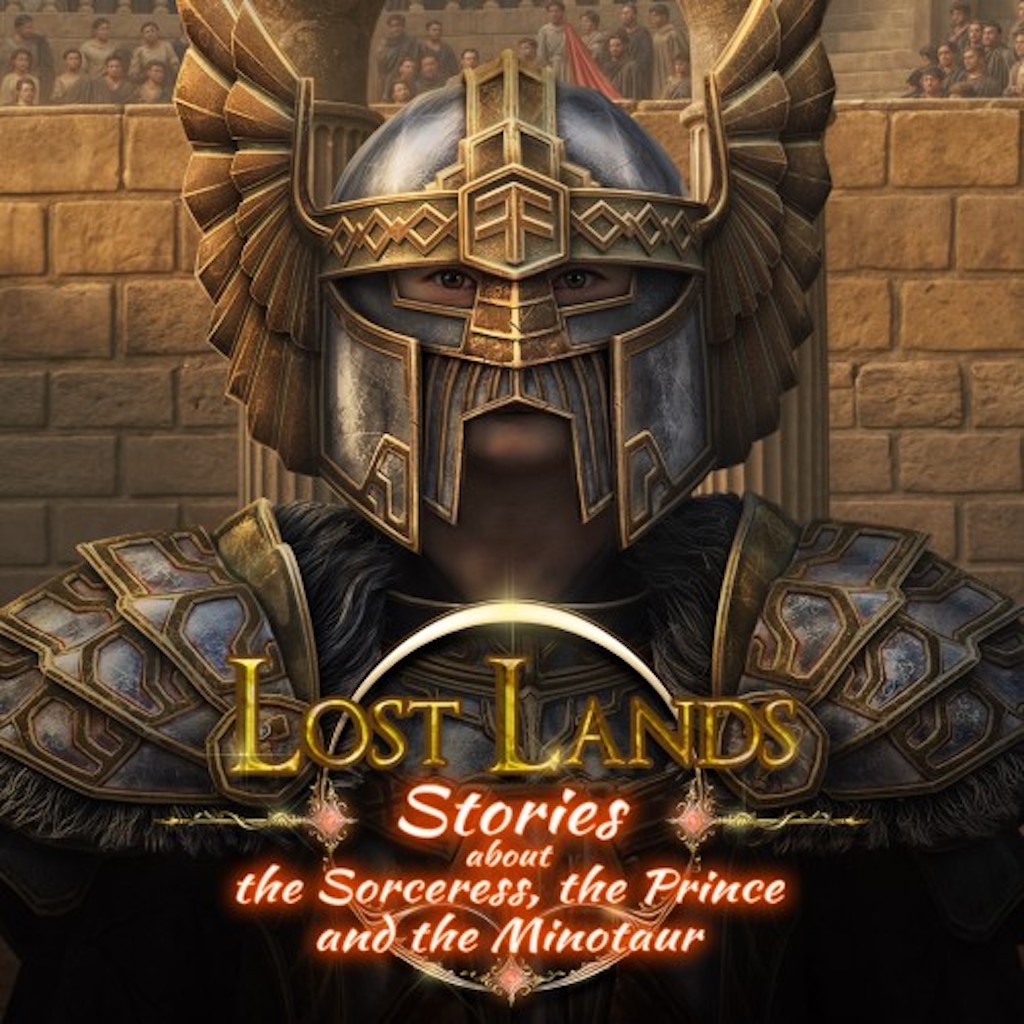
The long-running hidden-object adventure series from FIVE-BN GAMES has always blended fairy-tale spectacle with relaxed puzzle-solving, but with its eleventh main entry, Lost Lands: Stories about the Sorceress, the Prince and the Minotaur, the studio attempts something more ambitious than usual. Released on PC in March 2026 and arriving on Nintendo Switch in April 2026 (following a mobile rollout in late 2025), this prequel departs from the series’ usual single-threaded narrative in favour of a triptych structure—three interconnected origin stories that explore the mythic foundations of the Lost Lands.
It’s a bold structural choice for a franchise best known for its comfortingly familiar pacing, and while it doesn’t radically reinvent the formula, it adds a welcome layer of narrative texture to a series that has long relied on isolated hero journeys.
Three Legends, One World
At the heart of this entry are three distinct perspectives: a sorceress, a prince, and a minotaur. Each story unfolds separately yet contributes to a broader understanding of the Lost Lands’ early history, long before the arrival of the series’ protagonist, Susan Shepard.
This framing device works surprisingly well. Rather than feeling fragmented, the three narratives gradually interlock through shared events and overlapping consequences. The sorceress’s arc leans heavily into political intrigue and magical responsibility, the prince’s story focuses on duty and personal sacrifice, while the minotaur’s perspective offers a more grounded, almost tragic lens on freedom and identity.
The shift away from a single protagonist is one of the game’s strongest decisions. It makes the world feel larger and more complex, as if we are only ever seeing fragments of a much greater mythos. However, this structure also has trade-offs—some emotional momentum is inevitably diluted when switching between arcs.
Classic Hidden Object DNA, Refined
Mechanically, this entry remains firmly rooted in the hidden-object adventure tradition that defines the series. Players still explore richly illustrated environments, locate specific items, and solve a wide variety of logic puzzles interwoven with story beats.
Fans of the genre will find the usual rhythm intact: explore a scene, gather items, unlock tools, and progress through environmental puzzles that gradually open up new areas. The interface remains clean and accessible, making it easy for both newcomers and returning players to navigate.
This installment slightly elevates the formula through its puzzle integration. The three-story structure allows for greater thematic variety in the challenges. The sorceress encounters magic-based logic puzzles involving glyphs and elemental alignment; the prince’s journey focuses more on mechanical and environmental puzzles; while the minotaur sections emphasise navigation and spatial reasoning within labyrinthine spaces.
It’s not a dramatic reinvention, but it does help prevent the gameplay from becoming repetitive over its extended runtime.
Narrative Depth and Emotional Weight
One of Lost Lands 11’s more notable strengths is its attempt to deepen emotional storytelling within a genre that often prioritises light fantasy over narrative complexity.
The sorceress’s storyline explores the burden of power and the cost of control, while the prince’s arc examines inherited responsibility and moral compromise. The minotaur, perhaps the most compelling of the three, anchors the experience with a surprisingly melancholic tale of being shaped into a monster by forces beyond his control.
There are moments when the writing genuinely resonates, particularly when the three narratives echo each other thematically. The idea of freedom—earned, denied, or misunderstood—threads through all three arcs in a way that feels deliberate and thoughtfully constructed.
However, the emotional impact is occasionally undercut by pacing. Frequent shifts between protagonists can disrupt momentum, and not every storyline receives equal depth. The prince’s arc, in particular, feels slightly less developed than the other two, serving more as connective tissue than a fully realised journey.
Puzzle Design and Difficulty Curve
Puzzle design remains consistent with series expectations: accessible, varied, and generally fair. Hidden-object scenes are clearly structured, with items typically integrated into the environment in logical ways rather than relying on obscurity to create difficulty.
Mini-games and logic puzzles offer a welcome change of pace, ranging from symbol-matching challenges to spatial manipulation tasks. While none of these mechanics are particularly groundbreaking, they are well implemented and satisfyingly integrated into the narrative flow.
The difficulty curve is gentle, making the game highly approachable for casual players. Veterans of the genre may find some puzzles too straightforward, but the game compensates with variety rather than challenge spikes.
Hints and guidance systems remain generous, reinforcing the series’ commitment to accessibility over frustration.
Presentation and Atmosphere
Visually, the game continues the series’ tradition of richly detailed, hand-painted environments. Each location feels carefully crafted, with strong attention to lighting, colour palette, and environmental storytelling.
The sorceress’s environments lean towards mystical, glowing architecture; the prince’s settings are more grounded and regal; and the minotaur’s labyrinthine spaces are darker and more oppressive. This visual differentiation effectively reinforces the three-story structure.
Sound design is similarly competent, with a soft orchestral score that adapts to the narrative tone without overwhelming it. Voice acting is serviceable, though occasionally uneven in its emotional delivery, particularly during more dramatic story beats.
Structure: Strength and Limitation
The decision to split the narrative into three interwoven arcs is both the game’s defining strength and its most noticeable limitation.
On the one hand, it expands the scope of the Lost Lands universe in a meaningful way, offering players multiple perspectives on its mythology. On the other, it inevitably fragments the pacing and diminishes the sustained sense of character attachment that previous entries often achieved more naturally.
There is a sense that the game is more interested in world-building than in deeply exploring any single character’s journey. For longtime fans, this is likely a welcome evolution. For newcomers, it may feel slightly diffuse.
Replayability and Longevity
As with most hidden-object adventures, replay value is modest. Once puzzles are solved and storylines completed, there is little mechanical incentive to return beyond revisiting favourite scenes or achievements.
However, the three-story structure encourages a more reflective first playthrough. Players may find themselves appreciating thematic links and foreshadowing more on a second look, even if the core gameplay remains unchanged.
Final Verdict
Lost Lands: Stories about the Sorceress, the Prince and the Minotaur is a confident, thoughtfully constructed evolution of the series’ formula. It doesn’t dramatically reinvent hidden-object gameplay, but it does expand the franchise’s narrative ambition in meaningful ways.
Its greatest success lies in its world-building and thematic cohesion across three distinct perspectives, even if uneven pacing and familiar mechanics keep it from reaching greater heights.
For fans of the series—or the genre more broadly—it’s another solid entry in a consistently reliable franchise.