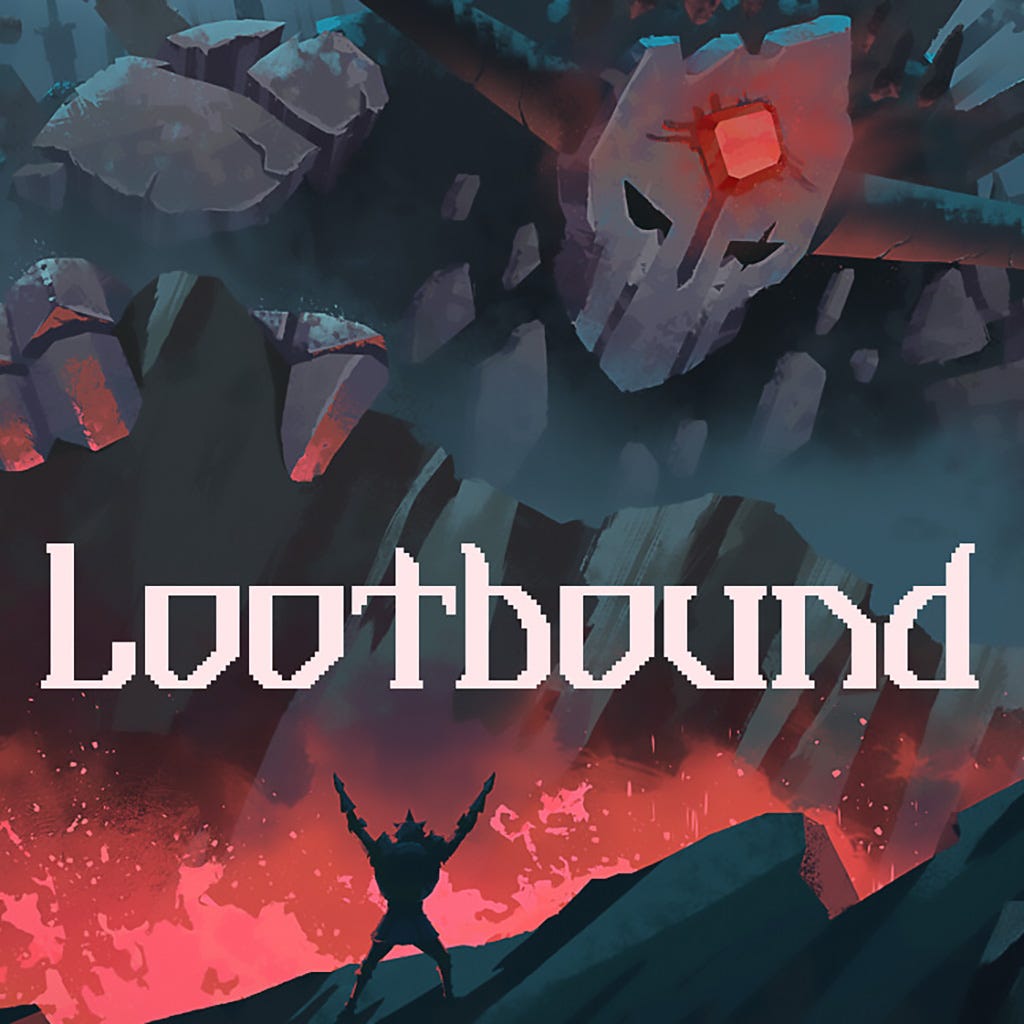
There is something wonderfully addictive about a game that makes you tell yourself, “Just one more run,” only to look at the clock and realise an hour has somehow disappeared. Lootbound understands that magic very well. It takes the familiar ingredients of dungeon crawling, party building, equipment hunting and character progression, then wraps them around a system in which almost every decision can completely change how your run plays out. It is not trying to reinvent the action RPG, but it does have some clever ideas about how the individual pieces should interact.
Developed and published by Multi Platform Games, Lootbound throws you into a dark fantasy world where survival is built on risk, experimentation and the constant search for something better. Every run begins with a lone hero, but that solitude rarely lasts. As you progress through the map, you encounter companions who can become essential to your party, and the adventure suddenly becomes less about simply making your character stronger and more about creating a group that actually works together.
That distinction is important because Lootbound does not treat companions as disposable additions to your numbers. They follow the same fundamental rules as your hero, so their equipment and skills directly influence what they bring to the party. A companion with the right item can suddenly be the difference between scraping through a difficult encounter and absolutely dominating it. Give them something that does not suit their role, however, and you can quickly discover that another sword or another piece of armour is not necessarily going to make the party stronger.
A Run Is Only as Good as Your Decisions
Lootbound’s greatest strength is the constant sense of making meaningful decisions. Starting a run with a blank slate gives you an appealing degree of freedom, as there is no predetermined build dictating exactly who you should become. Your hero begins with a basic set of skills, but everything that follows is shaped by your choices.
The map itself reinforces this philosophy. You move from one location to another, deciding which paths to take and which risks are worth accepting. Sometimes the obvious route offers the safest progression, while another path might present an opportunity to acquire a powerful item or recruit a valuable companion. The temptation to gamble is always there, and Lootbound does a good job of making those decisions feel like part of the adventure rather than simply another menu selection.
The permanence of many of these choices gives the experience additional weight. You are not merely increasing numbers until an arbitrary level cap tells you to stop. You are creating a character and party as you go, and once those decisions have been made, you have to live with them. That can occasionally be unforgiving, but it also makes successful runs considerably more satisfying.
Equipment That Actually Matters
Loot is obviously a major part of Lootbound, but this is not a case of throwing increasingly powerful equipment at the player and expecting the numbers to do all the work. Items are only effective when equipped, and their influence can extend beyond the character carrying them. This gives equipment a much more interesting role within the party.
The aura system is particularly clever. Certain items can influence neighbouring equipment, strengthening or altering their effects depending on how everything is arranged. Suddenly, finding a new item is not simply a question of whether its statistics are higher than what you already have. You have to consider where it belongs and what effect it might have on the rest of your setup.
It is a deceptively simple idea, but one that adds a welcome layer of thought to the usual loot treadmill. An item that looks mediocre on its own can become incredibly powerful when placed alongside the right combination. Conversely, something that appears to be an obvious upgrade might disrupt an existing synergy and weaken the overall build. That is where Lootbound starts to show some real personality.
Building a Fighting Style
The same philosophy extends to the combat system. Rather than simply stacking bigger damage numbers, Lootbound gives you different ways to approach enemies through its various damage types. Armour penetration, exhaustion, armour destruction and direct damage all interact differently with enemy defences and health, allowing players to build around the mechanics they enjoy.
This works particularly well because it encourages experimentation. You can focus on dismantling heavily armoured opponents, build around wearing enemies down through exhaustion, or simply embrace direct damage and try to overwhelm everything in front of you. There is a pleasing sense of ownership when a build begins to click into place and you realise that your earlier decisions have created something far more effective than you initially expected.
Combat itself is fast and satisfying, with the isometric perspective providing a clear view of the battlefield while enemies crowd around you. Encounters can become chaotic, particularly when several threats arrive together, but the pace encourages you to keep moving and think about what you are doing rather than standing in one spot and hammering the attack button. It is a familiar formula, certainly, but the surrounding progression systems give the fighting a reason to remain interesting.
The Party Can Make or Break You
Bringing companions into the equation is where Lootbound becomes particularly compelling. Each additional party member creates another opportunity for a successful combination, but it also introduces another potential weakness. Because companions operate under the same equipment rules as the main character, simply recruiting another fighter does not necessarily make things easier.
That creates some fascinating moments during a run. You might find yourself desperately searching for a particular item because you know it would transform one of your companions into a powerhouse. Alternatively, you might discover that an apparently brilliant piece of equipment has no useful place in your current setup. These moments make loot feel personal because you are not simply collecting things. You are trying to solve a constantly changing puzzle.
There is also something refreshingly unpredictable about how these systems interact. One run can feel completely different from the next, and that unpredictability is exactly what helps keep the experience alive. You start with a plan, the game throws something unexpected at you, and suddenly you are adapting rather than following a rigid strategy.
The Risk Is Part of the Fun
Lootbound clearly wants players to embrace uncertainty. Every run is an opportunity to create something brilliant, but there is always the risk that your decisions will lead you down a dead end. That tension gives progression a sense of purpose, because failure does not simply feel like losing a battle. It feels like discovering that your approach was not quite right.
This is also where the game’s replayability comes from. Once you have completed a successful run, you can immediately start thinking about how you might approach the next one differently. Perhaps you will prioritise companions earlier. Maybe you will build around a different damage type or experiment with item auras. There is always another combination waiting to be discovered.
It is not an experience that will necessarily appeal to players looking for a straightforward power fantasy. Lootbound asks you to think about what you are doing, and sometimes the most powerful choice is not the most obvious one. That can create a few moments of frustration when a carefully constructed run falls apart, but those failures are generally what make the eventual victories feel worthwhile.
A Dark but Welcoming Presentation
Visually, Lootbound embraces the darker side of fantasy without tipping into relentless misery. The environments, enemies and equipment all fit the grim atmosphere, while the action remains clear enough to keep combat from becoming a confusing mess of effects. There is nothing particularly revolutionary about its presentation, but it provides a suitably moody backdrop for the endless cycle of exploration and combat.
The overall tone also works well with the game’s systems. There is something fitting about rummaging through dangerous locations in search of equipment, knowing that the next item could completely change your fortunes. Lootbound feels like a game about obsession in the best possible sense. You go looking for one more item, then another, and suddenly you have spent far longer playing than you intended.
The Verdict
Lootbound does not need to shout about being revolutionary because its appeal lies in how effectively its individual systems work together. The combination of companions, equipment placement, item auras, damage types and permanent character decisions creates a satisfying framework in which every run has the potential to become its own little story.
There are moments when the familiar isometric action RPG formula shows through, and players who have spent years exploring similar dungeon crawlers may recognise many of its foundations. Yet the party-building and equipment systems provide enough personality to give Lootbound its own identity. The best moments come when everything suddenly clicks, a companion becomes unexpectedly powerful, an item combination works exactly as planned, and your carefully constructed party tears through an encounter that previously looked impossible.
Most importantly, Lootbound understands that progression is more satisfying when players feel responsible for it. You are not simply handed power as you move forward. You are building it, experimenting with it and occasionally making a spectacular mess of it. That makes every successful run feel earned.
Lootbound is an engaging and surprisingly thoughtful dungeon crawler that knows how to make loot feel meaningful again. Its companion system, clever item auras and flexible damage mechanics give the familiar action RPG formula some welcome depth, while the risk and reward structure makes every run worth another attempt. It may not completely redefine the genre, but when the right characters, skills and equipment fall into place, it delivers exactly the kind of satisfying chaos that can keep you playing long after you promised yourself you would stop.