

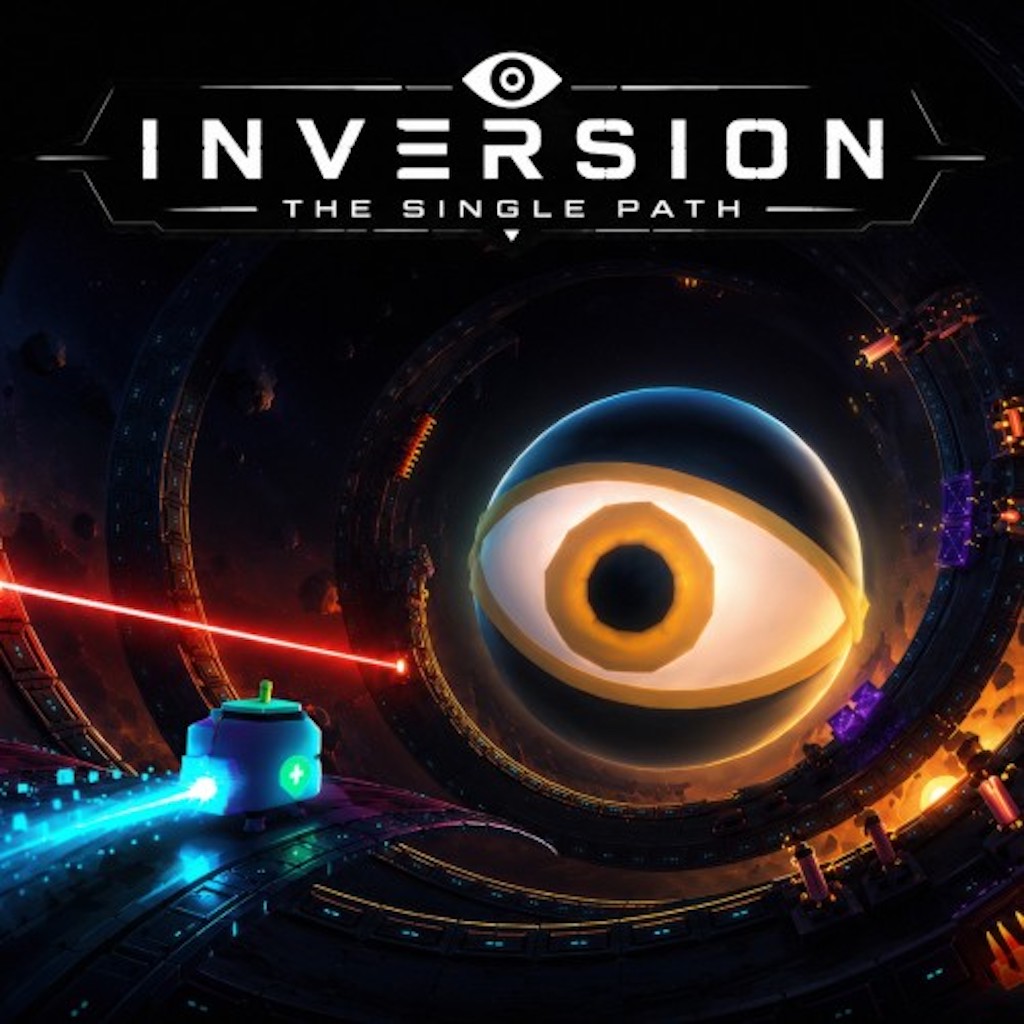
Some games build entire worlds around sprawling narratives, endless upgrade systems, and dozens of interconnected mechanics. Others take a single idea and commit fully to exploring every possible variation of that concept. Inversion: The Single Path firmly belongs to the latter category.
Developed as a focused puzzle-platforming experience, this indie release revolves around one core mechanic: manipulating the world itself. Rather than handing players an arsenal of abilities or combat tools, the game challenges them to alter their surroundings through rotation, inversion, and careful environmental control. The result is a surprisingly engaging blend of platforming and puzzle-solving that feels both familiar and refreshingly unique.
It is not a massive adventure. It will not consume hundreds of hours of your time. What it does offer, however, is a tightly designed experience that knows exactly what it wants to achieve and rarely loses sight of that goal.
A Journey Through Constant Change
Inversion: The Single Path adopts a minimalist approach to storytelling. Rather than delivering lengthy cutscenes or detailed lore entries, it lets the gameplay carry the experience forward. Players guide a glowing orb through increasingly complex environments where the laws of movement and perspective rarely remain stable for long.
The simplicity works in the game’s favour. There are no lengthy exposition dumps that slow the pace or distract from the central mechanics. Instead, the focus remains squarely on progression, experimentation, and discovery.
Each new stage introduces another twist on the core formula. Platforms rotate unexpectedly, gravity shifts direction, and previously inaccessible routes suddenly become viable. The world constantly evolves around you, turning every level into a puzzle that demands observation as much as dexterity.
There is something satisfying about a game that trusts players to figure things out for themselves. Inversion rarely overexplains its systems, preferring to let challenges teach lessons naturally through play.
Momentum Is Everything
The heart of the experience lies in how movement is handled. Unlike traditional platformers, where players have direct control over every jump and direction change, Inversion asks you to think differently.
Your orb is always moving. Rather than controlling the character directly, you manipulate the environment itself. Rotating platforms, flipping gravity, and reorienting entire sections become your primary tools for survival.
This creates a fascinating relationship between player and world. Instead of reacting to obstacles as they appear, success often depends on predicting how environmental changes will affect momentum several seconds in advance. One poorly timed rotation can send your orb hurtling into spikes, while a perfectly executed inversion can launch it gracefully across seemingly impossible gaps.
The mechanic sounds simple on paper, but the game draws impressive depth from it. Early levels introduce concepts gently, allowing players to grasp the basics before steadily layering additional complexity.
By the midpoint of the adventure, levels begin to demand quick thinking and precise execution. Sequences that initially seem impossible gradually become manageable as your understanding of the game’s physics improves.
Puzzle Design That Respects the Player
One of Inversion’s greatest strengths is its level design. Every challenge feels handcrafted around a specific idea, ensuring that new obstacles rarely feel repetitive.
Many puzzle games fall into the trap of endlessly recycling mechanics with only minor tweaks. Inversion consistently introduces fresh variations that keep players engaged. A stage that teaches one concept may immediately challenge your understanding of it in the next.
The game strikes an admirable balance between difficulty and fairness. Failure is common, particularly in later levels, but deaths rarely feel cheap. More often than not, mistakes stem from poor timing or misjudged momentum rather than from unclear design.
This creates a satisfying learning process. Every failed attempt teaches something valuable, encouraging players to approach the challenge differently on their next run.
The quick restart structure further enhances this rhythm. Recovery from mistakes is almost instantaneous, allowing experimentation without frustration. It becomes remarkably easy to lose track of time while chasing the perfect solution to a particularly demanding room.
Precision Platforming Done Right
Alongside its puzzle elements, Inversion succeeds as a platformer thanks to responsive controls and reliable physics. Precision is paramount in a game built around momentum. Any noticeable input delay or inconsistent behaviour would undermine the entire experience. Thankfully, the controls remain sharp throughout, allowing players to focus entirely on execution rather than fighting the system.
Performance on the Nintendo Switch is equally impressive. The game maintains a smooth frame rate whether played docked or handheld, ensuring that timing-sensitive challenges remain reliable.
This technical stability becomes increasingly important as the difficulty ramps up. Later stages often require multiple environmental manipulations within seconds, demanding complete confidence in both controls and performance. Inversion delivers on both fronts.
The challenge can be demanding, but it always feels achievable. Success comes from improving your understanding of the mechanics rather than relying on luck.
A Clean and Effective Presentation
Visually, Inversion embraces a minimalist neon aesthetic that perfectly complements its gameplay. The environments are built from clean geometric shapes, glowing pathways, and high-contrast hazards that remain easy to read even in chaotic moments. This clarity is essential in a game where understanding your surroundings at a glance can mean the difference between success and failure.
While the visual style lacks the elaborate detail found in larger productions, it serves the gameplay exceptionally well. Nothing distracts from the challenge at hand. Every element on screen has a purpose.
The soundtrack deserves praise as well. Its atmospheric electronic compositions provide a calming backdrop that balances the gameplay’s increasing intensity. During particularly difficult sequences, the music helps maintain focus rather than adding unnecessary pressure. Together, the visuals and audio create an experience that feels polished and cohesive from beginning to end.
The Limits of Simplicity
As strong as the core concept is, the game’s focused nature does create a few limitations. Visual variety remains somewhat limited throughout the campaign. Although new obstacles and mechanics continue to appear, the overall aesthetic remains largely unchanged. Players tackling the game in long sessions may occasionally wish for more dramatic environmental shifts to accompany the evolving gameplay.
Replay value is another area where the experience feels somewhat restrained. Once a puzzle has been solved, much of its mystery disappears. Speedrunners and completionists will certainly find reasons to return, but players seeking substantial post-game content may find fewer incentives to revisit completed stages.
The minimalist storytelling approach also means emotional investment remains relatively low. The game succeeds as a mechanical challenge, but those searching for memorable characters or a compelling narrative journey may leave wanting more. Fortunately, these shortcomings never overshadow the quality of the core experience.
Final Verdict
Inversion: The Single Path is a wonderful example of focused game design. It identifies a clever central mechanic and explores it with confidence, creativity, and precision. Every level is carefully constructed to challenge your understanding of momentum, gravity, and spatial awareness in fresh and engaging ways.
Its streamlined presentation, responsive controls, and rewarding puzzle design make it an easy recommendation for fans of cerebral platformers. While its minimalist structure limits narrative depth and long-term replayability, the quality of the moment-to-moment gameplay more than compensates.
Not every game needs to be enormous. Sometimes a concise, well-crafted experience can leave as strong an impression as a sprawling epic. Inversion: The Single Path understands that perfectly. For players who enjoy puzzle-solving, precision platforming, and mechanics that encourage creative thinking, this is a journey well worth taking.


