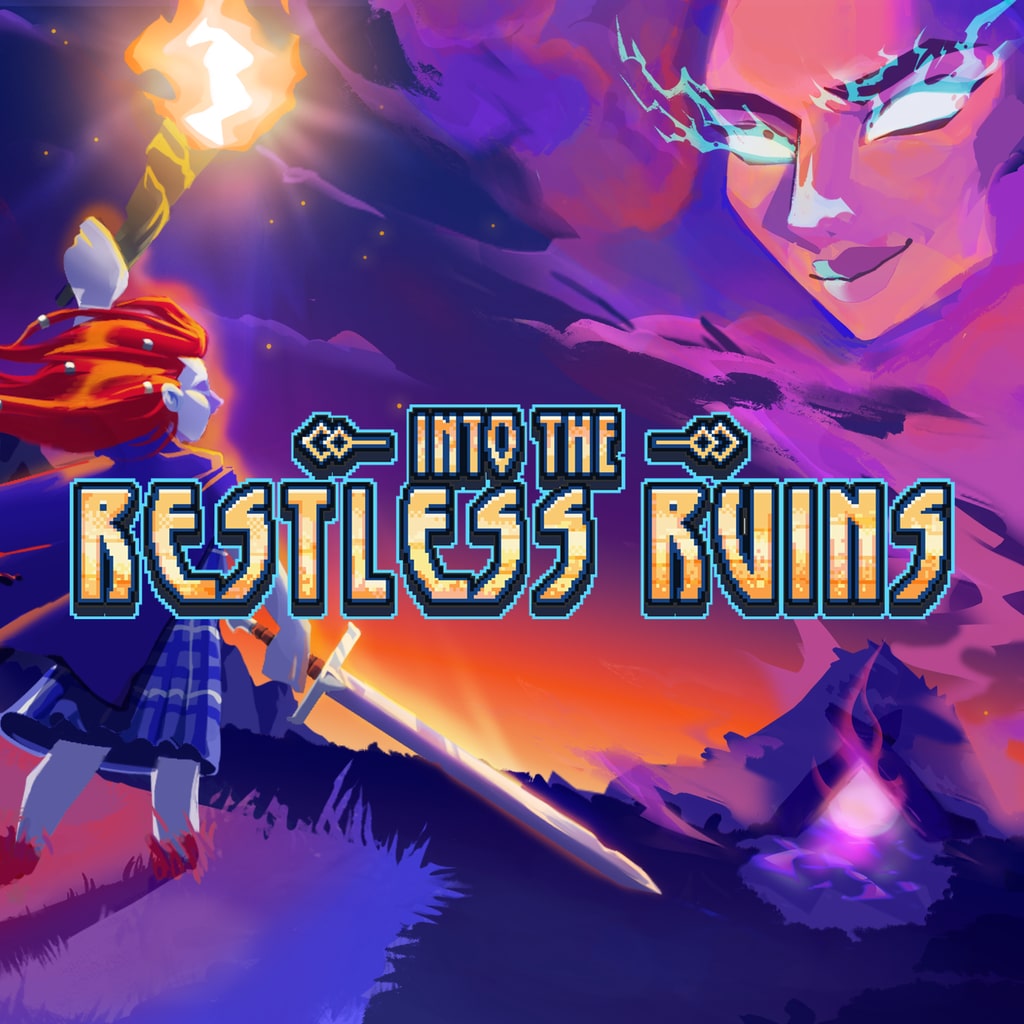
When a game combines deck-building, roguelike progression and dungeon-crawling into one seamless loop, expectations naturally run high. Into the Restless Ruins, developed by Ant Workshop and published by Wales Interactive, manages to deliver a fresh, highly addictive spin on the hybrid formula. It’s a game built on clever design ideas, tension-driven exploration, and the constant push-and-pull between creation and survival.
Setting & Premise
The game takes place deep within a shrouded, labyrinthine ruin inspired by Scottish folklore. You play as a lone adventurer driven by the haunting presence known as “The Maiden,” tasked with gathering a mystical resource called Glimour from the lost souls roaming the ancient halls. Your ultimate goal is to reach and defeat the Warden, a powerful entity that binds the ruins together. But getting there requires navigating an ever-changing dungeon that you—quite literally—construct yourself.
Each run is split into two phases: a deck-building construction stage and an exploration stage. The twist is that your deck doesn’t represent abilities or attacks—it represents the rooms, corridors, chambers and hazards that make up the dungeon. You draw cards, place tiles, shape the paths, and try to create a route that balances safety, efficiency, and reward. Once the dungeon is built, you must then descend into it, exploring the environment you just assembled.
It’s a brilliant concept that gives every run a personalised sense of authorship. Success feels earned not only because you played well, but because you built well.
Gameplay Mechanics
The deck-building phase is the heart of the game’s innovation. Every room card has strengths, drawbacks or special interactions. Some rooms are treasure-laden but risky. Some act as rest points. Some are branching corridors that help expand your layout. You must construct a path toward the exit while considering how your torch—your main survival resource—will hold up. Torchlight drains constantly, and running out turns the ruins into a death sentence.
This constant pressure makes even the build phase thrilling. Every card placement has consequences. Do you risk creating a longer route for more loot? Do you prioritise safety and speed? Do you place rooms rich in Glimour early on, or hide them behind tougher chambers?
When you finish building, the game shifts into an exploration phase reminiscent of a minimalist auto-battler crossed with a tactical dungeon-crawl. You move through rooms, engage in quick combat encounters, gather loot, and try to make it to the exit before the darkness consumes you. While the combat is simple, it’s intentionally so; the focus isn’t twitch reflexes but the macro-strategy you set up in the previous phase.
After each failed run, you return with upgrades, new cards, passive bonuses, and opportunities to experiment with different deck compositions. Over 100 cards and a wide array of mutators ensure that almost every run feels distinct, even if certain strategies naturally rise to the surface as you progress.
Visuals & Audio
The art direction is understated but full of personality. Environments blend pixel-influenced detail with modern lighting effects, conjuring the sensation of navigating wet stone corridors lit only by the soft glow of your dwindling torch. The colour palette leans into moody blues, greys and muted folklore motifs that help differentiate the game from more generic dungeon-crawlers.
Audio design is equally atmospheric. Soft echoes, dripping water, distant groans, and the crackle of your torch all contribute to a sense of slow-building dread. Music rarely intrudes; instead, ambient sound carries the tension. It’s the kind of game where subtle audio cues can make the difference between pushing forward one more room or fleeing for the exit.
Strengths
1. A genuinely new idea in a crowded genre.
Deck-building dungeons instead of decks for combat gives the game a striking identity. It’s inventive, playful and offers strategic depth without overwhelming complexity.
2. High tension created naturally through design.
The ever-dwindling torch makes even quiet moments stressful. Planning routes and rationing light becomes as important as surviving individual encounters.
3. Excellent replay value.
Thanks to its evolving card pool, mutators and short-run structure, the game tempts you into “one more run” again and again.
4. Distinct folklore-tinged atmosphere.
Rather than leaning on generic fantasy tropes, the game uses cultural inspiration and mood-driven worldbuilding to create something memorable.
Weaknesses
1. Steep learning curve for some players.
The idea of building your own dungeon isn’t complicated, but the underlying strategy—synergy between room types, managing torchlight, planning movement flow—can take a few failed runs to fully grasp.
2. Exploration phase may feel repetitive over time.
While the building phase stays consistently engaging, the exploration sections can become predictable on long play sessions.
3. Some deck-building imbalance.
Like many roguelike deck-builders, a handful of card combinations overshadow others, which can lead to a bit of meta-degeneracy once players find optimal builds.
Verdict
Into the Restless Ruins is a standout addition to the roguelike landscape—clever, tense, atmospheric and endlessly replayable. Its hook is simple yet brilliant: build the dungeon, then survive it. Few games offer a loop that feels so reflective, so personalised, and so rewarding run after run.
If you enjoy games that blend strategy, progression and emergent storytelling, Into the Restless Ruins is absolutely worth diving into. It rewards creativity, punishes carelessness, and encourages experimentation in a way that few modern roguelikes manage.
A smart, stylish and highly addictive hybrid that brings something genuinely new to the roguelike table.