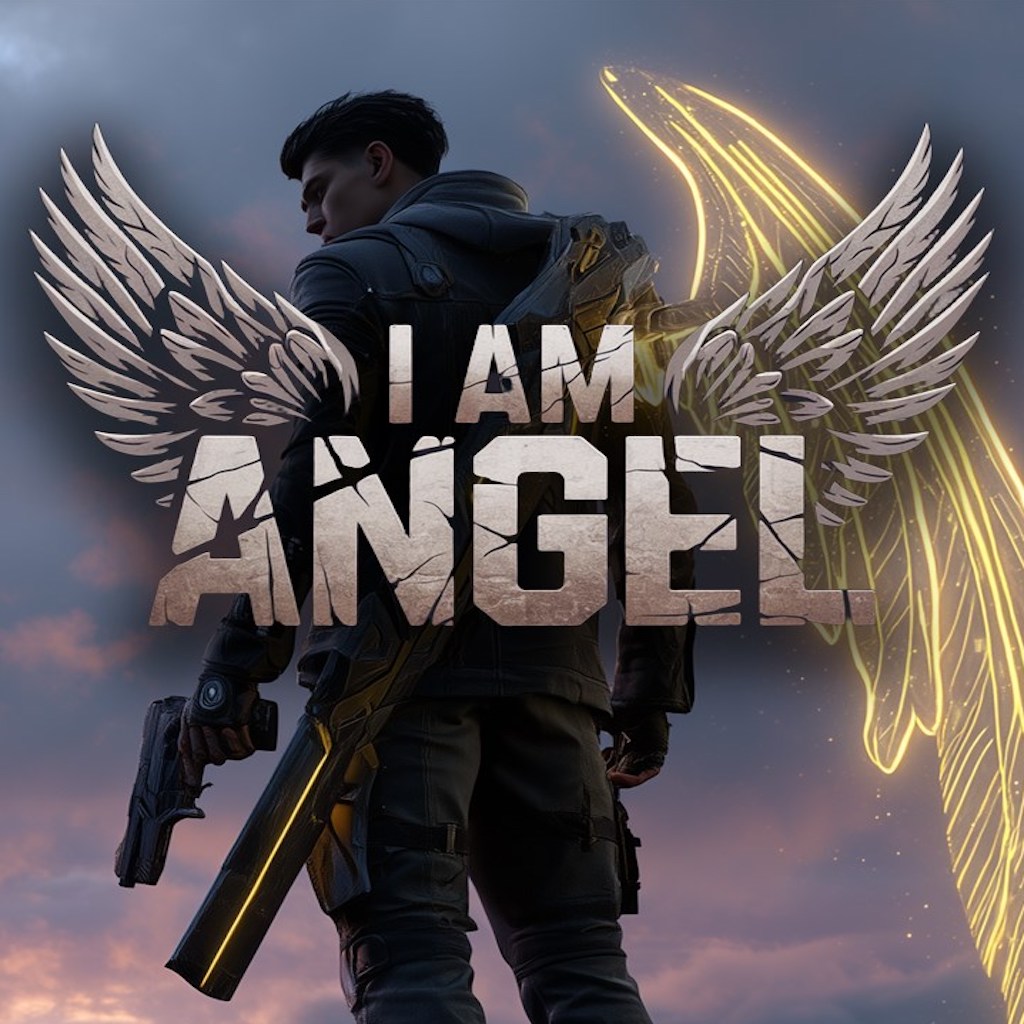
There is something immediately appealing about I Am Angel. Its opening premise takes a familiar story of betrayal and revenge and sets it in a considerably more unusual place. You play as a former police officer whose life is brutally cut short by someone he trusted, only to wake in Heaven and discover that eternal paradise is not quite the blissful reward he expected. Instead of finding peace, he finds himself trapped in a strange purgatory, haunted by memories of his old life and tormented by the knowledge that his former partner has something far worse planned for the world he left behind.
It is a wonderfully melodramatic setup, and that is part of the fun. I Am Angel isn’t interested in quietly contemplating the afterlife from a safe distance. It wants you to pick up celestial weapons, summon supernatural powers and fight your way through armies of the damned while deciding what kind of soul you want to become. Beneath all the gunfire and demonic destruction, a surprisingly emotional thread runs, particularly as the story begins to peel back the circumstances surrounding the protagonist’s death.
A Cop Who Died With Unfinished Business
The central character works because his motivation is painfully simple. He was a good man with a wife, friends and a career, and then everything was taken from him in an instant. Worse still, the person responsible wasn’t some anonymous monster lurking in the shadows. It was someone he considered a friend, and that betrayal gives the entire adventure a much more personal edge than the usual save-the-world narrative.
Things become considerably darker when the protagonist discovers what his former friend has been doing in his absence. A satanic cult, his wife’s blood and a plan to summon Lucifer provide the story with plenty of suitably outrageous supernatural drama. It sounds like the sort of plot that could easily disappear beneath mountains of spectacle, but I Am Angel benefits from keeping the protagonist’s emotional journey at its centre. This isn’t simply a story about killing demons. It is about whether someone who has lost everything can stop revenge from consuming whatever remains of him.
That idea feeds nicely into the game’s moral choices. Encounters with lingering souls give you opportunities to offer redemption or pass judgement, and these decisions contribute to your alignment. The light and dark paths aren’t simply there to give the story a few different dialogue options either. They influence how your abilities develop, giving the player’s decisions a tangible connection to the way their supernatural powers evolve.
Heaven, Hell And Everything In Between
The world of I Am Angel is one of its strongest attractions. Rather than settling on a single gloomy version of the afterlife, the game moves between heavenly architecture, distorted memories, rain-soaked urban environments, and increasingly nightmarish visions of Hell. The contrast between beautiful celestial spaces and the decaying remnants of the protagonist’s earthly existence gives the journey an appropriately dreamlike quality.
There is a psychological element to these environments that I particularly enjoyed. The world isn’t always meant to make sense, because purgatory itself is presented as an unstable place where memories and reality have become tangled. Familiar locations from the protagonist’s former life can appear twisted and distorted, creating the impression that you are walking through somebody else’s damaged recollection rather than a conventional game level.
The environmental puzzles build on this idea. They aren’t necessarily the most sophisticated puzzles you will encounter in an action-adventure game, and the pacing can occasionally slow when the game asks you to spend longer exploring rather than fighting. Still, they serve an important purpose. They provide breathing room between combat encounters and give the story an opportunity to explore the protagonist’s fractured memories.
Gunfire Meets Divine Power
When I Am Angel lets loose, it certainly doesn’t hold back. Combat blends conventional firearms with celestial weaponry and swordplay, creating a deliberately excessive mix of gunfire, supernatural abilities and close-quarters violence. Anyone who has spent time with games such as Devil May Cry, God of War or Bayonetta will immediately recognise the influence.
The emphasis is firmly on stylish combat rather than simply pointing a weapon at an enemy and pulling the trigger. Gunplay and divine swordplay are designed to work together, encouraging you to move between ranged attacks and brutal close-quarters combinations. There is a satisfying rhythm to switching between different forms of offence, particularly when an encounter starts filling the screen with enemies and you have to make quick decisions about which ability to use next.
The legendary sword of Archangel Michael naturally becomes one of the centrepieces of the arsenal, and it feels suitably important. There is something inherently satisfying about wielding a weapon with that sort of mythological weight while tearing through supernatural enemies. It gives the combat an identity of its own rather than making the protagonist feel like a conventional soldier who has wandered into Heaven.
Seven Angels, Seven Ways To Fight
The seven angelic mentors are another clever part of the progression system. Each offers distinct abilities that can fundamentally change how you approach combat, giving a sense that your transformation into something more than human unfolds throughout the adventure rather than simply being declared by the story.
This also works well alongside the light and dark alignment system. Your choices aren’t completely detached from the action. Instead, the character you create can gradually reflect the decisions you make, giving the supernatural powers a little more meaning. Whether you are attempting to become an instrument of divine judgement or seeking a more forgiving path, the game gives you reasons to think about what sort of angel you actually want to be.
It is an interesting idea because the easiest solution in I Am Angel is often violence. There are armies of corrupted souls, fallen angels and demonic generals standing between you and your objective, so simply destroying everything in your path can feel natural. The moral encounters occasionally force you to pause and consider whether absolute judgement is really what your character wants.
Bosses From The Other Side
Naturally, an adventure built around supernatural warfare needs bosses capable of matching the spectacle, and I Am Angel delivers fallen angels and demonic generals to test everything you’ve learned. These encounters are where the game’s combat systems shine, forcing you to pay closer attention to enemy patterns and make proper use of your abilities.
The best boss encounters carry a sense of escalation that fits the story. You aren’t merely fighting another monster at the end of a corridor. You are gradually moving closer to the forces responsible for the catastrophe, and every major confrontation feels like another step towards the ultimate showdown.
There are moments when the action can become chaotic, particularly when multiple enemies and supernatural effects occupy the same space, but there is a certain charm to the excess. I Am Angel clearly wants its combat to feel spectacular, and sometimes it succeeds simply because it commits so completely to that idea.
A Beautifully Bleak Afterlife
Visually, I Am Angel has a strong atmosphere. The contrast between luminous, heavenly environments and dark, rain-soaked urban ruins creates an appealing sense of visual unease. There is beauty here, but it is rarely comfortable. Even the brighter environments carry an underlying sense that something isn’t quite right.
The distortion effects are particularly effective at establishing that atmosphere. Memories blur into reality, familiar spaces become unsettling, and the line between Heaven, Earth and Hell becomes increasingly difficult to trust. This gives the game a slightly surreal personality that helps distinguish it from more conventional supernatural action games.
The sound design complements this nicely. Deep ambient drones and haunting choral elements lend the quieter sections an appropriately oppressive quality, while combat sound effects add weight to every shot and sword strike. The music knows when to stay in the background and when to become more forceful, helping the game’s strongest moments feel more dramatic.
The Road To Redemption
What ultimately makes I Am Angel interesting is that, beneath all the demons and celestial weaponry, it is really a story about grief. The protagonist has been denied the chance to say goodbye to the life he had, and his journey through purgatory becomes a way of confronting everything left unresolved.
That gives the title a little more emotional weight than its explosive combat might initially suggest. There is a genuine tension between vengeance and redemption running through the adventure, and it makes the moral choices feel relevant rather than merely decorative. You can understand why the protagonist would want revenge, but the game repeatedly asks whether revenge will actually give him what he needs.
The pacing isn’t flawless. The puzzle-focused sections can occasionally interrupt the momentum built by the combat, and some of the narrative ideas could have benefited from a little more time to breathe. Yet there is enough ambition here to make those imperfections easier to forgive. I Am Angel is clearly trying to create something more distinctive than another straightforward supernatural shooter, and for the most part it succeeds.
The Verdict
I Am Angel is a dark, stylish and surprisingly thoughtful action-adventure that blends supernatural spectacle with a story of betrayal, grief and the possibility of redemption. Its combat wears its influences proudly, combining gunplay, swordplay and angelic abilities into a suitably extravagant combat system, while the seven mentors and alignment mechanics lend progression a little more personality.
The story is at its best when it focuses on the protagonist’s personal tragedy rather than simply escalating the scale of the next battle. The idea of a dead police officer being offered a second chance to stop the person who betrayed him is strong enough on its own, but adding Heaven, Hell, fallen angels and a Lucifer-summoning ritual gives the whole thing a deliciously dark sense of scale.
There are rough edges, particularly in the pacing of the exploration and puzzle sections, but they don’t completely undermine the experience. PortingGuru has created an indie action game with a genuine identity, and there is something refreshing about a game that is unapologetically dramatic.
I Am Angel may not always reach the heights of the games that inspired it, but it understands why those games are so enjoyable. The combat is flashy, the world is atmospheric and the story has enough emotional weight to make the journey worthwhile. Most importantly, beneath all the celestial firepower lies a surprisingly human question: when you’ve lost everything, is revenge really the only thing you have left?