There is something wonderfully miserable about being told your great mission is to save the world, only to discover that before you can even think about doing so, someone needs to plant some potatoes. Dungeon Settlers takes the familiar fantasy idea of sending brave adventurers into a place sensible people would never willingly go and adds an unexpectedly demanding layer of colony management. Your heroes might be destined to destroy the source of all calamities, but they still need somewhere to sleep, something to eat and decent equipment before they head underground. It sounds slightly strange on paper, yet it quickly becomes clear that the settlement and the dungeon are two halves of the same game.
Developed by Korean indie studio CanOpener and co-published alongside WhisperGames, Dungeon Settlers is unapologetically aimed at players who enjoy strategy with teeth. This is not a game where mistakes are quietly swept under the carpet or where a fallen hero magically returns after the next loading screen. Death is permanent, preparation matters, and every expedition carries the possibility of turning weeks of careful planning into a very expensive lesson. That harshness will not appeal to everyone, but for those who enjoy games that make them think before they act, there is an impressive amount to sink your teeth into.
Welcome To The End Of The World
The premise is suitably bleak. You have been sent by the Guild to a desolate stretch of land, isolated from the wider world by magical erosion, with the considerable responsibility of establishing a settlement and eventually destroying the dungeon responsible for a seemingly endless stream of calamities. There is no comfortable kingdom waiting behind you, with endless supplies and reinforcements. Everything has to be built, grown, crafted and managed from the ground up.
That immediately gives the settlement a purpose beyond simply being a place to admire between adventures. Your people need bedrooms, dining areas and workshops, while fields provide the crops required to keep everyone alive. The forge becomes particularly important as you begin producing and improving equipment, and that seemingly innocent pile of resources suddenly becomes considerably more valuable. Wood is not simply wood, food is not simply food, and a spare piece of equipment can mean the difference between a successful expedition and another name added to the graveyard.
Building A Settlement That Works
The construction system gives you considerable freedom over how your settlement develops. Rather than simply dropping pre-designed buildings, you can create rooms by placing walls and doors, then fitting them out with the equipment they require. It is a deceptively simple approach, but it makes the settlement feel like something you are actually building rather than merely unlocking.
There is a satisfying rhythm to watching the place develop. First you worry about the basics, then you think about food production, crafting and storage, before eventually considering how your settlement can support increasingly ambitious dungeon expeditions. Research gradually unlocks new buildings and equipment, giving the whole process a sense of progression. The important thing is that the settlement never feels completely separate from the action below ground, because everything you construct ultimately exists to keep your expedition alive.
That creates one of the game’s most enjoyable strategic tensions. Do you spend precious resources improving the settlement, or do you concentrate on preparing your next party? Do you invest in better equipment now, or save materials for something you know you will need later? There are rarely enough resources to do everything, so Dungeon Settlers constantly encourages you to think one step ahead.
Your Heroes Are More Than Numbers
The character system is where the game’s hardcore nature really begins to show. Each member of your settlement has a collection of abilities, talents and statistics, alongside traits shaped by their race, background and personality. As a result, recruiting somebody is not simply a matter of looking for the biggest numbers and sending them into battle.
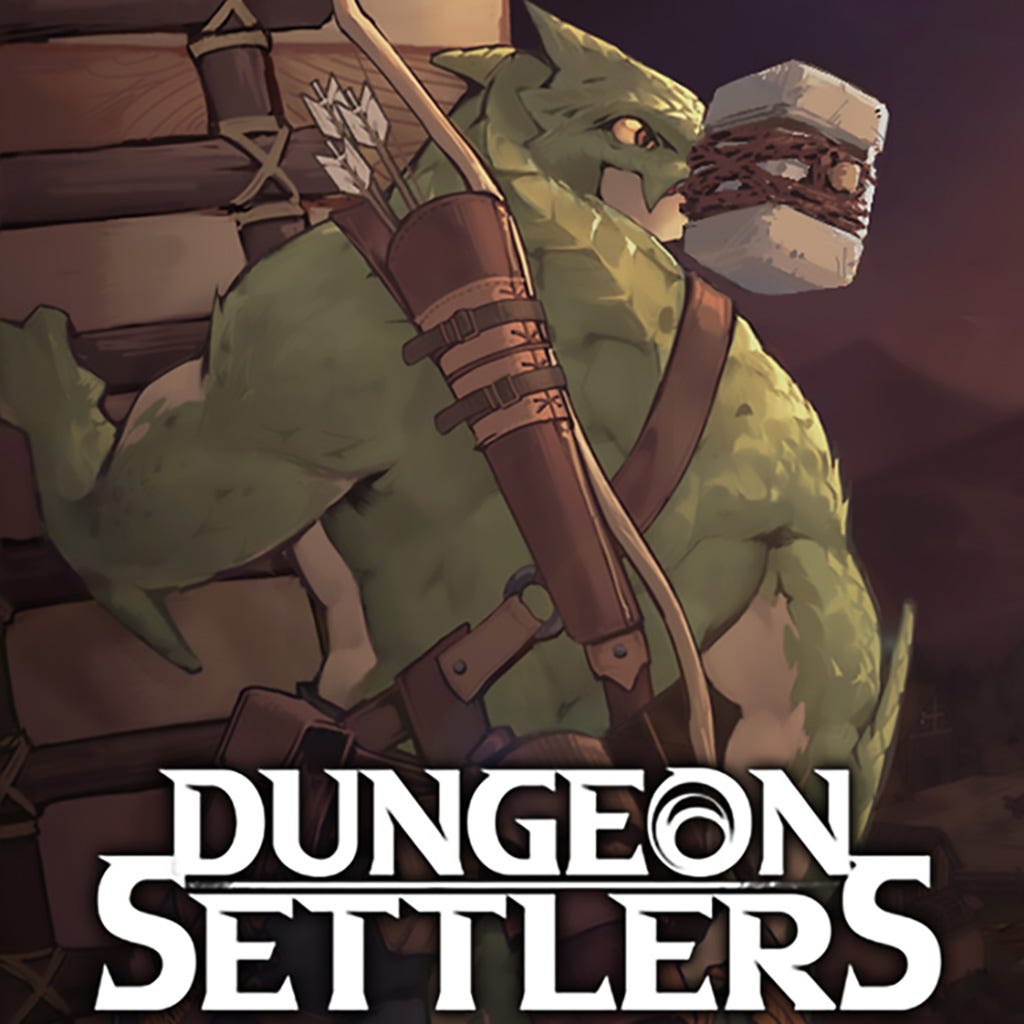
A curious Lizardman with a drifter’s past might develop very differently from another character who happens to share the same race. These details give the population a little personality and make recruitment feel more meaningful. You are looking for potential, then deciding how that potential can best be used.
Eventually, the challenge becomes assembling a four-person expedition team whose abilities complement one another. Sword, mace, bow and fire magic are just some of the possibilities, and the real fun comes from working out how different skill trees and equipment choices can work together. A powerful character on their own is useful, but a carefully constructed team can be considerably more effective than four individually strong fighters.
That is particularly important because of the game’s permanent death system. Losing somebody you have carefully trained is not an inconvenience that can be fixed by loading an autosave. They are gone, and that makes every expedition feel genuinely dangerous. It also makes success feel much more rewarding because victory is the result of preparation rather than simply throwing your strongest characters at whatever happens to be in front of you.
Thinking Before You Swing
Combat unfolds in real time, but you can pause whenever you need to assess the situation. This is one of the game’s smartest decisions, giving battles a tactical edge without turning them into conventional turn-based encounters.
Enemies have traits and attack patterns that demand study, while your party has a range of effects and abilities that can be combined to swing fights in your favour. Stuns can interrupt threats, bleeding can punish enemies over time, burning adds another layer of pressure, and provoking can influence how opponents behave. There are also vulnerable states, charge attacks, and summons to consider, giving encounters considerably more depth than simply clicking on whichever monster has the lowest health.
Positioning is equally important. A badly positioned character can quickly become a liability, while a well-timed ability can turn an apparently hopeless battle around. The pause system gives you the breathing room to make those decisions, but it does not remove the pressure entirely. You still have to understand what is happening and react accordingly.
The result is combat that rewards knowledge rather than frantic button-pressing. When everything goes right, there is a wonderful feeling of dismantling an encounter piece by piece. When everything goes wrong, you will probably know exactly which decision caused it, which is both frustrating and strangely satisfying.
Into The Dungeon
The dungeon itself provides another reason to keep coming back. Floors and rooms are randomly generated, so you cannot simply memorise a route and repeat it forever. Environmental effects vary between regions, while deeper areas offer increasingly valuable resources alongside increasingly unpleasant threats.
The risk-and-reward structure works particularly well here. You might discover wood, herbs, gemstones or mysterious mandrake, but every resource comes with the unspoken question of whether it is worth putting your party in danger to collect it. Dungeon merchants offer opportunities to trade, while stranger encounters can leave you wondering whether curiosity is really worth the price.
The creatures themselves fit the dark fantasy setting nicely. Magical experiments have left behind towering golems and acid-spitting monsters, while more unusual encounters promise something different from the usual collection of fantasy beasts. One particularly memorable example is the ancient tree demanding blood in exchange for forbidden fruit, which gives the dungeon a suitably twisted personality.
The deeper you go, the more tempting the rewards become. Unfortunately, that is also where the consequences of overconfidence become increasingly severe.
A Dark And Purposeful World
Visually, Dungeon Settlers adopts a dark fantasy aesthetic that prioritises clarity over visual extravagance. The isometric presentation works well for both settlement management and dungeon exploration, making spaces easy to read without cluttering the screen. Rooms are distinct, equipment is easy to identify, and combat effects remain visible even when battles become busy.
There is a pleasing sense of weight to the world, too. The settlement feels cold and isolated, while the dungeon has a more hostile atmosphere. It is not trying to be the most technically spectacular fantasy game around, but it does not need to be. The visual design supports the strategy rather than distracting from it.
The sound design follows a similar philosophy. Forge equipment clinks as you work, environmental sounds help sell the loneliness of the frontier, and combat carries appropriate weight through weapon impacts and tense music. These touches may not be the first thing you notice, but they contribute considerably to the atmosphere once you settle into the game’s rhythm.
A Game That Wants You To Think
Perhaps the greatest compliment to Dungeon Settlers is that its different systems genuinely need one another. The settlement is not merely a side activity, and the dungeon is not simply a separate combat mode. Your settlement exists to support your expeditions, while your expeditions bring back the resources that allow the settlement to grow.
That relationship creates a satisfying loop. Build, recruit, research, equip, explore, survive, and return with whatever you managed to bring home. Then do it again, only this time with a little more knowledge and, hopefully, a little better preparation.
It is not always an easy loop to master. The learning curve can feel steep, particularly for players accustomed to strategy games that allow more room for error. Permanent death will also be a sticking point for anyone who prefers to experiment without serious consequences. Here, experimentation can be expensive, and sometimes the best lesson is simply discovering what not to do next time.
Yet that is also where Dungeon Settlers finds its identity. It does not apologise for demanding your attention. It expects you to consider your choices, understand your characters, and respect the dangers lurking below the surface.
The Verdict
Dungeon Settlers is an ambitious blend of colony management and tactical dungeon crawling that works surprisingly well because neither side feels bolted on to the other. Building the settlement gives meaning to resource gathering, crafting and research, while the dungeon provides a constant reason to improve everything you have created.
The permanent death system is brutal, but it gives the entire experience genuine stakes. When a beloved character falls, it hurts because you have invested time in them, and when a carefully prepared party returns from a dangerous expedition alive, there is a real sense of achievement. The real-time combat with pause also strikes a good balance between immediacy and thoughtful strategy, giving you enough breathing room to make decisions without removing the pressure.
There are certainly players who will bounce off its unforgiving nature. This is not a relaxing colony builder with a dungeon attached, nor is it a conventional dungeon crawler with some buildings on the side. It asks you to embrace both halves, and it can be demanding when the two collide.
For players willing to meet it on those terms, however, there is plenty to admire. Dungeon Settlers understands that the most satisfying victories are often the ones that looked impossible a few minutes earlier. It is harsh, methodical and occasionally cruel, but beneath all that punishment is a genuinely rewarding strategy game with a strong sense of purpose.