Deck-building games live and die by balance. Too much randomness and strategy collapses; too much rigidity and experimentation disappears. HEART of CROWN, originally a physical card game and later adapted into a digital format, walks this tightrope with surprising confidence. It blends competitive deck construction, character-driven asymmetry, and long-term planning into a system that rewards foresight just as much as tactical flexibility.
At first glance, HEART of CROWN may look like a lightweight anime-styled card game, but beneath its charming artwork lies a carefully constructed strategy experience that demands patience, adaptation, and a strong understanding of tempo. While it doesn’t reinvent the deck-building genre, it refines familiar ideas into a cohesive and compelling whole.
A Kingdom Built on Cards
The premise of HEART of CROWN is deceptively simple. Players take on the role of ministers attempting to guide a princess to the throne by building influence through cards. Rather than directly attacking opponents, the game focuses on economic growth, engine-building, and timing — a refreshing alternative to more aggressive deck-builders.
Victory is achieved by promoting a chosen princess and accumulating sufficient victory points before opponents can do the same. This creates a layered strategic structure: players must build an efficient deck, manage resources carefully, and decide when to pivot from growth to endgame scoring. Every decision feeds into this broader arc, and mistiming a key promotion can undo an otherwise strong run.
The thematic framing works well. While the setting is light and whimsical, it provides enough narrative flavour to give purpose to the mechanics without becoming intrusive or overly complex.
Gameplay Mechanics: Elegant but Demanding
At its core, HEART of CROWN is about engine-building. Players begin with modest decks and gradually acquire stronger cards that improve income, efficiency, and flexibility. Each turn feels meaningful, as even small optimisations can snowball into major advantages over time.
What distinguishes HEART of CROWN from many other deck-builders is its pacing. The early game encourages cautious growth, while the mid-game becomes a tense balancing act between expanding your deck and avoiding bloat. Cards that are powerful early can become liabilities later, forcing players to think carefully about long-term deck composition.
The princess system adds a compelling layer of asymmetry. Each princess has unique abilities and scoring conditions, pushing players toward different strategies. Choosing when to commit to a princess is one of the game’s most important decisions, and it often defines the entire flow of a match.
This system ensures that no two games play out quite the same. Even with the same card pool, the interaction between princess abilities and player choices creates a wide range of strategic possibilities.
Interaction Without Aggression
Unlike many competitive card games, HEART of CROWN features limited direct conflict. Players rarely interfere with each other outright. Instead, interaction happens indirectly through competition for shared card markets and racing toward endgame conditions.
This design choice gives the game a calmer, more contemplative tone. Matches feel like intellectual duels rather than battles of attrition. For players who enjoy reading opponents’ intentions and adjusting plans accordingly, this approach is deeply satisfying.
However, this lack of direct confrontation may feel underwhelming to players who prefer aggressive counterplay or disruptive mechanics. HEART of CROWN asks you to win through efficiency and timing rather than denial or destruction.
Digital Adaptation and Interface
As a digital adaptation, HEART of CROWN performs competently, though not without limitations. The interface is clean and readable, with card effects clearly displayed and turn structure easy to follow. Animations are functional rather than flashy, keeping focus on the strategic elements.
That said, the presentation can feel slightly static. While the artwork is charming and expressive, the overall visual experience lacks dynamism. Menus and transitions are straightforward, but they don’t add much personality beyond what the card art provides.
Controls are intuitive, and the game runs smoothly, making it easy to focus on decision-making rather than wrestling with the interface. For a strategy-heavy card game, this clarity is essential — and largely achieved.
Learning Curve and Accessibility
HEART of CROWN is relatively approachable for newcomers to deck-building games, but it doesn’t shy away from complexity. The basic rules are easy to grasp, yet mastery requires an understanding of probability, tempo, and synergy.
The game does a reasonable job of introducing mechanics gradually, though it assumes a willingness to learn through experimentation. New players may struggle early on, particularly when it comes to recognising when to stop expanding their deck and shift toward scoring.
More experienced players will appreciate the depth on offer. There is a strong sense that improvement comes from understanding why you lost rather than feeling cheated by randomness. Losses feel instructional rather than punitive.
Replayability and Strategic Depth
Replayability is one of HEART of CROWN’s strongest assets. Variable card sets, multiple princesses, and differing player counts ensure that no single strategy dominates permanently. Each game becomes a puzzle shaped by available options and opponent behaviour.
The game shines in repeated play, where subtle differences in early decisions can lead to dramatically different outcomes. It rewards players who are willing to reflect, adapt, and refine their approach over time.
However, the pace of matches can be an issue. Games tend to run longer than expected, especially with players who enjoy careful planning. While this suits the game’s strategic nature, it may limit its appeal for shorter play sessions.
Presentation and Atmosphere
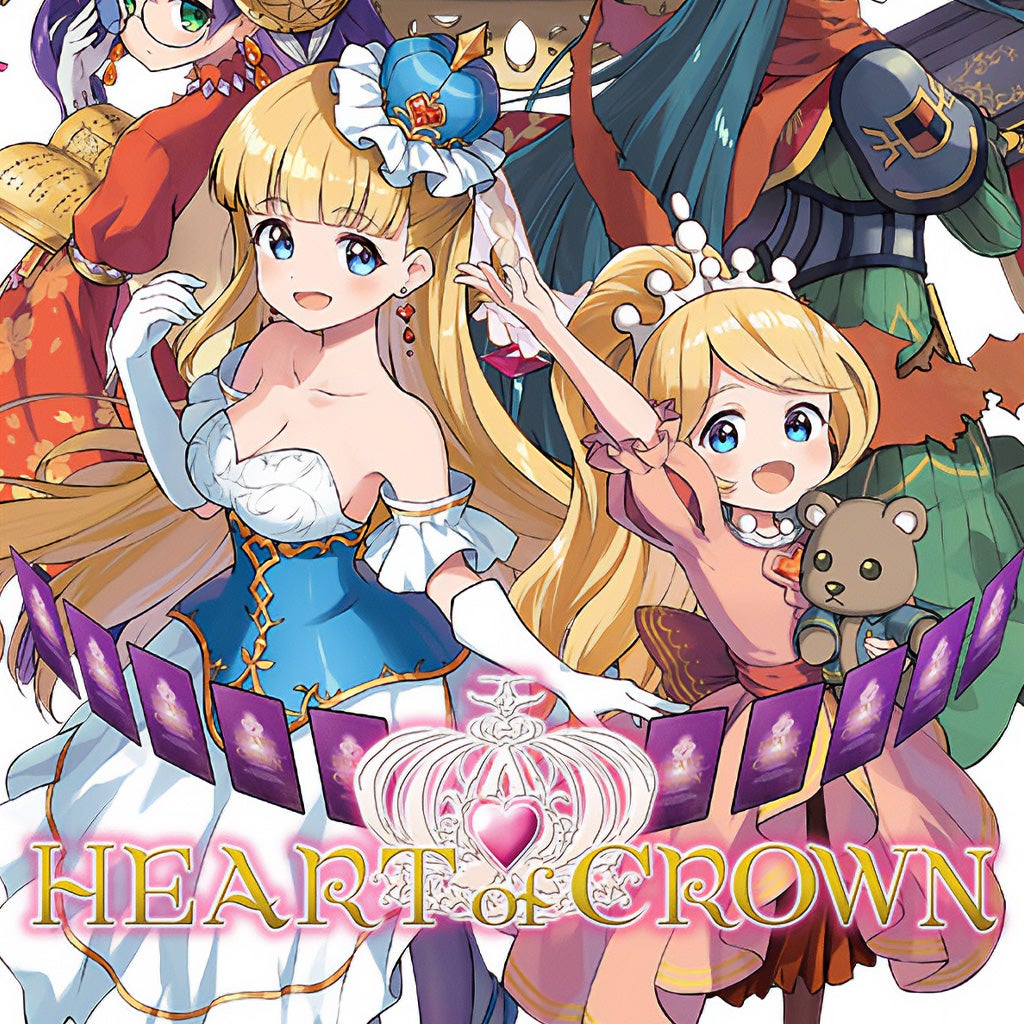
Artistically, HEART of CROWN leans into a soft, anime-inspired aesthetic. Character illustrations are expressive and polished, lending personality to each princess and card. While this style may not appeal to everyone, it complements the game’s lighthearted theme.
Sound design is understated. Music provides a gentle backdrop without drawing attention away from gameplay, and sound effects are subtle but effective. The audio presentation reinforces the calm, thoughtful tone rather than injecting unnecessary drama.
Who Is HEART of CROWN For?
HEART of CROWN is best suited for players who enjoy strategic planning, engine-building, and indirect competition. Fans of thoughtful deck-builders that reward long-term thinking will find a lot to love here.
Players looking for fast-paced action, heavy interaction, or flashy presentation may find the experience too restrained. HEART of CROWN is a slow burn — deliberate, measured, and deeply strategic.
Final Verdict
HEART of CROWN is a refined and rewarding deck-building experience that prioritises strategy, balance, and meaningful decision-making. Its princess system introduces elegant asymmetry, while its focus on economic growth and timing sets it apart from more aggressive competitors in the genre.
While the digital adaptation could benefit from more dynamic presentation and slightly tighter pacing, the core gameplay remains strong enough to carry the experience. For players willing to engage with its systems and think several turns ahead, HEART of CROWN offers a deeply satisfying strategic challenge.