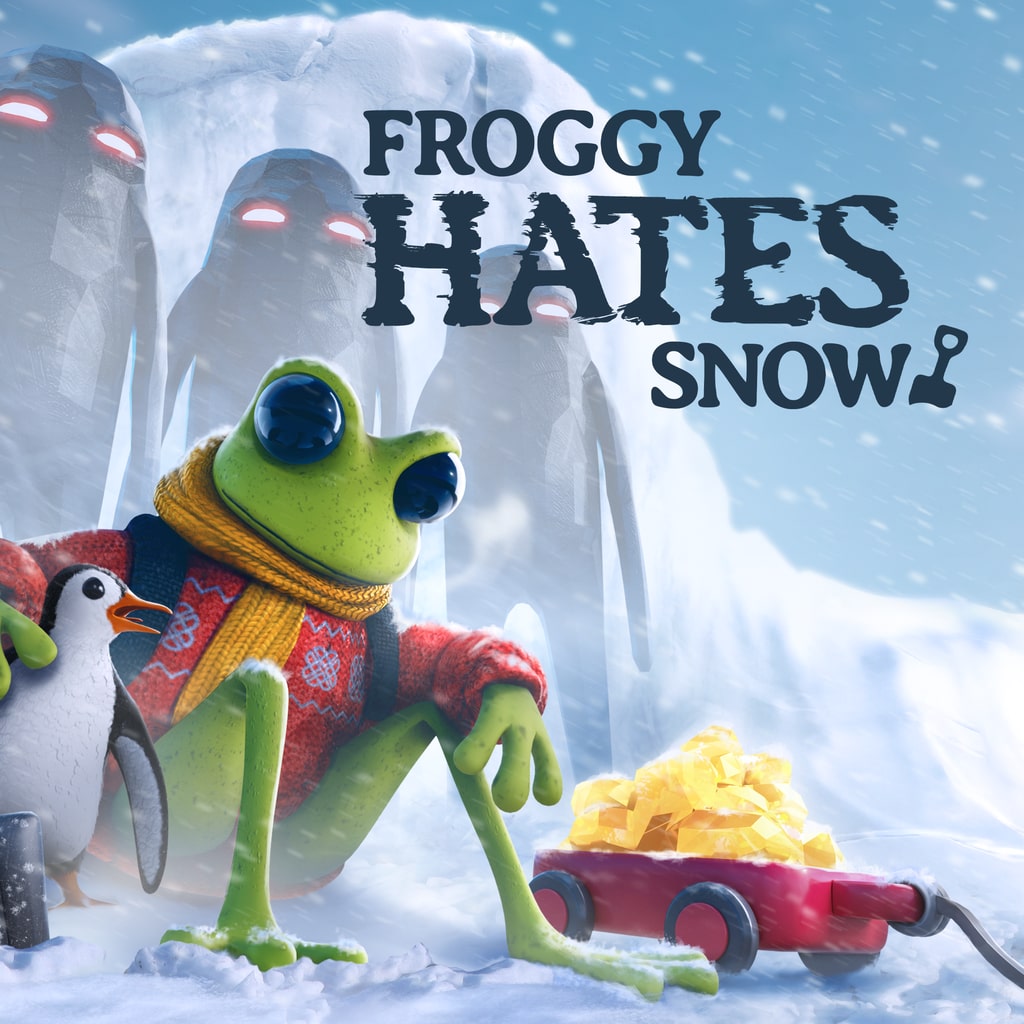
There is something immediately disarming about Froggy Hates Snow. Before you even grasp its systems or survival mechanics, you are greeted by a frog. Not a hardened warrior or mythic hero, just a small, determined creature bundled against the cold, staring out at an endless white expanse as if it had personally offended him.
That contrast is the hook. On the surface, it looks like a cosy survival game wrapped in cute animation. In practice, it is far more demanding, sometimes brutal, and consistently clever in how it turns the environment into both weapon and threat.
Developed by Crying Brick, this solo-crafted roguelite leans heavily into experimentation. It takes the familiar “one more run” survival structure and buries it under layers of snow, danger, and surprisingly deep environmental interaction. Somehow, it works.
Digging as Discovery
At the heart of Froggy Hates Snow is its core mechanic: digging. You are not simply moving through a map. You are shaping it. Every run begins at a small, safe home base, but everything beyond is hidden beneath thick, interactive snow. You carve paths forward, uncovering resources, traps, creatures, and secrets buried beneath the surface.
The act of digging feels tactile in a way few roguelites attempt. Snow collapses realistically. Paths can be widened or collapsed. You can tunnel cautiously or carve aggressively, and each choice carries consequences. It is surprisingly strategic.
Early on, you move carefully, unsure of what lies ahead. Later, with better tools, you begin to reshape entire sections of the map, turning terrain into shortcuts, escape routes, or ambush points. It is not just exploration. It is environmental planning under pressure. And that pressure never fully lifts.
Cold That Actually Matters
Survival mechanics often fade into the background in games like this, but Froggy Hates Snow makes the cold a constant presence. You are always managing warmth. Step too far from safety, and the environment begins to erode your survival meter. At first, it feels restrictive, but as upgrades unlock, it becomes a tool for risk management rather than a punishment.
Do you push deeper into the frozen desert for rare loot, knowing you are minutes away from freezing? Or do you retreat early, preserving your progress but missing potential rewards? That push and pull defines every run.
Eventually, upgrades allow you to extend your limits. Thermal resistance, faster movement, and improved digging efficiency gradually shift the balance. But even then, the cold never becomes irrelevant. It simply evolves from an immediate threat to long-term pressure. It keeps every decision meaningful.
The Things Beneath the Snow
The world of Froggy Hates Snow is not empty. Far from it. Eerie obsidian-black creatures move through the drifts with unsettling intelligence. Some hunt directly. Others patrol in silence, waiting for sound or movement. Each enemy type forces you to adapt, and because the terrain is destructible, encounters rarely play out the same way twice.
You can hide in snowbanks, collapse tunnels to block pursuit, or carve escape routes mid-combat. Alternatively, you can weaponise destruction, using flamethrowers or explosives to reshape the battlefield in your favour. Combat is not about standing your ground. It is about manipulating space under pressure.
Then there are anomaly zones, optional high-risk areas filled with stronger enemies and better rewards. These sections are where the game pushes hardest. Entering them often feels like stepping into a different rule set, where survival depends on improvisation rather than preparation. They are also where Froggy Hates Snow feels most alive.
Progress, Tools, and Tiny Companions
Between runs, you invest gathered resources in upgrades. These are not just stat increases. They meaningfully change how you interact with the world.
A faster digging speed transforms exploration. Increased thermal resistance completely changes your route planning. New tools, such as skis, open up mobility options that make traversal feel almost fluid compared with the early game’s deliberate pacing.
Then there are the companions. Penguins, moles, and owls accompany you on runs, each offering small but impactful abilities. One might highlight hidden resources. Another helps you navigate buried structures. They are not game-breaking additions, but they add personality and utility in equal measure.
They also reinforce the game’s strange tone. This is a harsh survival experience, yet it is populated by absurdly charming allies. That contradiction gives it character.
The Comfort Mode Surprise
One of the most interesting inclusions is Peaceful Mode. It removes enemies entirely, turning the game into a pure exploration and digging experience.
What could have felt like an afterthought instead becomes a genuinely thoughtful alternative. Without pressure, the snow becomes almost meditative. You focus on shaping terrain, uncovering secrets, and experimenting with movement systems, unafraid of sudden danger.
It reveals something important about the game’s design. Beneath all the tension and survival systems, a genuinely satisfying sandbox lies in plain sight. Not every player will use it, but its presence shows confidence in the core mechanics.
Rough Ice Under the Surface
For all its creativity, Froggy Hates Snow is not without flaws. The early hours can feel slow until your toolkit expands. Movement, while deliberate and purposeful, occasionally lacks responsiveness in tight tunnels. Combat readability suffers when multiple effects overlap within dense snow formations.
There is also a slight imbalance in progression pacing. Some upgrades feel transformative, while others feel underwhelming in comparison, leading to uneven spikes in player power. These issues do not break the experience, but they surface occasionally, especially during longer play sessions.
A Survival Game With Personality
What ultimately carries Froggy Hates Snow is its identity. It knows exactly what it aims to be and commits fully to that vision.
It is not trying to be a realistic survival simulation. It is not blindly chasing genre trends. Instead, it builds a focused loop around digging, survival pressure, and environmental manipulation, then wraps it in an absurd yet charming aesthetic.
That frog matters more than it should. Not for its story significance, but because it anchors the tone. Without it, the game might feel bleak. With it, the harshness becomes oddly endearing.
Final Verdict
Froggy Hates Snow is one of the more inventive roguelites in recent memory. Its digging mechanics turn terrain into a strategic element. Its cold survival system keeps the tension high. Its enemies and anomaly zones ensure every run feels unpredictable.
It is not flawless. Early pacing is uneven, and some systems could use refinement. But its core loop is strong enough to carry those imperfections. Most importantly, it feels different. In a crowded genre full of similar ideas, Froggy Hates Snow carves out its own identity, quite literally, one tunnel at a time.