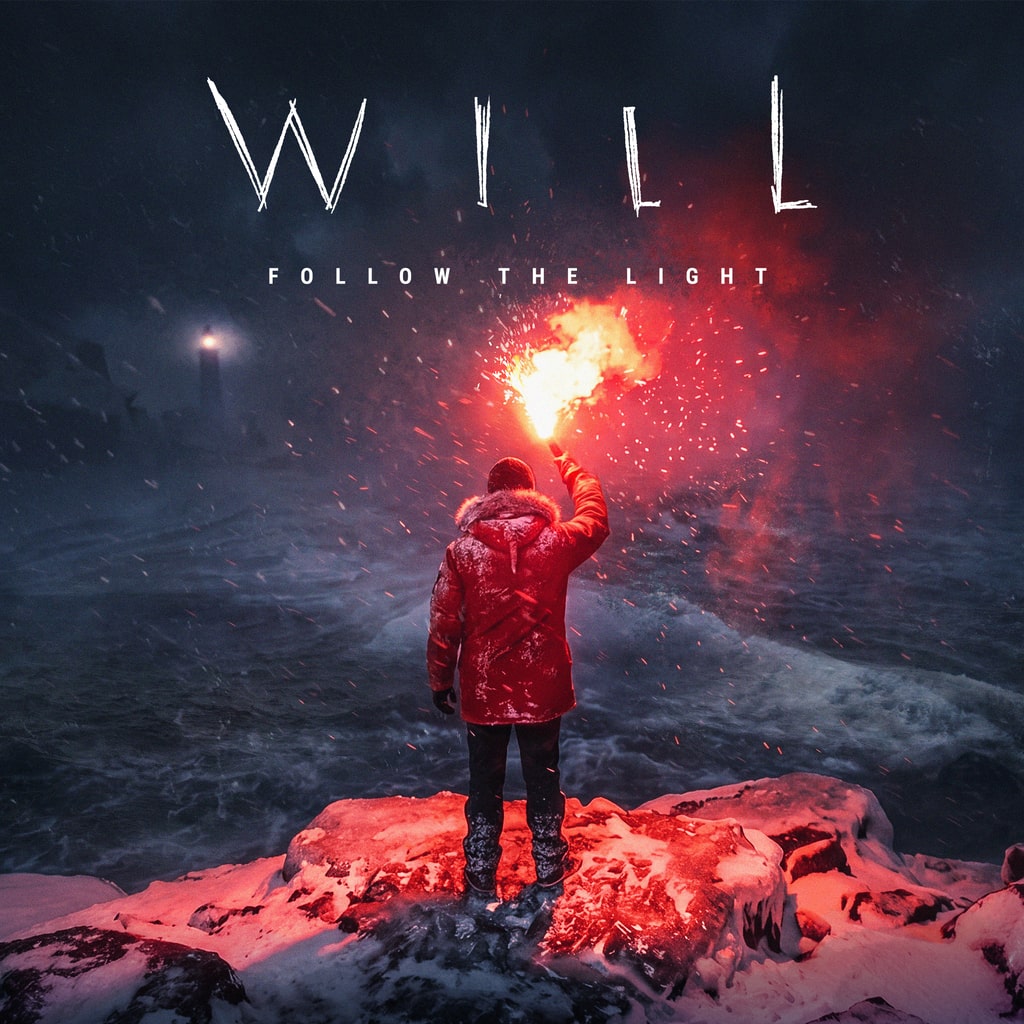
There is a particular kind of loneliness that only exists near the sea. Not the peaceful solitude romanticised in postcards and travel brochures, but a heavier kind. The sort that settles in the bones when the wind never stops howling and the horizon stretches endlessly into grey nothingness. WILL: Follow The Light understands that feeling intimately.
TomorrowHead Studio’s debut title is not a loud adventure. It does not rush to overwhelm players with spectacle or constant action. Instead, it drifts slowly through grief, memory, and fractured family ties, using the harsh northern wilderness as both backdrop and emotional mirror.
You play as Will, a lighthouse keeper stationed alone on a remote island, cut off from the world except for the occasional crackle of radio static. His isolated routine shatters when news arrives that a disaster has struck his hometown and his son is missing. With little more than determination and his ageing sailing yacht, Molly, Will sets out into the freezing northern waters to find him.
What follows is less a traditional adventure and more an introspective journey through loss, regret, and emotional distance. Some games tell stories through exposition. WILL prefers silence. For long stretches, that silence is extraordinary.
The Sea as Companion
The strongest aspect of WILL: Follow The Light is its atmosphere. Few games capture environmental loneliness this effectively. Sailing across icy waters aboard Molly becomes strangely hypnotic. You manually adjust sails, navigate shifting weather, and carefully manage the boat against unforgiving currents. These mechanics are deliberately tactile. You pull ropes, position sails, and react to the changing sea in ways that feel grounded rather than gamified. This creates a wonderful sense of physical presence.
There are moments when nothing dramatic happens for several minutes. No enemies appear. No sudden plot twists emerge. It is simply you, the sound of creaking wood, and endless water disappearing into fog. Yet those stretches become some of the game’s most memorable scenes because they allow the emotional weight of Will’s journey to settle naturally.
The northern environments themselves are stunning. Unreal Engine 5 does heavy lifting here, but TomorrowHead Studio clearly understands how to use the technology effectively rather than simply showing it off. Snowstorms swallow visibility in seconds. Moonlight glimmers across frozen coastlines. Lighthouse beams cut through darkness with haunting beauty. The world feels cold in a way few games manage to replicate.
A Story About Fathers
At its heart, WILL is about fractured relationships between fathers and sons. The search for Will’s missing child gradually becomes entangled with unresolved memories of his own father, creating a layered narrative about emotional inheritance and generational distance.
The game rarely spells things out directly. Much of the storytelling unfolds through quiet narration, abandoned locations, environmental details, and fragmented conversations. It trusts players to sit with uncertainty rather than constantly explaining itself. That restraint works in the game’s favour.
Will himself is not presented as a heroic archetype. He feels exhausted long before the journey begins. His search is driven as much by guilt as by love, and the further he travels, the more the game questions whether he is truly trying to save his son or searching for some form of personal redemption. There is real emotional ambition here.
The writing occasionally drifts into familiar introspective territory, but the sincerity behind it carries the experience through its weaker moments. When the story lands, it lands hard.
Traversal That Feels Physical
Beyond sailing, WILL introduces several traversal systems throughout the journey, including dog-sledding and on-foot exploration across ruined settlements and frozen mountain paths. The dog-sledding sequences are fantastic.
Controlling the sled through blizzards and icy terrain has an immediacy that feels thrilling without becoming overly arcade-like. The dogs strain through the snow as visibility collapses around you, creating moments of genuine tension and immersion. These sections inject momentum into a game otherwise defined by a slower pace.
Exploration also benefits from the environmental design. Abandoned islands and collapsed towns feel convincingly lived-in before disaster struck. You often learn more from the placement of objects and the condition of ruined spaces than from dialogue itself. The world tells its own story constantly.
The Puzzle Problem
Unfortunately, the game’s weakest element is also its most frequent: the puzzles. While some environmental challenges integrate cleverly with the setting, too many tasks fall into repetitive adventure-game routines. Fixing machinery, reconnecting electrical systems, locating scattered objects, or completing mundane maintenance jobs often slow the pacing considerably. These moments are rarely difficult. They are simply uninspired.
The problem is not that the puzzles exist. Slower narrative adventures need interaction to maintain engagement. The issue is that many of these sequences feel disconnected from the surrounding emotional intensity. You might emerge from a powerful narrative revelation only to spend the next fifteen minutes searching drawers for tools or aligning switches. It disrupts the rhythm.
Thankfully, the atmosphere remains strong enough to soften some of this frustration, but there are stretches where the game loses momentum because it mistakes busywork for immersion.
Beauty With Rough Edges
For all its visual splendour, WILL occasionally struggles technically, undermining emotional scenes. Character models are inconsistent, and facial animations can drift into uncanny territory during close-up conversations. This becomes particularly noticeable in emotional cutscenes, where the writing aims for vulnerability but the expressions fail to fully sell the moment. It is unfortunate, as the surrounding environments are often breathtaking.
Performance remains generally stable, but some transitions between gameplay and cinematic sequences feel awkwardly stitched together. Certain animations lack polish, and occasional stiffness in movement reminds you this is a smaller independent production.
Still, there is something admirable about the game’s ambition. TomorrowHead Studio clearly aimed far beyond what many debut projects attempt, and even when pieces wobble slightly, the sincerity of the vision remains intact.
Music Beneath the Ice
The soundtrack deserves significant praise. Rather than relying on sweeping orchestral dominance, the music leans into sparse, experimental textures and subtle instrumentation. It often feels more like environmental emotion than traditional scoring.
Some tracks barely register at first, quietly blending into the wind and sea before gradually building emotional presence. Others emerge at key moments with devastating effect.
Combined with the sound design, which constantly reinforces the harshness of the environment, the audio work becomes one of the game’s greatest strengths. You hear the world before you fully process it visually.
Final Verdict
WILL: Follow The Light is imperfect yet deeply affecting. Its puzzles occasionally drag, its character animations sometimes undermine emotional scenes, and parts of its narrative lose focus near the conclusion. Yet despite those flaws, the game succeeds because it understands mood, atmosphere, and emotional vulnerability better than many far larger productions.
The sailing mechanics are immersive, the northern wilderness breathtaking, and the story’s exploration of fathers and sons carries genuine emotional weight. More importantly, the game trusts quiet moments. It allows silence, distance, and isolation to communicate what words often cannot.
There is soul here. You feel it in the freezing winds, the empty coastlines, and the long stretches of open sea where Will is left alone with memory and regret. WILL: Follow The Light may stumble along the way, but it never loses sight of the emotional horizon it is chasing.