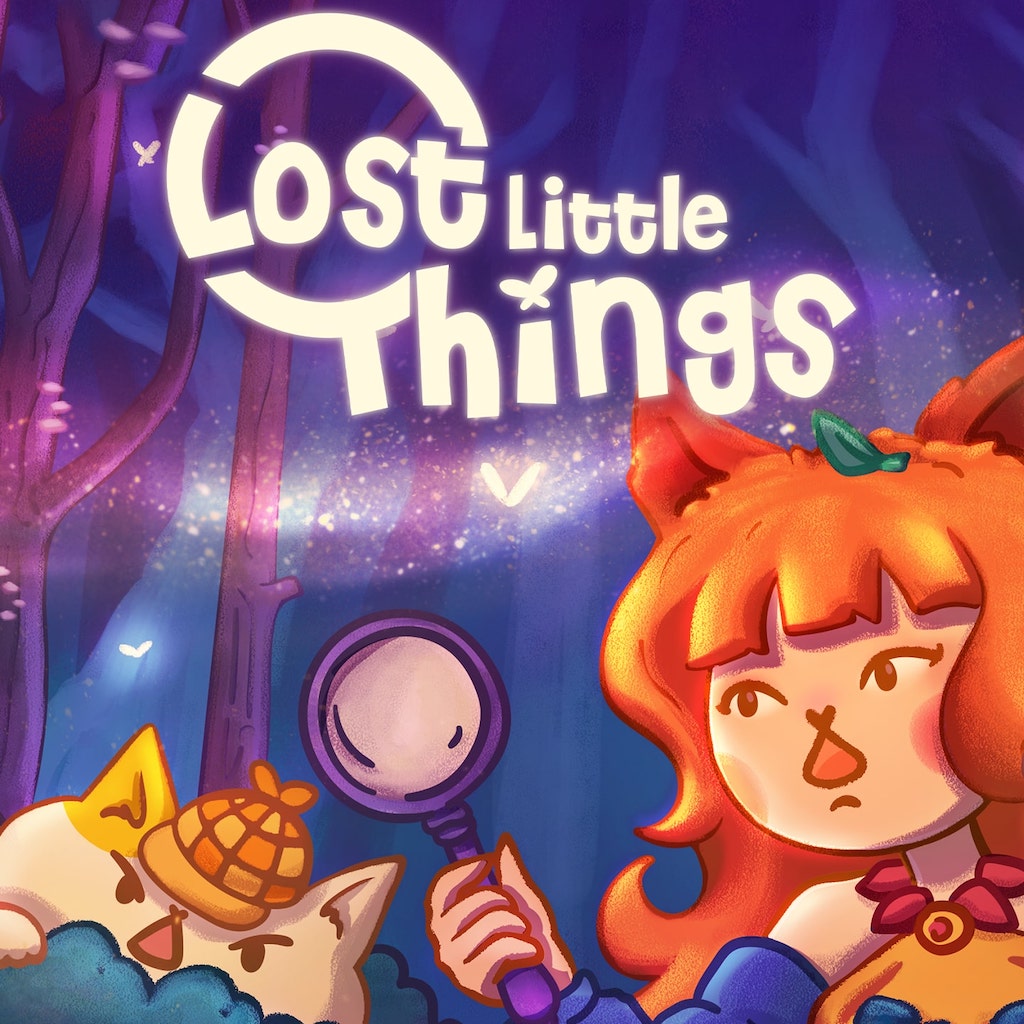
We often think of our childhood memories as intangible, yet they are often anchored in small, physical objects we leave behind—a broken toy in the attic, a faded sketch tucked in a drawer, or a trinket lost beneath a floorboard. Lost Little Things, developed by Age Zero, explores the haunting power of these forgotten relics. By forcing the player to return to a decaying family home to reclaim fragments of a fractured past, the game transforms a routine inheritance into a visceral, psychological confrontation. It is not just the house that feels haunted, but the objects themselves, each a vessel for grief and unfinished moments we were never ready to face.
From that opening idea, Lost Little Things builds its world with quiet restraint. There is no dramatic inciting incident beyond Leo’s return to his childhood home after his estranged father’s death. No clear instruction beyond the simple act of going inside and looking around. What begins as a familiar domestic space slowly becomes something far less stable, as though the act of remembering is physically rewriting the architecture around you.
A House That Remembers Too Much
The house is the entire game, yet it never feels static. Rooms subtly shift as you explore. Corridors seem slightly longer on a second pass. Familiar objects appear where you are certain they were not before. The effect is subtle at first, then increasingly difficult to ignore.
At the centre of this exploration are the “lost little things” themselves. Toys, drawings, and personal items that seem harmless until you interact with them. Each one acts as a trigger, pulling you into fragmented distortions of reality that feel like misfiring memories. The game never fully explains whether these are supernatural events or psychological responses. That uncertainty becomes part of the tension.
The Memory Light and the Cost of Seeing
The Memory Light is your primary tool for navigating the house’s deeper layers. A hand-cranked lantern that reveals hidden objects and pathways, it is both a guide and a liability. Light lets you see what is truly there, but using it makes noise that draws the Remnants, shadow-like entities that linger at the edge of perception.
This creates a constant, low-level decision-making process. Do you risk visibility for clarity, or move forward in partial darkness to avoid attention? Neither option feels entirely safe. That tension quietly defines the entire experience. The mechanical simplicity of the lantern is deceptive. It becomes less a tool and more a negotiation with your own curiosity.
Horror Built From Familiar Spaces
Lost Little Things does not rely on traditional horror pacing. There are no overt jump scares or sudden tonal shifts. Instead, it leans into environmental discomfort. The house is always slightly wrong in ways that are hard to articulate in the moment but impossible to ignore over time.
Sound design carries much of the weight here. Floorboards creak with deliberate placement. Distant whispers seem to come from rooms you have not yet entered. The audio mix is spatially precise, making silence feel unsafe rather than calming.
Visually, the game is understated yet effective. Nothing is overly stylised or exaggerated. Instead, it relies on decay and subtle distortion. Wallpaper peels where memory feels incomplete. Furniture sits at angles that suggest use but no longer functions. The realism makes the shifts into surrealism more unsettling when they arrive.
Movement Through Memory
One of the more divisive aspects of Lost Little Things is its pacing. Leo moves slowly, deliberately, and without urgency. This creates a grounded atmosphere, but in later sections it can make traversal and backtracking feel drawn out.
However, this slowness is clearly intentional. It forces you to inhabit each space rather than pass through it. You are not rushing towards answers. You are lingering in questions you are not fully prepared to resolve.
Still, there are moments when repetition slightly dulls the momentum. Certain routes are revisited with minimal variation, which can soften the impact of otherwise strong atmospheric design.
A Story Told in Fragments
Narratively, Lost Little Things resists straightforward explanation. Leo’s relationship with his father, the house’s history, and the significance of the objects you uncover are all conveyed through fragments rather than exposition.
This approach aligns with the game’s core theme. Memory here is not a clean archive. It is scattered, incomplete, and sometimes contradictory. You assemble meaning from what is left behind, not from what is explicitly stated.
For some players, this ambiguity will feel appropriate and emotionally resonant. For others, it may feel as though the narrative never fully commits to its own implications.
Where It Falters, and Where It Lingers
Lost Little Things is not without friction. Its deliberate pacing and repeated traversal can occasionally undermine its strongest emotional beats. A few puzzle sequences rely more on observation than insight, leading to moments of hesitation that feel more procedural than meaningful.
Yet even in its weaker moments, the atmosphere rarely breaks. The sense of unease remains consistent, supported by sound design and environmental detail that continue to work even when gameplay momentum slows.
Final Verdict
Lost Little Things is a restrained, atmospheric psychological horror game that builds its impact through accumulation rather than shock. It is not interested in spectacle or escalation. Instead, it focuses on the emotional residue left in familiar places and how easily those places can shift when viewed through the lens of memory and loss.
Its pacing and ambiguity will not suit everyone, but its commitment to tone and theme gives it a distinct identity within the genre. This is a game about what remains when everything else is gone, and how even the smallest objects can carry the weight of entire lives.