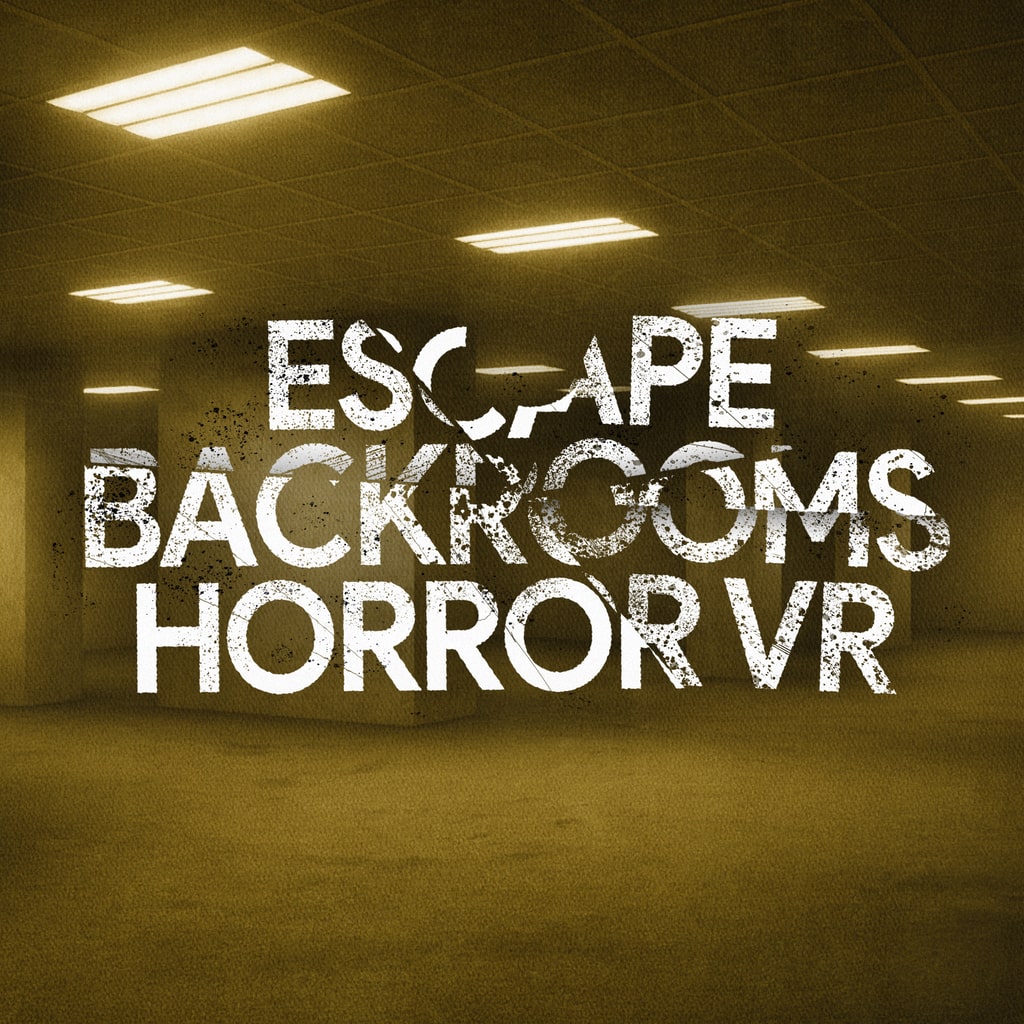
The “Backrooms” creepypasta concept — endless, eerily familiar mazes of buzzing fluorescent lights, stained carpets, and impossible geometry — has become one of horror’s dominant modern myths. Escape – Backrooms Horror VR takes that unnerving premise and drops players directly into it in virtual reality, where claustrophobia, uncertainty, and tension are amplified by immersion. The idea is simple: wake up in the Backrooms with no memory of how you arrived, and use your wits to navigate toward escape while battling psychological tension and lurking threats in the dark.
If horror in virtual reality is meant to feel personal and intense, then on its surface this game ticks those boxes. But as is often the case with ambitious VR projects, execution is what ultimately defines the experience.
Setting the Stage: A Nightmare Made Real
Escape – Backrooms Horror VR doesn’t waste time with exposition. The moment you open your eyes in a dimly lit, narrow corridor, the tone is set: this is a place where nothing feels quite right. Flickering lights, unsettling acoustics, and a labyrinthine layout give an immediate sense of alienation and dread. The Backrooms aren’t just scary because of what hides in the shadows — they are scary because they distort the familiar into something oppressive and inescapable. That psychological friction is the game’s strongest asset.
The VR format heightens this effect. Unlike playing on a flat screen, where the distance between player and game remains conceptual, VR puts you inside those unnerving hallways. Every distant sound, every unfamiliar corner, feels closer — and often more dangerous — than it ever could on a traditional screen.
Gameplay: Exploration Meets Puzzle Survival
The core loop of Escape – Backrooms Horror VR blends exploration with puzzle-solving. Players traverse a maze of connected rooms and hallways, decoding cryptic hints and collecting tools like keycards, fuses, and switches that unlock new paths or reveal hidden secrets. Puzzle mechanics are woven into the environment rather than presented as separate mini-games, so every unlocked door feels earned and every clue potentially crucial.
Traversal isn’t just about walking forward — you’ll climb obstacles, break through weakened walls, and even use zip lines to access new sections of the maze. These movement mechanics add tactile variety to an otherwise uniform setting and help break up the mental fatigue that can come from hours spent in repetitive atmospheres.
The interactive inventory — a six-slot system that hangs on your back in VR space — is both a visual flourish and a practical tool. Every item you carry feels weighty and important, reinforcing the precariousness of your situation. When your inventory fills and you must decide what to keep or discard, the game forces you to weigh immediate needs against future uncertainty.
Horror Atmosphere and Dread
Where Escape – Backrooms Horror VR excels is in atmosphere. The lighting is uneven and unforgiving, with shadows creeping over every corner. Ambient audio — distant whispers, groaning pipes, and the hum of fluorescent lights — sustains a tension that never quite lets you relax. The claustrophobic corridors, together with the psychological unease of an environment that feels endless, generate a persistent dread that few horror games manage to sustain for long stretches.
Creatures and unexpected encounters lurk in the periphery, turning routine exploration into a harrowing gamble. These threats aren’t just jump scares; they create moments of panic and rapid decision-making that break away from the slower puzzle work. The result is a horror experience that drips rather than shouts — and often those slow-burn moments are the most effective.
Strengths: Immersion and Tension
One of the game’s greatest achievements is in fully utilising VR’s strengths to enhance horror. The sense of presence — being physically inside a space that feels both familiar and wrong — elevates every corridor, every flicker, and every distant noise into something genuinely unsettling.
Puzzle integration is thoughtful rather than intrusive. Players rarely feel like they’re stepping out of the horror to solve arbitrary challenges; instead, puzzles naturally emerge from the environment and often serve to deepen immersion rather than distract from it.
The interplay of movement and environment — climbing, navigating broken hallways, squeezing through tight spaces — makes the Backrooms feel like a living labyrinth rather than a static backdrop.
Weaknesses: Technical Issues and Pacing
Despite the strong atmosphere, the experience is hampered by some significant shortcomings.
For one, VR motion sickness remains a real concern. The game’s locomotion design — necessary for navigating the maze — can induce discomfort in some players, particularly during prolonged sessions or in tight corridors where movement is constant.
Technical polish is another area of concern. While not fundamentally broken, certain interactions feel clunky or unrefined, and the challenge of interacting with objects in VR can occasionally feel imprecise or frustrating. These minor hitches don’t break the experience, but they do pull you out of immersion at critical moments.
Pacing, meanwhile, is uneven. The game’s slow build of tension and puzzle progression is effective early on, but as the experience stretches on, a sense of repetition creeps in. Without dramatic shifts in environment or narrative, long sessions risk becoming mentally draining rather than terrifying — the psychological dread loses its edge if nothing new ever truly surprises you.
Target Audience and Accessibility
Escape – Backrooms Horror VR is designed primarily for players who relish creeping dread, atmospheric tension, and careful exploration over fast-paced action. Fans of psychological horror, liminal space aesthetics, and methodical puzzle survival will find plenty to enjoy here.
However, VR newcomers or players sensitive to motion sickness may find the experience challenging. The combination of direct movement and narrow, disorienting spaces isn’t ideal for everyone, and there are limited comfort options to mitigate this.
As a single-player horror experience in virtual reality, it occupies a niche segment of the market — one that values immersion and slow-burn dread above all else.
Final Verdict:
Escape – Backrooms Horror VR is an atmospheric, immersive experience that skillfully brings the unsettling Backrooms mythos into virtual reality. Its ability to sustain tension through environmental storytelling, puzzles, and claustrophobic design makes it a compelling choice for horror fans seeking psychological unease rather than jump scares alone. Technical rough patches, occasional pacing issues, and VR motion discomfort prevent it from being a truly standout title, but it remains a solid and memorable horror adventure for players willing to brave its twisting corridors.