Games that prioritise storytelling over action occupy a unique niche: they ask players to relinquish reflex-driven play in favour of immersion, interpretation, and narrative investment. EmyLiveShow – Demons and Mistress’s Tale sits squarely in this space, weaving a darkly fantastical narrative rich with mystique, occult intrigue, and dramatic character relationships.
From its premise — told through ominous title art and evocative subtext — the game promises an exploration of power, temptation, and revelation. It aims to be immersive, seductive in its tone, and emotionally charged in its storytelling. But while EmyLiveShow delivers on atmosphere and concept, the execution ultimately falters under the weight of uneven pacing, shallow mechanics, and a narrative that doesn’t always rise to its own ambitions.
For players who prioritise mood and character over gameplay complexity, this title offers compelling moments. But for those looking for deeper interactive depth or tightly woven story arcs, it may feel more like an intriguing sketch than a fully realised tale.
Premise and Narrative Style
At its core, EmyLiveShow – Demons and Mistress’s Tale is a dark narrative experience that blends supernatural elements with themes of temptation, power, and transformation. You follow Emy — a figure caught between mortal uncertainty and occult discovery — as she navigates a world of demons, covens, and shadowed intentions. Mistress figures loom large in the story’s emotional architecture: enigmatic, authoritative, morally ambivalent, and central to Emy’s evolving identity.
The narrative is presented predominantly through text, character portraits, atmospheric backgrounds, and occasional interactive sequences. Dialogue choices shift tone and reveal character layers, but rarely alter the broader arc in dramatic ways. This is a story that mostly wants to be felt rather than played.
The writing style aims for evocative and poetic, with passages that lean into introspection and uncanny imagery. At its best, the narrative creates vivid scenes of tension and curiosity — Emy’s disorientation juxtaposed with supernatural allure feels like stepping into a psychological Gothic fable. Likewise, the game’s demons aren’t cheap jump scares; they are narrative agents with intentions, philosophies, and personal histories that intertwine with Emy’s arc.
However, this narrative weaving doesn’t always cohere. Some plot developments arrive abruptly, and character motivations can feel under-explored. At times, the game reads like a series of compelling vignettes rather than a fully connected journey. This isn’t inherently negative — thematic ambiguity can be powerful — but the structure leaves some players wanting more connective tissue.
Interactive Mechanics and Player Agency
Mechanically, EmyLiveShow is minimalist by design. It’s not built around combat, resource management, or long branching systems. Instead, interactivity is driven by:
- Dialogue choices
- Exploration of environment scenes
- Decision points that influence how characters relate to Emy
These interactions influence tone and character rapport, but they rarely introduce significant mechanical complexity or transformation of the world state. Choices reshuffle dialogue, subtly shift relational tones, or reveal exposition that might otherwise remain hidden — but the overarching narrative path remains largely singular.
For some players, this may feel like a strength: the experience becomes about internalisation rather than optimization. For others, the sense of agency can feel shallow — as if choices are ornamental rather than impactful.
The pacing of interactive beats also varies. Some scenes involve extended reading and contemplation, while others offer quick decision moments. The contrast can be jarring, not because either is ill-suited to the medium, but because transitions between them feel abrupt instead of rhythmically balanced. A more calibrated pacing structure might have smoothed engagement and sustained immersion more effectively.
Atmosphere, Visuals and Sound Design
This is where EmyLiveShow – Demons and Mistress’s Tale genuinely shines.
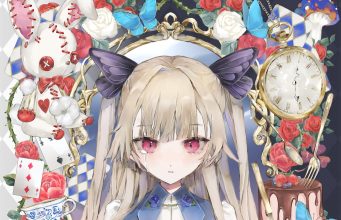
Visually, the game employs a moody, evocative aesthetic. Character art, though not hyper-detailed, conveys emotion with subtle expressions and illustrative flair. Backgrounds — from candlelit chambers to misted forests and shadowed altars — lean into Gothic sensibilities. Colours are muted when necessary and vivid in moments of occult revelation, creating a visual language that supports narrative tone rather than distracting from it.
Sound design further amplifies atmosphere. The soundtrack is measured and textural — wisps of ambient strings, haunting motifs that rise and recede like breath. Sound effects are judicious: a reflective chime as a choice is made, distant echoes that amplify solitude, whispered murmurs during key scenes. This isn’t a game about bombast; it’s about vibe.
While not every visual or audio element is a showpiece, the consistency of atmosphere is admirable. The game’s audiovisual presentation crafts a world that feels lived-in and emotionally resonant, even in scenes that rely heavily on text.
Characterisation and Themes
The heart of EmyLiveShow lies in its characters — particularly Emy and the titular “Mistress” figures. These are not cartoonish villains or simplistic allies; they are shaded, ambiguous, and reflective of the game’s broader themes of power, identity, and transformation.
Emy herself feels like a vessel for exploration: curious, vulnerable, and gradually shaped by the forces she encounters. Depending on player choice, her arc can lean toward empowerment, entanglement, or introspective self-examination. However, because the narrative path remains broadly linear, these shifts are more tonal than structural.
Supporting characters — demons, coven members, strangers in the shadows — are sketched with enough personality to stay memorable. Some serve as foils to Emy’s evolving worldview; others represent temptation, challenge, or new perspectives. Dialogue often hints at deeper lore and relationships, but without a truly branching narrative engine, these relationships remain rich in flavour rather than deep in consequence.
Themes of transformation, allegiance, and moral ambiguity thread through the experience persistently. What does it mean to descend into darkness? To embrace power at personal cost? To balance desire against consequence? These questions linger — even if the answers feel partly obscured by stylistic choices.
Pacing: Immersion vs. Momentum
One of the most noticeable aspects of EmyLiveShow is its pacing — and it’s worth underscoring that this is a feature, not a flaw, but one that will divide players.
The game’s tempo is deliberate — slow, meditative, and reflective. Extended dialogue scenes give room for introspection. Moments of decision are spaced in ways that encourage careful reading rather than reflex reactions. There’s a feeling of wandering through story as one might stroll through a misted garden: gradually, thoughtfully, with attention to the subtle.
But this pacing means that forward momentum isn’t always taut. There are stretches where narrative beats feel languid, and scenes linger longer than necessary. For players who equate engagement with forward propulsion, this pacing may feel meandering rather than atmospheric.
Still, for those who appreciate emotional unfolding and thematic depth over plot speed, the tempo reinforces the game’s identity.
Replayability and Longevity
Replayability is modest but meaningful. The branching dialogue choices and nuanced relational responses mean that a second playthrough can reveal alternative emotional landscapes, hidden scenes, and different relational tones. However, because the structure remains largely singular in overall outcome, the experience doesn’t radically transform.
For players motivated by narrative nuances and character variations, revisiting EmyLiveShow is rewarding. For others seeking structural divergence or systemic complexity, its replay appeal may feel limited.
Final Verdict
Pros:
- Deeply atmospheric and stylistically consistent
- Thoughtful sound and visual design
- Rich thematic focus on identity and transformation
- Intriguing character interactions with emotional nuance
Cons:
- Uneven pacing may feel sluggish to some
- Dialogue choices have limited structural impact
- Shallow mechanical engagement beyond narrative
Summary:
EmyLiveShow – Demons and Mistress’s Tale is a thoughtful, atmospheric narrative adventure that excels in mood, character, and tonal expression. Its strengths lie in evocative storytelling and immersive presentation, making it a compelling experience for players who prioritise ambiance and emotional resonance.
However, its limited depth of interactive systems and uneven narrative pacing mean it won’t satisfy every genre fan. This is a game that rewards reflection more than reaction — a slow burn of sentiment and mystique rather than an action-driven thrill ride.
If you enjoy narrative adventures that immerse you in tone and character before mechanics, EmyLiveShow offers an evocative journey worth taking. Just be prepared for a deliberate pace and a focus on atmosphere over adrenaline.