In a gaming landscape dominated by action blockbusters and sprawling open worlds, titles that focus on introspection, existential inquiry, and conceptual nuance feel like rare gems. Elon and the Divine Proof is one such gem — a game that doesn’t rely on spectacle but instead invites players into a deeply reflective experience rooted in narrative and puzzle design.
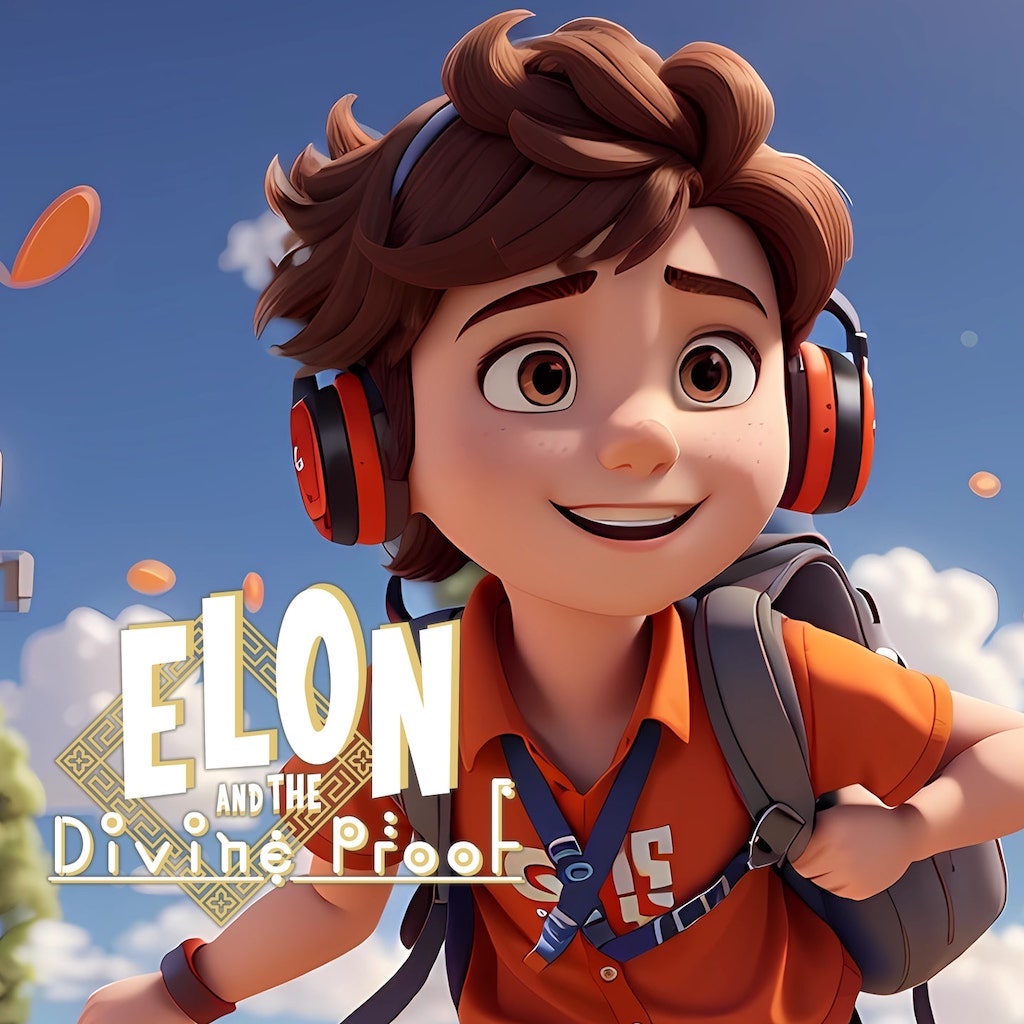
Part philosophical meditation, part narrative puzzle, Elon and the Divine Proof puts you in the shoes of Elon, a character on a journey to unravel questions that span belief, logic, and the nature of existence itself. The game is ambitious in its thematic scope, engaging players not just as controllers of an avatar but as thinkers grappling with ideas that don’t always have clear answers.
This is a game that rewards patience, attention, and a willingness to engage with abstract concepts. Its pacing and tone aren’t for everyone, but for those prepared to meet it on its own terms, Elon and the Divine Proof offers a memorable and intellectually rich experience.
Premise and Thematic Exploration
Elon and the Divine Proof begins with an intriguing premise: in a world shaped by conflicting ideologies and fracturing belief systems, Elon receives a cryptic invitation to investigate the Divine Proof — a rumored artifact or insight that could, theoretically, settle questions about divine existence once and for all.
From this narrative seed grows a story that touches on:
- Faith vs. logic
- Certainty and doubt
- Human craving for meaning
- The nature of evidence and interpretation
Rather than presenting a singular philosophical stance, the game allows players to explore different perspectives through dialogue, environmental storytelling, and puzzle interaction. Conversations with NPCs aren’t mere exposition — they’re philosophical dialogues, each reflecting varied worldviews, challenges to assumptions, or reflective questions that nudge players toward deeper thought.
This approach elevates the narrative beyond a linear mystery. Elon and the Divine Proof is more like a journey of ideas, where progression is measured not only in story beats but in evolving understanding.
Gameplay Mechanics: Puzzle Meets Reflection
Gameplay in Elon and the Divine Proof blends light adventure with puzzle mechanics that sit comfortably between narrative choice and symbolic reasoning.
At its core, the game invites players to:
- Explore environments rich in visual metaphor
- Interact with characters and objects that trigger philosophical dialogue
- Solve conceptual puzzles that tie into thematic ideas rather than just mechanical rules
Puzzles are not purely about pattern recognition or reflexes. Instead, they often require connecting ideas, interpreting symbolic representations, or rearranging conceptual elements to unlock new paths or unlock deeper narrative threads. This makes the puzzles feel like logical extensions of the game’s intellectual themes.
Rather than providing explicit instructions, the game encourages inference. You learn by engaging with the environment, absorbing dialogue, and noticing how visual cues relate to abstract concepts. For some, this design evokes a sense of discovery and accomplishment; for others, it may feel cryptic. But the payoff is in the aha moment — when everything clicks and you realise the puzzle was more than a mechanical challenge, but a metaphor rendered interactive.
Narrative Structure and Dialogue
Narrative and dialogue are where Elon and the Divine Proof really shines. Characters are thoughtfully crafted, not as flat conveyors of ideas but as individuals whose perspectives reflect lived contradiction, uncertainty, and philosophical tension.
Elon’s journey is peppered with conversations that feel more like dialogues from a café table than linear quest dialogue. NPCs — philosophers, skeptics, spiritualists, wanderers — present conflicting viewpoints that resist simplistic categorisation. These interactions are not designed to win arguments but to illuminate different ways of seeing the same problem.
Importantly, the writing avoids didacticism. It doesn’t preach one answer; it explores why answers matter. This makes the experience feel personal — as if the game is inviting you to contribute your own interpretation rather than supplying one for you.
While some players may prefer narrative driven by action or external stakes, Elon and the Divine Proof rewards players who appreciate narrative that unfolds through contemplation and conversation.
Visual and Audio Design
Visually, the game adopts a minimalist yet evocative style that supports its thematic focus. Environments are often serene, symbolic, and suggestive rather than overly detailed. This artistic choice reinforces the idea that the world is a canvas for thought rather than a literal space to be explored.
Colour palettes shift subtly to reflect emotional and narrative tones — warmer hues in scenes of discovery, cooler tones during introspective or uncertain moments. NPC character designs are expressive without being overly detailed, allowing focus to remain on dialogue and interaction.
Audio is similarly understated but effective. A gentle ambient score underpins exploration and dialogue. Sound cues emphasize transitions and puzzle resolution without dominating the experience. Music and sound work together to maintain a contemplative mood, perfect for reflective engagement rather than high-octane action.
Accessibility and Learning Curve
While the game’s conceptual focus is deep, its mechanics are accessible. Walking, interacting, and navigating the interface are intuitive. Puzzles provide gentle progression, and while they can be thought-provoking, they rarely demand sudden difficulty spikes or reflex challenges.
The biggest learning curve relates to interpretive thinking rather than mechanical mastery. Players are asked to make sense of symbolic clues, interpret dialogue nuances, and connect ideas across conceptual spaces. For some players, this can feel like intellectual play; for others, it may prove abstract in ways that are unfamiliar.
However, the game does a commendable job of balancing challenge with clarity. It does not gate progress behind impenetrable logic but offers enough contextual grounding to keep players moving forward even when puzzles get hairy.
Pacing and Engagement
Pacing in Elon and the Divine Proof is deliberate, unhurried, and reflective. Sessions are best enjoyed when players treat the game as a dialogue partner rather than a task list of objectives.
Some sections move slower than traditional adventure games, lingering on conversation or visual metaphor. This pacing is intentional, encouraging absorption and reflection rather than immediate resolution.
While this can feel slow for players accustomed to action-oriented pacing, for those who enjoy thoughtful progression, it reinforces a sense of immersion and personal involvement.
Replayability and Interpretation
Replay value isn’t rooted in divergent endings or hidden items (though those exist) but in interpretation. Players replay sections not to find new loot but to test alternative approaches to dialogue, explore different puzzle solutions, or revisit philosophical threads with fresh perspective.
Different choices subtly alter narrative tone and character responses, making each playthrough feel like a new set of questions rather than just new outcomes.
Final Verdict
Pros:
- Rich, contemplative narrative with meaningful dialogue
- Puzzle design that reinforces thematic depth
- Cohesive visual and audio atmosphere
- Encourages personal interpretation rather than prescriptive answers
Cons:
- Pacing may feel slow for players seeking rapid progression
- Requires patience and openness to abstract concepts
- Not a traditional action or story-driven adventure
Summary:
Elon and the Divine Proof is an intellectually engaging narrative adventure that thrives on reflection rather than spectacle. Its fusion of philosophy, poetry, and puzzle design delivers an experience that resonates long after play sessions end. It isn’t for everyone — especially those who prefer fast pacing or conventional storytelling — but for players who enjoy games that function as both interactive art and thoughtful inquiry, it’s a rare and compelling journey.