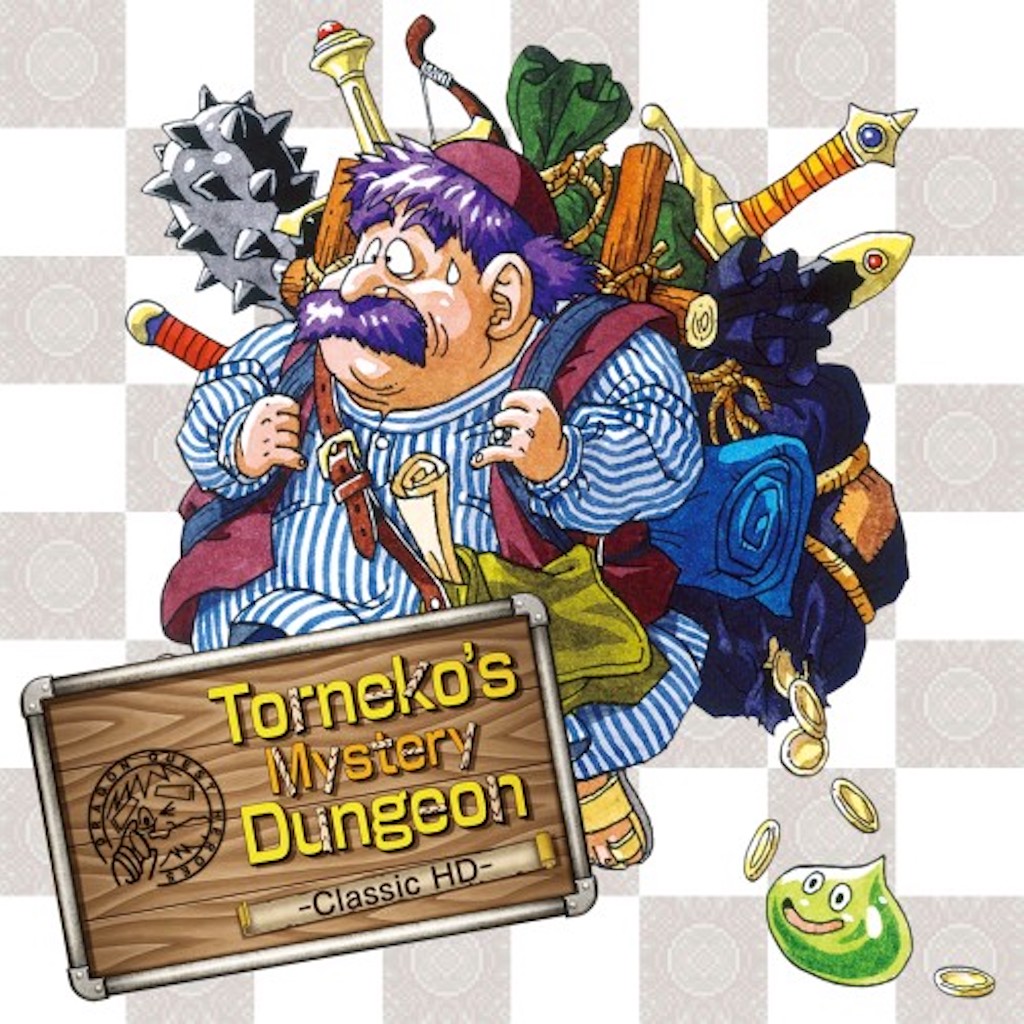
There is something wonderfully reassuring about returning to a game that knows exactly what it wants to be. Dragon Quest Heroes: Torneko’s Mystery Dungeon Classic HD does not try to reinvent the roguelike formula, nor does it bury its heritage beneath layers of modern systems and unnecessary spectacle. Instead, it reaches back to one of the most important chapters in the history of Japanese dungeon crawling and gives it a fresh coat of HD paint. The result is a charming, occasionally brutal and surprisingly addictive adventure that shows how much can be achieved with a simple idea when every part of it is carefully considered.
For anyone unfamiliar with the series’ history, Torneko’s adventure is particularly significant. Released in Japan in 1993, it was the first Mystery Dungeon title and helped lay the foundations upon which countless roguelikes would later be built. Rather than placing a traditional heroic warrior at the centre of proceedings, the game follows Torneko Taloon, the lovable merchant from Dragon Quest IV, as he pursues his dream of becoming the greatest weapons merchant in the world. His route to commercial glory takes him somewhere considerably less glamorous than a bustling marketplace, as he repeatedly ventures into a mysterious dungeon filled with monsters, treasure and the sort of danger that can turn a promising expedition into a complete disaster within seconds.
Back to the Beginning
The beauty of Torneko’s Mystery Dungeon lies in its simplicity. You enter the Mystery Dungeon at Level 1, knowing that every step could mark the start of a remarkable run or the first misstep in an increasingly costly chain of bad decisions. The dungeon is procedurally generated, so its layout, monsters and items change between expeditions, ensuring that no two journeys are quite the same. What initially appears to be a straightforward dungeon crawler quickly becomes a fascinating exercise in judgement, where knowing when to push forward and when to retreat is every bit as important as knowing how to fight.
That sense of risk is central to the experience, and it has lost surprisingly little of its bite over the years. Every action Torneko takes advances the turn, and enemies respond accordingly, turning even the most innocent movement into a tactical decision. You cannot simply charge into a room and start swinging wildly because the monsters are thinking along with you. A careless step can put you in a terrible position, while an apparently insignificant decision involving a potion, piece of equipment or item can determine whether you reach the next floor or return home empty-handed.
It is this constant pressure that gives the game its character. Modern games often go to considerable lengths to ensure that players never feel they have wasted their time, but Torneko’s Mystery Dungeon is perfectly comfortable telling you that sometimes you have simply made a mistake. Defeat means losing the items and equipment gathered during your expedition, while the next attempt begins from Level 1. It sounds cruel on paper, yet there is an undeniable satisfaction in returning to the dungeon after a disastrous run and thinking, “Right, I know what I did wrong this time.”
The Merchant’s Gamble
Torneko himself is an inspired protagonist because the entire adventure feels connected to his personality. He is not some legendary warrior destined to save the world. He is a merchant with a dream, and treasure is valuable not merely because it makes him stronger but because bringing it home helps his business grow. This creates a pleasing connection between dungeon crawling and long-term progression, as every successful expedition contributes to something tangible outside the dungeon itself.
The shop expansion system is one of the game’s most effective touches. Surviving a dangerous expedition and returning with valuable equipment feels genuinely rewarding because those treasures can help expand Torneko’s business and provide additional opportunities for future adventures. Even if individual dungeon runs end in failure, the broader journey continues to move forward. There is a lovely rhythm to the process of venturing out, taking risks, escaping with your haul, and then preparing for the next trip.
That loop remains remarkably compelling because it gives every expedition a purpose. You are never simply grinding because the game expects you to grind. You are searching for better equipment, discovering useful items, learning enemy behaviours, and trying to push deeper than you managed previously. There is always another floor waiting, another treasure potentially sitting just beyond the next corridor, and another opportunity to convince yourself that you can squeeze just a little more value out of your current run.
Every Step Matters
The combat itself is deliberately straightforward, but that simplicity should not be mistaken for a lack of strategy. Because everything operates on turns, positioning becomes crucial. An enemy standing one square away is an immediate threat, while another several spaces away can be dealt with according to a completely different plan. The dungeon constantly asks you to think about what will happen after your next action rather than simply reacting to what is happening right now.
Items add another layer of decision-making. Potions, herbs, scrolls and other useful tools can be lifesavers, but resources are limited and inventory space is never infinite. The temptation to hold onto something for a future emergency can be just as dangerous as using it too early. There is a wonderful little tension in looking at your dwindling supplies and wondering whether you have enough to continue, because the answer is rarely obvious.
The difficulty also feels much more meaningful because of the game’s rules. When you eventually understand how enemies behave and begin making better decisions, victories feel earned rather than handed to you. The game does not need an enormous collection of flashy abilities to create tension because its real weapon is uncertainty. You know that the dungeon is dangerous, but you never know precisely how the next few turns will unfold.
A Classic Reborn in HD
Visually, Classic HD walks an interesting line between preservation and modernisation. The underlying character designs and environments retain the unmistakable charm of classic Dragon Quest, while the HD treatment gives everything a cleaner, more contemporary look. Torneko remains wonderfully expressive, and the familiar monsters still possess the personality that has made them so memorable throughout the franchise.
There is a warmth to the presentation that suits the game’s relaxed pace. Town environments feel inviting after the dangers of the dungeon, while the Mystery Dungeon itself provides an appropriately mysterious contrast. The HD presentation does not attempt to overwhelm you with visual spectacle, and that restraint feels appropriate for a game whose real entertainment comes from systems rather than graphics.
The audio complements that approach beautifully. The familiar Dragon Quest musical identity provides a comforting backdrop to Torneko’s adventures, helping the game feel like both a historical curiosity and a genuine part of the wider series. The music makes the peaceful moments feel cosy before the dungeon reminds you that comfort is temporary.
A Roguelike With Real Personality
Perhaps the biggest achievement of Dragon Quest Heroes: Torneko’s Mystery Dungeon Classic HD is that it never feels like an academic exercise in game preservation. Yes, this is an important piece of roguelike history, but it is also a game that remains enjoyable on its own terms. There is a difference between something being historically interesting and genuinely fun to play decades later, and Torneko manages to achieve both.
That said, its age is still noticeable. Players accustomed to modern roguelites with generous checkpoints, permanent upgrades and a constant stream of unlockables may find the traditional structure harsh. Losing a particularly successful run can sting, especially after spending considerable time collecting equipment and valuable items. The game expects patience and encourages learning through failure, which will not necessarily appeal to everyone.
Yet there is something refreshing about that uncompromising philosophy. Failure is not treated as a meaningless inconvenience. It is part of the learning process, and every defeat teaches you something about resource management, enemy behaviour or the dangers of becoming too greedy. The moment when a strategy finally comes together and you make it further than ever before is immensely satisfying precisely because the game made you work for it.
The Birth of a Legacy
Looking back at Torneko’s Mystery Dungeon through the lens of modern gaming makes its influence particularly fascinating. Many familiar roguelike conventions can be traced to its approach to procedural dungeons, turn-based movement and meaningful failure. What makes the experience remarkable is how little it needs to explain itself. The systems are straightforward, but their interaction creates layers of strategy that gradually reveal themselves through play.
Torneko also brings a sense of humour and charm that sets the adventure apart from more severe roguelike experiences. The Dragon Quest world has always had a knack for mixing danger with warmth, and that personality survives intact here. You can spend one moment carefully calculating whether you have enough health to continue, and the next smiling at the antics of one of the series’ familiar creatures.
For newcomers, this is therefore more than simply an old game given a modern presentation. It is an opportunity to experience one of the foundations of an entire genre without having to track down obscure Japanese hardware or navigate the limitations of its original release. For longtime Dragon Quest fans, meanwhile, it is a fascinating chance to see Torneko stepping into the spotlight in an adventure that helped establish an enduring subgenre.
Verdict
Dragon Quest Heroes: Torneko’s Mystery Dungeon Classic HD is a wonderful reminder that great game design need not be complicated. Its turn-based movement, unpredictable dungeons, harsh consequences and shop-building progression create a deceptively deep adventure that can keep you thinking long after you have switched the console off. It is charming without being saccharine, challenging without feeling deliberately cruel, and simple without ever becoming simplistic.
There will certainly be players who find its old-school approach difficult to embrace. The prospect of returning to Level 1 after defeat and losing your hard-earned dungeon haul is a world away from the forgiving structure of many contemporary roguelites. For those willing to accept its rules, however, there is a wonderfully addictive rhythm beneath that initial layer of frustration. One successful expedition leads to another, a stronger shop to greater ambitions, and before long you are telling yourself that you will only attempt one more run.
Most importantly, Classic HD proves that the foundations of the Mystery Dungeon formula remain remarkably sturdy. Torneko may be a merchant rather than a traditional hero, but his determination, charm and willingness to repeatedly throw himself into danger make him an oddly compelling adventurer. More than three decades after the original game helped shape Japanese roguelikes, this polished revival allows a new generation to discover why that formula worked in the first place.