
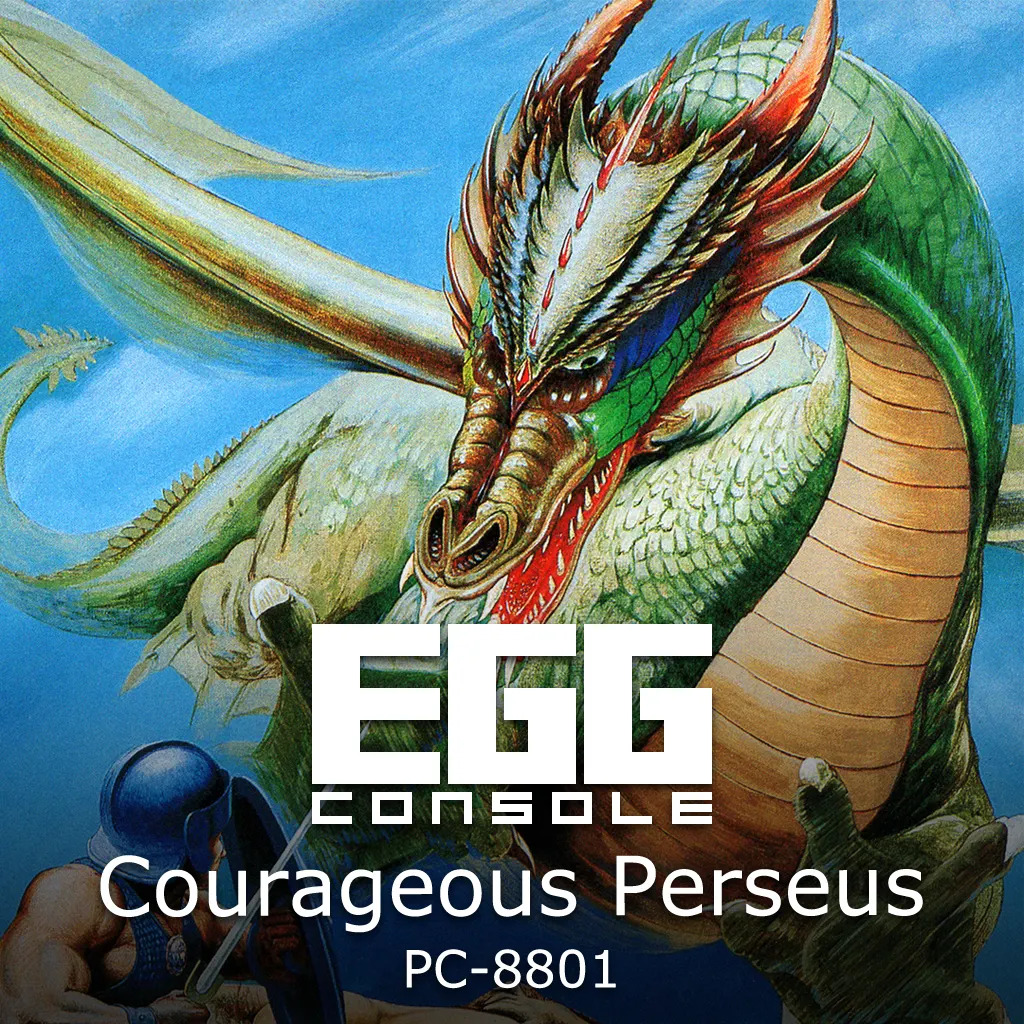
There’s a rare joy in revisiting the roots of gaming history, especially when a title plays like a time capsule forged from pure retro ambition. EGGCONSOLE Courageous Perseus — a meticulously emulated release from the classic PC-8801 line — isn’t just a trip down memory lane; it’s a reminder of how far games have come and how far they still carry the DNA of their ancestors. Originally released in Japan in the early years of home computing, Courageous Perseus has found a new audience through EGGCONSOLE’s ongoing effort to preserve and reintroduce arcade-era and early PC titles to modern platforms. Playing it today, particularly on PC via emulation, reveals a game that is unmistakably of its time: charming, occasionally frustrating, and bursting with ideas that beg for replay.
This review isn’t just historical nostalgia. It’s a close look at what makes Courageous Perseus both a classic worth preserving and a relic that challenges modern expectations — and why it still matters.
A Sword and a Quest Through 8-Bit Space
At its core, Courageous Perseus is an action platformer with hack-and-slash elements. The premise is delightfully simple: you — Perseus, a fledgling hero — must rescue the kingdom from an encroaching darkness by fighting through levels teeming with mythical beasts, nefarious minions, and a steadily rising challenge curve.
The control scheme is straightforward: left and right movement, jump, and attack. In true 8-bit fashion, every enemy encounter feels like an experiment in timing and positioning rather than flashy combo execution. Combat is tight and unforgiving, but there’s a rhythmic pleasure to each narrowly-saved health bar and each session where you inch just a little further than before.
The world structure is linear by necessity, but the stages themselves vary in theme and pacing. Forested paths give way to crumbling ruins, haunted caves, and industrial lairs — each with enemies and hazards tailored to the setting. The difficulty is notably steep by modern standards, but this is part of its charm; Courageous Perseus is a relic of an era when games demanded respect, patience, and repetition.
Visuals: Old Hardware, Bold Ideas
Viewed through the lens of 2026 technology, Courageous Perseus wears its age proudly. On the PC-8801’s limited palette, the game nevertheless conveys character and atmosphere through tightly designed sprites and evocative environments. The town stage brims with curious villagers and bustling NPCs — a rarity for action games of its time — while later levels lean into surreal design and imaginative use of space.
Playing Courageous Perseus on a modern PC gives these visuals a new lease on life. Emulation preserves scanline aesthetics and pixel art faithfully, and native widescreen options allow the game to breathe without stretching or distorting its original design. It’s a testament to the enduring power of pixel art that these simple sprites can still trigger curiosity and personality.
Yet there’s a duality here: what feels charmingly retro to veterans can feel sparse or opaque to newcomers. Enemy sprites occasionally blend into the background, and without modern quality-of-life cues, hazards can seem unfair rather than cleverly designed. But for players willing to embrace the limitations of the era, every visual beat feels intentional and evocative.
Soundtrack: Chiptune Light and Shadow
Audio in Courageous Perseus is quintessential PC-8801: bold chiptune melodies that loop with infectious energy and occasional tension. The soundtrack adapts to each environment — galloping percussion in forest stages, eerie tones in caverns, and triumphant flourishes in boss encounters — giving the game an emotional cadence that belies its technical simplicity.
On modern hardware, the sound feels vibrant rather than dated. The bass lines thrum with nostalgic warmth, and the high leads sparkle with character. While these tunes might not rival a fully orchestrated soundtrack, they accomplish something rare: they make you feel the terrain. A good retro track doesn’t just loop — it sets the mood. Here, the music does exactly that.
Gameplay: Punishing, Rewarding, and Methodical
Here’s where Courageous Perseus demands patience.
Modern titles often wrap difficulty in adjustable settings and accessibility features. Not so here. Perseus’ journey is inherently hard: enemies hit hard, players have limited health recovery, and checkpoints are infrequent. Every progression feels earned. A single misstep can send you back to the beginning of a stage, forcing you to recalibrate and learn enemy patterns one more time.
But this isn’t arbitrary frustration. Instead, it’s a deliberate design philosophy carried over from the era when arcades and early home computers demanded repetition as part of mastery. Enemies telegraph their moves, patterns repeat predictably, and success comes from observing rather than brute-forcing your way forward. For some players, this will feel like a slog; for others, it’s a satisfying rhythm of trial, error, and eventual breakthrough.
Combat itself is crisp. Despite simple controls, enemy variety keeps encounters fresh. Flying gargoyles, charging beasts, and spellcasting foes require different responses, and learning those responses is part of the joy. Perseus’ own attack has reach and weight, which means every swing matters.
Modern Emulation Features: Preservation Meets Convenience
One of the most compelling aspects of experiencing Courageous Perseus today is how modern emulation elevates a classic without altering its spirit. Features like save states, rewind functionality, and adjustable display filters make the game far more approachable. Where earlier players once memorised every jump and pixel, today’s game preserves that learning curve while softening the edges for accessibility.
These enhancements don’t dilute challenge; they democratise it. A player can now experiment freely — rewind a misjudged leap or restart from the exact moment they fell. For a game that originally demanded endless repetition, these quality-of-life tools are transformative.
The inclusion of controller remapping and modern input support also makes Courageous Perseus feel at home on contemporary rigs. Whether you’re using a classic gamepad or a keyboard, the responsiveness holds, and the tactile feel remains surprisingly engaging.
Accessibility and Audience
EGGCONSOLE Courageous Perseus isn’t designed for everyone, and that’s part of its appeal. This is a classic rediscovered, not reimagined. It caters to players who crave a slice of gaming history — especially those who appreciate the discipline of older design philosophies.
But newer gamers unfamiliar with retro difficulty spikes might feel overwhelmed — or even put off — by the lack of modern hand-holding. While emulator features help, the core experience still reflects an era when challenge was part of the fun, not an optional setting.
Still, there’s value in that. Many modern games downplay difficulty to broaden appeal. Courageous Perseus reminds us that design philosophies have shifted, but there’s still room for titles that demand — and reward — diligence and pattern recognition.
Verdict
EGGCONSOLE Courageous Perseus (PC-8801) is more than a retro reissue. It’s a preserved artefact of gaming history that offers meaningful insight into how early action titles challenged and captivated players. Its visuals, audio, and mechanics are unmistakably of their era — simple, earnest, and occasionally unforgiving — yet they resonate on modern hardware in ways that feel both nostalgic and fresh.
If you’re a fan of retro action games or curious about foundational designs that shaped the genre, Courageous Perseus is essential play. It’s not perfect; its challenges reflect a mechanical toughness many modern players may find daunting. But its rewards — a sense of progression earned through skill, music that sticks with you, and a world realised through pixel art — are timeless.












[…] you’ve followed our coverage of retro PC releases like EGGCONSOLE Courageous Perseus PC-8801 or the deeper RPG preservation effort seen in EGGCONSOLE Rune Worth 2 PC-9801, you’ll know that […]