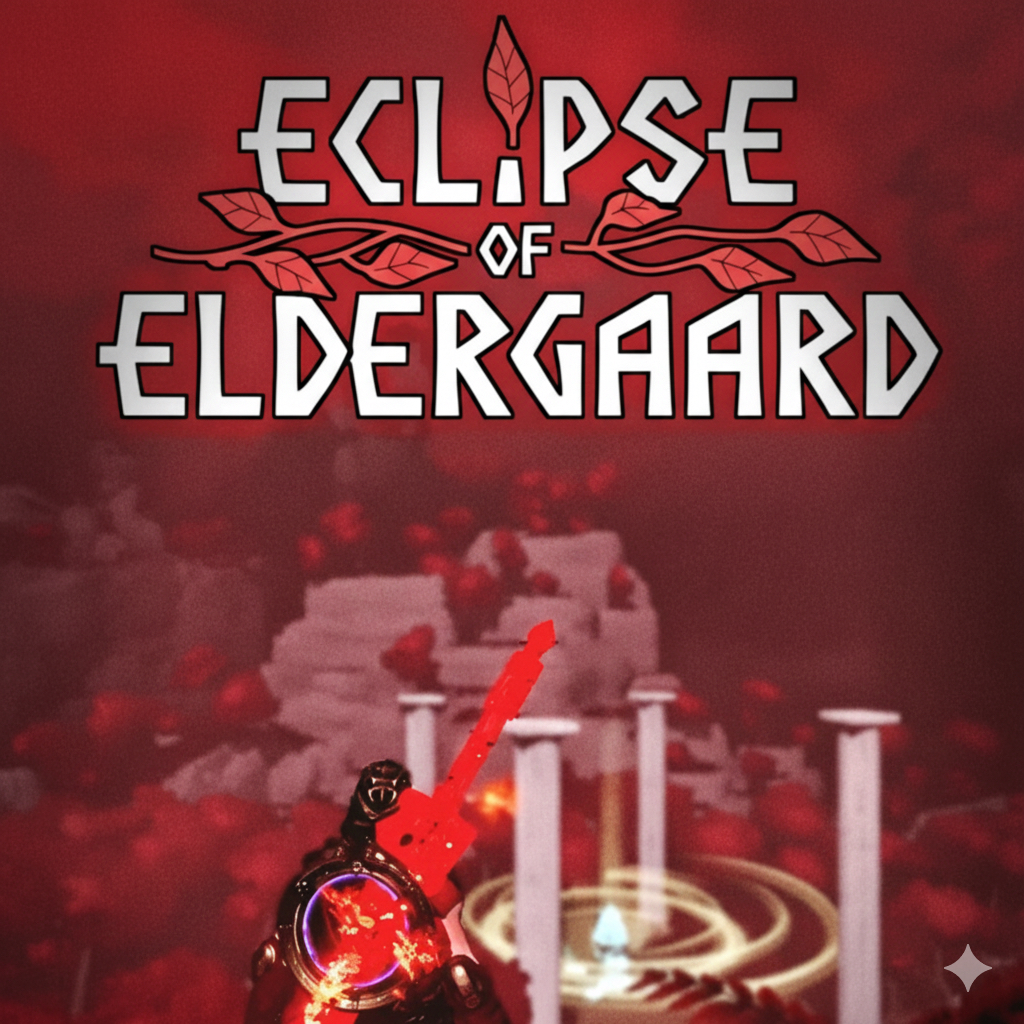
Eclipse of Eldergaard arrives as a dark fantasy action-adventure that places survival and urgency at the very centre of its design. Rather than presenting a sprawling RPG filled with side quests and narrative detours, it focuses on a more concentrated experience driven by time pressure, demanding combat, and a world on the edge of supernatural collapse. It is not a flawless execution of its ambitions, but it is a purposeful one—offering a tense and often compelling experience for players who value atmosphere, challenge, and momentum over scale.
From the outset, Eclipse of Eldergaard makes its intentions clear. This is a game about holding the line against inevitable darkness, not leisurely exploration. Every system feeds into that core idea, creating a cohesive identity that prioritises pressure and consequence above all else.
A World on the Brink
The premise of Eclipse of Eldergaard is deceptively simple. The realm is fractured by demonic incursions, hell gates are opening across the land, and the fallen god Umbra threatens to return and consume what remains. You are tasked with sealing these breaches before the world reaches a point of no return.
What elevates this setup is how tightly it is woven into the mechanics. Time is not an abstract narrative concept; it is an active force. The longer threats remain unchecked, the more hostile the world becomes. This creates a persistent sense of unease that defines the experience. You are not merely progressing through levels—you are racing against systemic decay.
The game avoids heavy exposition, instead relying on environmental storytelling and mechanical reinforcement to communicate its themes. Ruined landscapes, corrupted enemies, and the constant escalation of danger do more to establish tone than lengthy dialogue ever could.
Combat That Demands Respect
Combat is the backbone of Eclipse of Eldergaard, and it is here that the game shows its greatest confidence. Encounters are fast, punishing, and deliberate. Enemies hit hard, mistakes are costly, and victory is rarely guaranteed without focus and precision.
The combat system emphasises movement and timing over brute force. Dodging is essential, but poorly timed evasions can leave you exposed rather than safe. Attacks must be chosen carefully, as overcommitment is often punished. This creates a rhythm of engagement that feels tense without becoming chaotic.
Crucially, combat encounters are meaningful. There is little in the way of filler fights. Each battle feels like a test of your understanding of the game’s systems, and success is earned rather than given. This design choice reinforces the game’s tone of survival under constant pressure.
Progression Through Survival
Progression in Eclipse of Eldergaard is tied closely to survival and adaptation rather than traditional levelling. As you push deeper into the world, you acquire crystals and resources that allow you to unlock new abilities, combat forms, and enhancements.
These upgrades are impactful. They do not simply inflate numbers but expand your tactical options. New abilities can change how you approach encounters, offering greater mobility, defensive tools, or specialised attacks that become essential in later stages.
However, progression can feel uneven. Difficulty spikes occasionally arrive before players feel adequately prepared, creating moments of frustration. While this aligns thematically with the game’s narrative of overwhelming odds, it does risk alienating players who prefer a smoother difficulty curve.
World Design and Atmosphere
Visually, Eclipse of Eldergaard embraces a bleak, oppressive aesthetic. Environments are drenched in dark tones, broken architecture, and ominous skies. This consistency reinforces the sense of a world in decline, but it also limits visual variety. Locations often blur together, distinguished more by enemy composition than environmental identity.
That said, the atmosphere remains effective. The world feels hostile and uncaring, and the visual restraint ensures that nothing undermines the game’s grim tone. It may not be visually spectacular, but it is thematically cohesive.
The audio design complements this approach. Combat is underscored by driving, urgent tracks that heighten tension, while quieter moments are marked by subdued ambience. While the soundtrack rarely demands attention on its own, it supports the gameplay without distraction.
Pacing and Structure
The game’s pacing is deliberate and unforgiving. Objectives are clear, and there is little downtime between encounters. This keeps momentum high but leaves little room for experimentation or relaxation. Players are constantly pushed forward, which suits the narrative but can make the experience feel relentless.
Replay value is modest. While there are multiple endings based on success or failure, the overall structure remains largely unchanged between playthroughs. Players who enjoy mastering systems and refining performance may find reason to return, but those seeking branching narratives or varied campaigns may find the experience finite.
Verdict
Eclipse of Eldergaard is a focused, pressure-driven dark fantasy action game that commits fully to its themes of urgency and survival. Its combat is demanding and rewarding, its progression systems are meaningful, and its world successfully conveys a sense of impending doom.
Where it falters is in variety and pacing. Environmental repetition and uneven difficulty spikes occasionally disrupt the flow, and the limited replayability keeps it from achieving lasting impact beyond its initial run.
Even so, for players drawn to intense combat, atmospheric worlds, and experiences that prioritise tension over comfort, Eclipse of Eldergaard offers a compelling and memorable challenge.