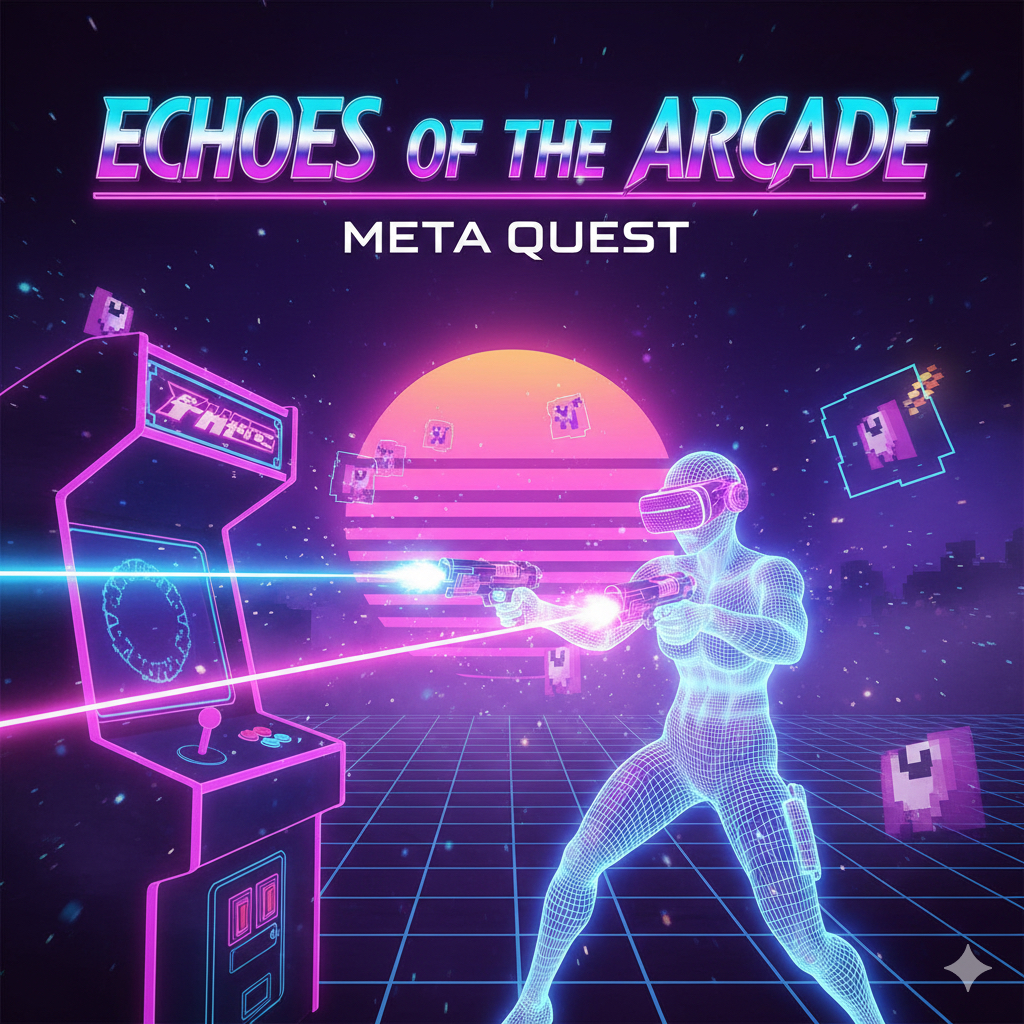
In a virtual reality market increasingly saturated with single-genre titles and mechanic-driven experiences, Echoes Of The Arcade arrives on Meta Quest as a celebration of gaming heritage and a tribute to the classics. It’s an ambitious effort to capture the spirit of arcade culture — leveraging nostalgia, diversity of gameplay, and VR’s immersive potential — and reimagine it in a cohesive package that appeals both to long-time gamers and newer audiences curious about gaming history. The promise is bold: step into a virtual arcade where each cabinet isn’t just a portal to a game, but a gateway to a different genre, mechanic, and mood.
After extensive play sessions across the game’s offerings, the verdict lands on Echoes Of The Arcade being best seen as a curated VR anthology rather than a singular game. Its strengths lie in variety, presentation, and emotional resonance; its weaknesses arise from uneven depth, pacing inconsistencies, and occasional technical limitations. In other words: if you come for the sheer breadth of arcade experiences and memorable moments, Echoes Of The Arcade delivers — but if you expect each individual game to be a deep or definitive modern classic, the experience is more mixed.
Vision and Conceptual Identity
Echoes Of The Arcade isn’t just a collection of mini-games; it’s an immersive space designed to feel like an arcade. Upon entering the virtual hub, players find themselves on a neon-lit floor with cabinets arrayed in thematic clusters, ambient arcade chatter in the background, and music that shifts subtly depending on your location. The design team clearly understood that ambience matters — the setting itself evokes memories of smoke-free arcade rooms, button mash battles, and the satisfying clink of virtual tokens.
This environmental foundation succeeds where many VR anthologies fail: by making the space an experience in itself, rather than a mere selection screen. Walking between machines, hearing distant game sounds, and watching AI patrons interact with other cabinets infuses the whole package with personality. It’s a thoughtful curatorial choice that turns every session — even between games — into a social experience.
Gameplay Variety and Mechanics
Where Echoes Of The Arcade truly shines is in the sheer breadth of playable experiences. The anthology comprises a wide spectrum of genres: platformers, shooters, racing games, rhythm challenges, puzzle titles, and even simplified RPG encounters. Each cabinet transports you into a self-contained game world with its own rules, control scheme, and challenge loop.
From classic side-scrolling action to top-down twin-stick shooters and bizarre abstract rhythm mashups, the diversity is commendable. VR interaction is generally well chosen for each genre:
- Shooters use intuitive aiming mechanics that feel natural with hand controls — the sensation of physically targeting enemies reinforces immersion without awkward calibration.
- Platformers use smooth locomotion or teleportation as options, ensuring movement feels comfortable and reduces motion sickness.
- Racing mini-games leverage steering mechanisms that cleverly use hand orientation and thumbstick control without overwhelming novices.
Despite the variety, the depth of each game varies significantly. Some titles feel fully realised and genuinely addictive in their simplicity, while others lack responsiveness, compelling scoring systems, or engaging progression. In a few instances, simplistic level design or predictable enemy patterns make certain mini-games feel like sketches rather than fully refined builds.
This inconsistency reflects the challenge inherent in anthology projects: resources are spread thin across multiple experiences. A few titles stand out as genuinely compelling, while others feel like amiable but forgettable diversions.
Presentation and Immersive Design
Visually, Echoes Of The Arcade walks a delicate balance between nostalgic pastiche and modern VR aesthetics. The arcade environment is rich with environmental cues: glowing marquees, animated posters, animated lights, and spatial audio that shifts as you move through the space. These design choices enhance immersion without distracting from the core play experiences.
The individual games’ graphics are intentionally retro in style — pixel art, vector graphics, or early 3D aesthetics — and that design choice feels intentional rather than lazy. This stylistic consistency helps unify the anthology and underscores the game’s identity as a celebration of gaming history rather than a showcase of tech prowess.
Where presentation occasionally falters is in the clarity of some UI elements and moment-to-moment feedback. A handful of mini-games don’t communicate scoring, hitboxes, or progression clearly, which can leave players feeling detached from the action. While this is not a universal problem, it’s noticeable enough to interrupt pacing in a few experiences.
Multiplayer and Social Interaction
One of Echoes Of The Arcade’s most compelling features is its social component. Multiple players can inhabit the arcade space simultaneously, spectating one another’s games, exchanging virtual tokens, or challenging each other to beat high scores on specific cabinets. Voice chat and avatar gestures add a layer of social presence that genuinely feels like hanging out in a real arcade.
In multiplayer sessions, certain games even incorporate competitive modes — races, score duels, or cooperative challenges that require shared attention and coordination. These moments are standouts because they extend the experience beyond solo play into something inherently social and replayable.
However, the multiplayer matchmaking infrastructure is basic. While players can easily host or join friends, finding random players with similar skill levels or coordinating matches outside pre-selected games feels cumbersome. A more sophisticated lobby system with curated playlists or themed rooms would elevate the multiplayer experience significantly.
Progression, Replayability, and Longevity
Unlike narrative VR games with clear arcs, Echoes Of The Arcade uses a progression system centred on achievements, high scores, and unlockable content. Players earn tokens through gameplay, which can be spent on cosmetic upgrades — avatar customisation, arcade cabinet skins, and environmental modifications. These unlocks add a layer of personal expression, though they do not meaningfully affect gameplay.
For arcade purists and score chasers, this meta progression adds incentive to revisit favourite mini-games and refine performance. However, without deeper layers — such as tiered league standings, global competition seasons, or evolving game modes — the long-term hook relies heavily on players’ intrinsic motivation to improve at specific mini-games.
Replayability is highest for a handful of standout titles within the anthology. Those mini-games with tight mechanics, compelling scoring loops, and satisfying feedback loops invite repeated sessions. Others, while pleasant, don’t inspire the same “just one more try” reflex.
Accessibility and Learning Curve
From an accessibility standpoint, Echoes Of The Arcade does a solid job catering to both VR newcomers and seasoned players. Tutorials are brief and contextual, introducing controls without long instruction segments. Each mini-game adapts its input schemes to feel natural — whether using motion controls, thumbsticks, or hybrid approaches.
Options for comfort settings (teleportation, vignette, or snap-turning) are present and well implemented, ensuring that players prone to motion sickness can adjust accordingly. The default difficulty curve in most mini-games starts approachable and scales up, striking a reasonable balance between accessibility and challenge.
However, the anthology’s breadth means that players may excel at some genres and struggle with others. This variance can make the overall experience feel uneven not because of design failures, but simply due to the wide stylistic range on display.
Final Verdict
Echoes Of The Arcade is not a single cohesive epic, nor does it pretend to be. Instead, it is a thoughtfully curated anthology designed to celebrate the breadth of arcade heritage while leveraging VR’s immersive capabilities. Its strengths lie in environmental presentation, nostalgic design, multiplayer social moments, and standout mini-games that genuinely capture the magic of simple, compelling mechanics.
Its weaknesses arise from uneven depth across titles, occasionally unclear feedback loops, and a lack of robust long-term progression systems that extend beyond cosmetic unlocks. Echoes Of The Arcade is best enjoyed in short play sessions with friends, chasing high scores and reliving genre variety — less so as a destination for marathon single-player campaigns.