

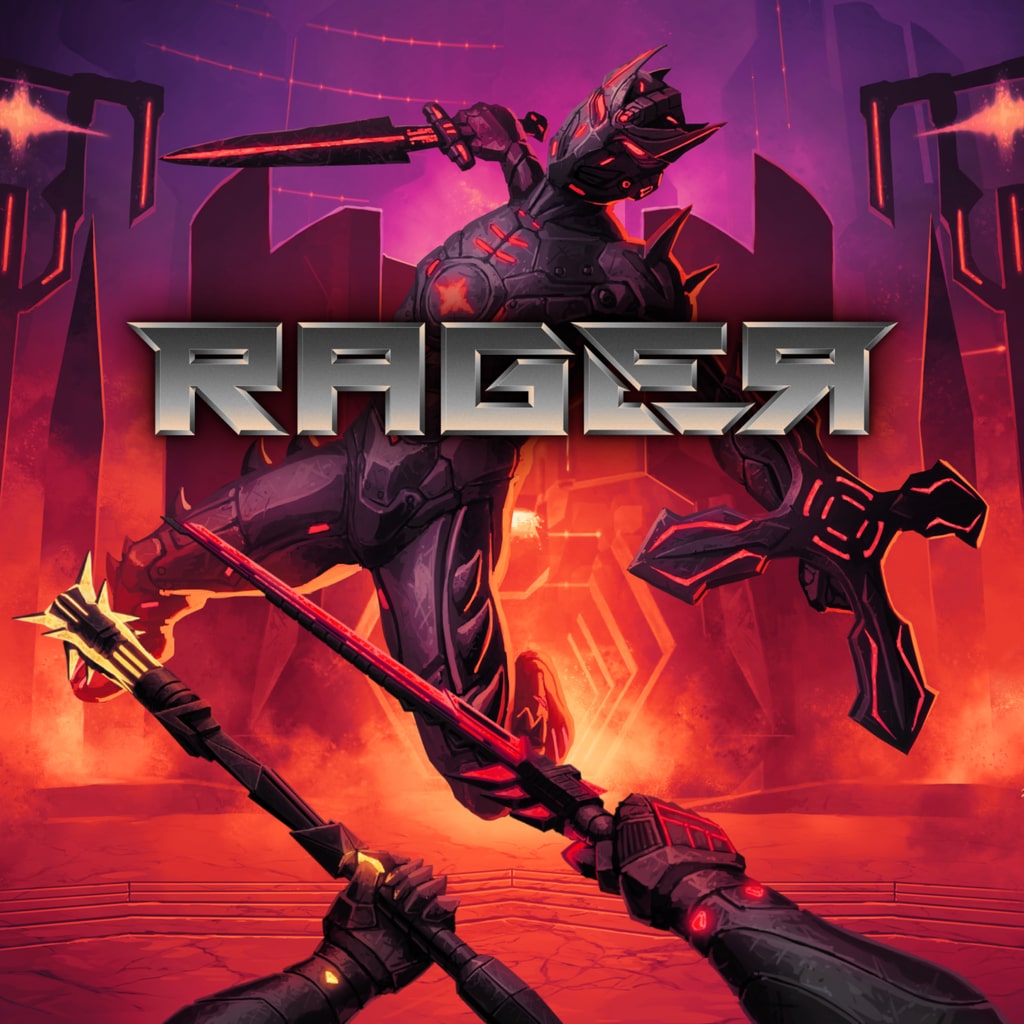
Virtual reality has proven to be a natural fit for rhythm games. Titles like Beat Saber and Pistol Whip have demonstrated how music and motion can combine to create exhilarating, physically engaging gameplay. RAGER, developed by Insane Prey, takes that idea in a more aggressive direction.
Originally launched in Early Access in October 2025 for PC VR and Meta Quest, RAGER officially reached version 1.0 on 5 March 2026, bringing its complete campaign and additional modes to players while also debuting on PlayStation VR2. The result is a full-featured release that expands on the Early Access foundation with twelve levels, three boss encounters, and competitive leaderboard challenges.
Rather than focusing on rhythm through traditional note-matching, RAGER frames its music-driven mechanics through melee combat. Every swing of a sword, block of an incoming attack, and evasive movement is synchronised with a pounding electronic soundtrack.
It’s an ambitious concept that aims to blend rhythm gameplay with visceral VR combat—and when it works, it delivers some of the most intense short bursts of action currently available in virtual reality.
Combat Choreographed by Music
The defining mechanic of RAGER is its beat-based combat system.
Enemies attack according to the rhythm of the music, and players must time their movements accordingly. Swinging your weapon off-beat weakens attacks and leaves you vulnerable, while striking precisely in time with the soundtrack unleashes powerful hits that can quickly dismantle robotic foes.
The system is immediately intuitive. Within moments of starting the game, players find themselves naturally aligning their movements with the music.
This rhythm-combat relationship transforms every encounter into something resembling a choreographed fight scene. Instead of simply reacting to enemies, players feel like they are performing alongside the soundtrack.
Weapons play a significant role in shaping this experience.
The sword emphasises precision and controlled strikes, rewarding players who carefully match their swings to the beat. The hammer delivers slower, heavier blows that feel like percussion hits within the music itself. Meanwhile, claws and fists encourage rapid, aggressive movements that mirror fast-paced drum patterns.
Switching between these weapons subtly alters how players approach each encounter, keeping the combat feeling dynamic.
Short, Explosive Encounters
Unlike many VR action games that stretch battles across lengthy levels, RAGER concentrates on short, high-intensity fights.
Individual levels generally last between ninety seconds and four minutes. Within that brief span, players must defeat waves of enemies while maintaining perfect rhythm and avoiding incoming attacks.
This design makes the game highly replayable. Short levels motivate players to immediately retry challenges in pursuit of higher scores or better timing.
Because of the game’s physical nature, the shorter sessions also help prevent fatigue. VR combat can be physically demanding, and RAGER wisely keeps encounters concise without sacrificing intensity.
Each level ends with the arena dissolving back into the digital void from which it emerged, reinforcing the game’s stylised presentation.
The Digital Arena
RAGER’s world exists within a dark, shifting digital landscape.
As each level begins, fragments of glowing geometry assemble themselves into a battlefield that pulses with the rhythm of the music. Platforms appear, enemies materialise, and environmental effects flash in time with the soundtrack.
The aesthetic feels reminiscent of neon cyberpunk environments combined with abstract digital architecture.
While the arenas themselves are relatively simple in layout, the visual effects surrounding them create a sense of scale and spectacle. Light shards explode outward with each attack, while bass drops trigger dramatic flashes across the environment.
The game’s art direction complements its rhythm-driven gameplay beautifully, ensuring that both sound and visuals reinforce the beat.
Boss Battles and Cinematic Moments
Beyond the standard combat encounters, RAGER features three major boss fights designed to test players’ rhythm skills to the maximum.
These encounters significantly amplify the scale of the action. Enormous robotic enemies tower over the arena, unleashing intricate attack patterns that fill the space with glowing projectiles and sweeping strikes.
Boss fights often require near-perfect timing. Players must parry incoming blows while maintaining the rhythm of their attacks.
The soundtrack becomes more intense during these encounters, adding extra musical layers that increase the tension.
Although the number of bosses is limited, each one presents a major challenge that tests everything players have learned throughout the campaign.
Freestyle and Leaderboards
Beyond the main campaign, RAGER offers Freestyle and Survival modes to boost replayability.
Freestyle mode lets players practice combat techniques and experiment with different weapons without the pressure of a structured level.
Meanwhile, Survival mode challenges players to withstand waves of increasingly tough enemies while keeping rhythm accuracy.
The addition of online leaderboards introduces a competitive element to the experience. Since levels are short and highly replayable, players are continually encouraged to improve their performance and climb the rankings.
This score-chasing aspect gives RAGER strong arcade-style longevity.
Soundtrack and Audio Design
Music is clearly central to RAGER’s identity, and the game’s original electronic soundtrack offers a compelling blend of styles.
Tracks feature elements of darksynth, drum and bass, industrial bass, metalstep, and war drums. Each song is carefully crafted to complement the game’s combat mechanics, ensuring attack patterns are easy to read without losing musical intensity.
The result is a soundtrack that feels both fierce and practical.
Sound effects further enhance the rhythm. Weapon strikes, enemy attacks, and environmental impacts all align with the music, creating an immersive audio experience that keeps players in sync with the beat.
Accessibility and Difficulty
Despite its challenging mechanics, RAGER offers several accessibility options designed to accommodate players of various skill levels.
Multiple difficulty settings enable newcomers to learn the rhythm system at a slower pace before facing the more demanding encounters.
Because levels are relatively short, even failed attempts seldom feel frustrating. Players can quickly restart and try again, gradually honing their timing.
However, mastering the game’s higher difficulties requires considerable concentration and physical coordination.
Pros & Cons
Pros
- Unique blend of rhythm gameplay and VR melee combat
- Short, intense levels perfect for replayability
- Strong electronic soundtrack integrated with combat mechanics
- Visually striking digital environments
- Competitive leaderboards encourage mastery
Cons
- Campaign length is relatively short
- Limited number of boss encounters
- Gameplay variety depends heavily on weapon switching
- VR-only availability limits audience
Final Verdict
RAGER successfully establishes a distinctive presence within the VR rhythm genre.
By replacing traditional note-based mechanics with physical combat directly linked to the music, the game offers a visceral and satisfying experience that feels both musical and athletic.
The mix of short, replayable levels, competitive leaderboards, and intense boss battles ensures players always have a reason to come back for more.
Although the campaign may seem brief and the boss roster somewhat limited, the core gameplay loop is robust enough to sustain the experience.
For VR players seeking something more aggressive than conventional rhythm games, RAGER provides an exhilarating blend of music and combat.


