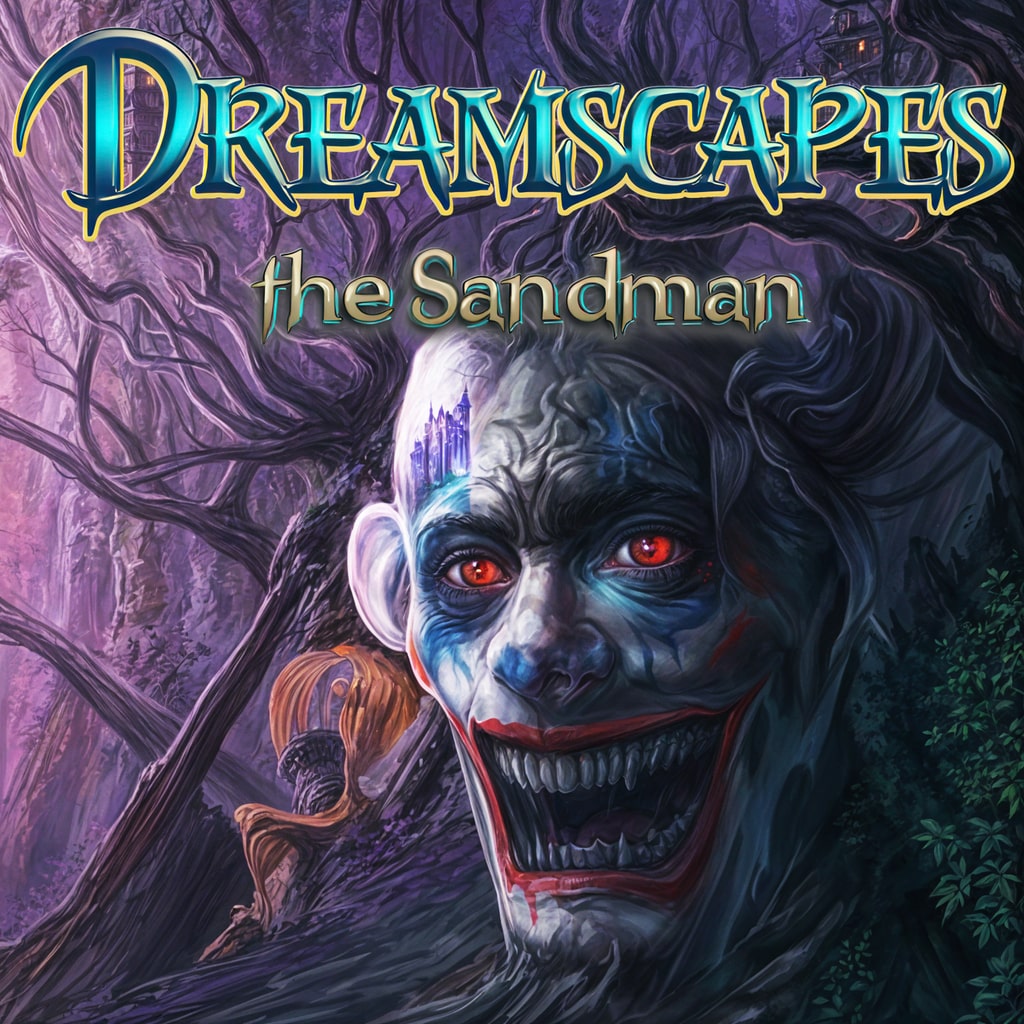
Point-and-click adventure games have a unique ability to immerse players in dreamlike worlds, and Dreamscapes: The Sandman from Shaman Games Studios captures that essence beautifully. Originally released as a hidden-object adventure, this surreal tale of nightmares and imagination has endured as a quiet cult favorite among fans of atmospheric storytelling. Its blend of eerie visuals, emotional undertones, and accessible gameplay make it one of those rare titles that feel both nostalgic and oddly timeless — a haunting dream you don’t want to wake from.
Into the Nightmare
Dreamscapes: The Sandman opens with a premise that feels simple yet immediately compelling. You play as a man named Ben who witnesses a young woman, Laura, fall into a mysterious coma after being attacked by the Sandman — an ancient entity who feeds on fear and dreams. With the help of a scientist experimenting in dream manipulation, you enter Laura’s subconscious mind to free her from this spectral tormentor.
It’s a setup that borrows from familiar psychological fantasy themes — think Inception meets Alice: Madness Returns — but the game’s execution is anything but derivative. Instead of leaning on heavy exposition, it pulls you into Laura’s fractured dreams, each representing her memories, fears, and emotions. The narrative balances surreal imagery with a surprisingly grounded emotional core. As you piece together fragments of her psyche, you begin to understand not just the nature of her torment but the humanity behind it.
Where many hidden-object adventures fall into cliché or overuse fetch quests, Dreamscapes keeps things moving with sharp pacing and strong atmosphere. It’s a story-driven experience that rewards observation more than inventory juggling, which makes it feel cinematic without sacrificing interactivity.
Puzzles and Progression
At its heart, Dreamscapes: The Sandman is a hybrid of puzzle-solving, exploration, and light hidden-object gameplay. You’ll navigate a series of dreamscapes — snow-covered villages, ominous caves, and surreal halls filled with shifting architecture — each layered with environmental puzzles and strange contraptions to figure out.
What’s refreshing here is that the puzzles feel integrated into the world rather than arbitrary. Solving them feels like untangling pieces of Laura’s subconscious rather than simply unlocking doors. A music box might open a repressed memory, or an ice wall might represent a frozen emotional trauma. This thematic cohesion gives every interaction weight.
The hidden-object elements are minimal, which is a blessing for those who prefer adventure storytelling over pixel-hunting. Instead, the game leans on logic-based puzzles and mechanical tinkering — things like rearranging mirrors to redirect light, or combining items to progress through dream barriers. The difficulty curve is well-balanced; it’s never punishing but always engaging enough to make you feel clever for solving a problem.
You also have a small companion, a creature called the gremlin, who occasionally helps you reach items or triggers. While this could have easily become a gimmick, it’s handled with charm and restraint. The little creature adds warmth to an otherwise lonely journey, and his animation provides moments of levity amid the darkness.
The Art of Dreams
Where Dreamscapes truly shines is in its visual and atmospheric design. The environments are lushly painted, with a surreal aesthetic that feels both whimsical and unsettling. Each dream realm is distinct — one may look like a shattered fairy tale, another like an industrial nightmare filled with gears and smoke.
The art direction leans heavily into contrasts: beauty intertwined with decay, innocence marred by fear. One moment you’re wandering through a tranquil frozen landscape; the next, you’re surrounded by grotesque imagery straight from a fever dream. It’s an approach that keeps you uneasy but intrigued, constantly wondering what visual surprise lies around the next corner.
Even with its older engine and modest technical fidelity, the game’s art direction holds up remarkably well. Backgrounds feel alive with detail, and transitions between dreams flow with a fluid, cinematic touch. Small animations — drifting snow, flickering candlelight, or the shifting gaze of the Sandman himself — give the world a chilling vitality.
The character design is a bit stiff by modern standards, but the expressive eyes and well-timed gestures do enough to convey emotion. Laura’s dream versions of herself — fractured, frightened, but resilient — remain some of the most hauntingly memorable images in the game.
Sound and Soul
Complementing the visual design is a strong soundscape that brings each dream to life. The soundtrack is composed of soft, ethereal piano pieces and melancholic orchestral swells that evoke both serenity and unease. It’s the kind of music that lingers long after you exit the game, perfectly capturing the feeling of being caught between sleep and wakefulness.
Voice acting is surprisingly effective for a game of this scope. Laura’s voice carries vulnerability and depth, while the Sandman’s lines drip with menace and theatricality. Minor characters occasionally sound flat, but the overall direction helps maintain immersion. The ambient audio — whispers, rustling fabric, creaking wood — enhances the tension, subtly reminding you that you’re wandering through someone’s mind.
Shadows of the Past
If Dreamscapes: The Sandman has a flaw, it’s rooted in its structure. The linear progression and limited freedom may feel restrictive to modern players accustomed to sprawling adventures. There are few branching paths or optional interactions — once you solve an area, you move on. While this keeps pacing tight, it also means replay value is low.
Additionally, some animations and UI elements show their age. Inventory management feels dated, and certain transitions take longer than they should. These issues don’t break the experience, but they remind you that Dreamscapes belongs to an earlier era of adventure design.
Still, the core experience transcends these limitations. The writing, tone, and emotional payoff are strong enough to make its linearity feel deliberate — like reading a beautifully illustrated storybook rather than playing a sandbox.
Final Verdict
Dreamscapes: The Sandman isn’t just another hidden-object adventure — it’s a psychological journey through imagination, memory, and fear. Shaman Games manages to blend emotional storytelling, clever puzzles, and surreal imagery into something that feels cohesive and heartfelt.
While its mechanics may show their age, its atmosphere and artistry remain timeless. It’s a game that understands the power of mood and mystery, using them to tell a deeply human story about trauma and redemption through the lens of dreams.
Whether you’re a veteran of point-and-click adventures or a newcomer looking for a narrative-driven experience that trades bombast for quiet beauty, Dreamscapes: The Sandman is a haunting gem worth rediscovering.