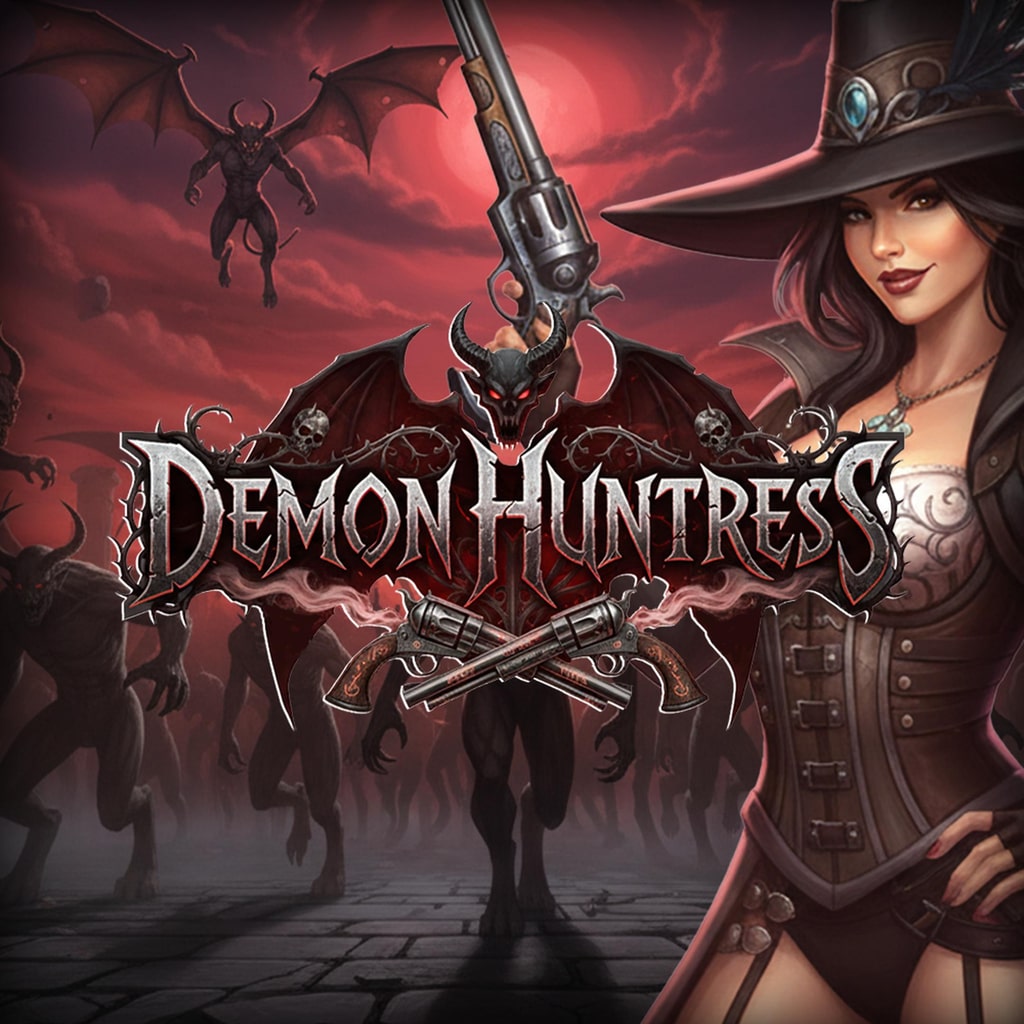
Demon Huntress does not waste time on introductions, lore dumps, or hand-holding. It throws you straight into its collapsing, demon-ridden world and expects you to adapt immediately or be swallowed by it. This is a roguelike built on momentum, where hesitation is punished and mastery is earned through repetition, failure, and eventually, dominance.
At its best, Demon Huntress feels like a tightly wound action loop that never stops escalating. At its weakest, it risks smoothing out the very tension that gives roguelikes their edge. The result is a game that is exhilarating in bursts, occasionally repetitive over time, but always confident in what it wants to be.
Combat That Demands Movement Over Mercy
Combat is the heartbeat of Demon Huntress, and it beats fast. You fight from a top-down perspective using a crossbow as your primary weapon, supported by an expanding toolkit of spells, passives, and environmental effects. It is not a game about standing your ground. It is about constant repositioning, reading space, and surviving by inches.
The controls are impressively responsive. Movement is tight, and the dodge roll is more than a safety button. It becomes a rhythm tool, something you learn to weave between shots and enemy patterns. When the screen fills with projectiles and demonic bodies, survival depends entirely on how well you trust that movement system.
There is a clarity to the chaos here that deserves credit. Even at its most crowded, attacks remain readable, and enemy behaviours are distinct enough to allow reactive play. It is intense, but rarely unfair.
Build Craft and the Joy of Escalation
If combat is the heartbeat, progression is the bloodstream. Demon Huntress builds its identity around transformation through accumulation. Every run introduces new abilities and modifiers that fundamentally alter how you play.
One run might see you relying on rotating magical orbs that shred anything nearby. Another might turn you into a mobile hazard, leaving fire trails, triggering chain lightning, or leeching health on contact. The combinations can get absurd, and that is very much the point.
\text{Run Power} = \text{Weapons} + \text{Spells} + \text{Passives} + \text{Stacking Upgrades}
This layering is what gives Demon Huntress its strongest hook. It is not just about surviving a run, but about watching your build evolve from fragile beginnings into something overwhelming. By the later stages of a successful run, you are no longer reacting to threats in the same way. You are deleting them.
The downside is that once your builds reach peak efficiency, tension can fade. What begins as survival horror in motion slowly shifts into controlled demolition.
Meta Progression and the Long Grind to Power
Between runs, permanent upgrades shape your long-term growth. Souls collected from enemies feed into a meta system that steadily expands your capabilities. More dodge charges, stronger passives, chained effects that carry across encounters. It is a familiar roguelike structure, but it is executed with clear intent.
Early hours can feel punishing, even slightly underpowered, but the game is deliberately tuned to reward persistence. The more you invest, the more dramatically your power curve shifts. Eventually, early encounters that once felt dangerous become trivial, replaced by later challenges that demand more refined build planning.
This is where Demon Huntress reveals its philosophy most clearly. It is not trying to maintain balance in the traditional sense. It is trying to make you feel like you are breaking the game over time.
Presentation, Clarity, and Functional Design
Visually, Demon Huntress is serviceable rather than striking. Environments are functional, built to support readability rather than atmosphere. You will not remember specific vistas, but you will always understand what is happening on screen, which matters far more in practice.
Sound design follows a similar philosophy. Weapons have weight, enemy cues are clear, and the soundtrack leans into driving intensity without overpowering the action. It supports the experience without demanding attention.
There is a slight lack of visual identity, though. While clarity is never an issue, personality sometimes is.
Structure, Repetition, and the Roguelike Loop
Each run follows a simple structure. Three randomly selected worlds drawn from a pool of five, each filled with enemies, hazards, and upgrade opportunities. The randomness keeps things from feeling identical, but over time, repetition does start to surface in environmental patterns and encounter pacing.
This is perhaps Demon Huntress at its most divisive point. For players who thrive on mechanical mastery and build experimentation, the repetition barely registers. For those who need stronger environmental variety or narrative framing, it may begin to weigh on the experience.
Still, the core loop remains effective. It is easy to drop in for a short session and just as easy to lose an hour without noticing.
Final Verdict
Demon Huntress is a game defined by escalation. It is about becoming stronger, faster, and more destructive until the very systems that challenge you begin to collapse under the weight of your build. That transformation is its greatest strength, and also where its tension sometimes dissolves.
It does not aim for narrative depth or visual spectacle. It focuses almost entirely on momentum, combat clarity, and the satisfaction of compounding power. When it clicks, it is genuinely exhilarating. When it stretches on too long, it can feel familiar in ways that dull its edge.
But there is no denying its focus. This is a roguelike that understands exactly what it wants to be and commits fully to it.