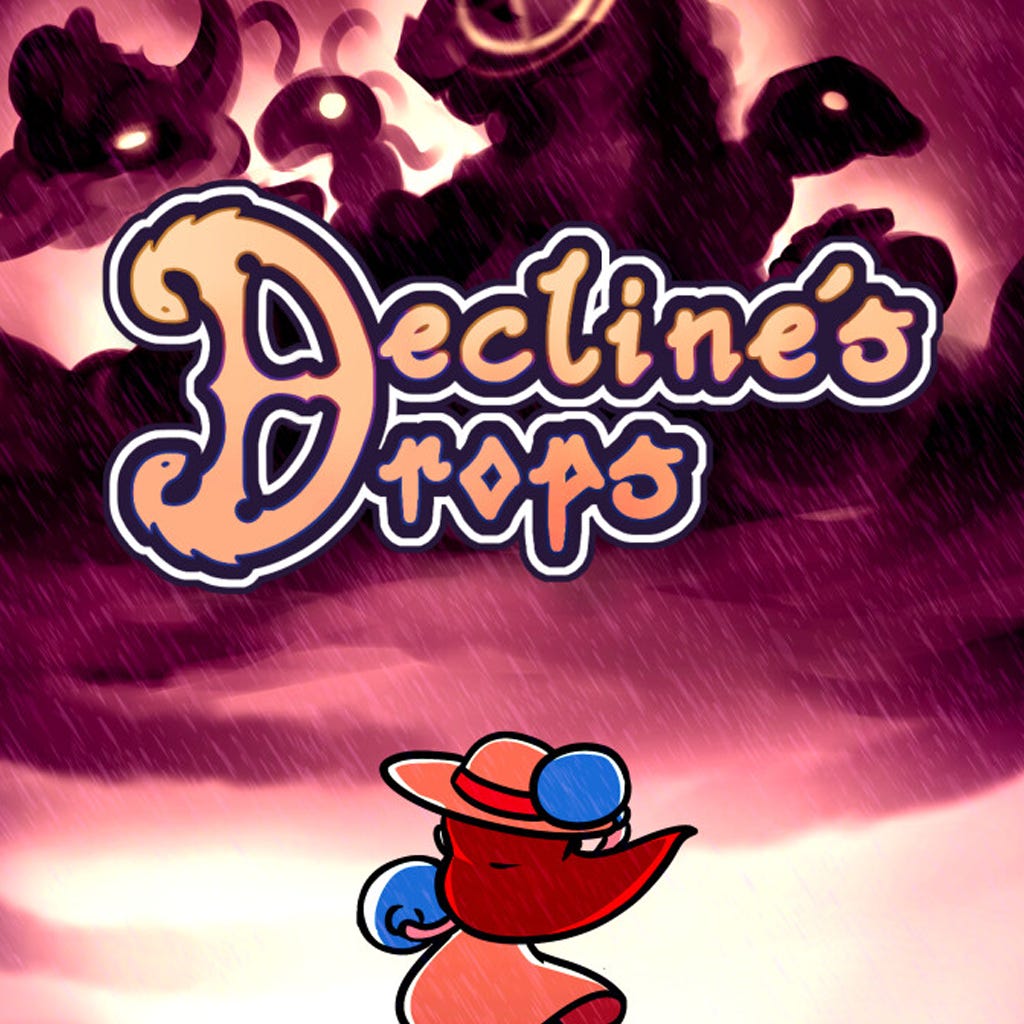
As children, we often attributed secret lives to our toys, imagining that action figures, toy soldiers, or stuffed animals left in the garden came to life once we went inside. Decline’s Drops captures that same sense of animated wonder, following a wooden puppet named Globule as she fights to save her home from a permanent, unnatural frost. Published by Silesia Games, it is a masterclass in hand-drawn kinetic energy, blending the speed of a platformer with the weight of a brawler. As I guided Globule through her beautifully distorted world, I was reminded that even the smallest “little things”, a wooden heart and a determined spirit, can stand tall against the overwhelming chill of a world in decline.
From the moment Decline’s Drops begins, it establishes a tone that feels equal parts whimsical and mournful. The opening moments unfold like a forgotten fairy tale, narrated with gentle melancholy as Globule awakens to find her once-vibrant garden buried beneath unnatural winter. Yet despite the sadness woven into its world, the game never feels hopeless. There is warmth here too, hidden beneath layers of frost and satire. That emotional balance becomes the foundation for everything that follows.
Movement With Momentum
At its core, Decline’s Drops is built around movement. Globule is not a slow, methodical protagonist. She launches herself across stages with reckless speed, diving through enemies and ricocheting off terrain with exhilarating momentum. The central “Drop” mechanic ties the entire experience together brilliantly.
By slamming into the environment, Globule builds momentum that can immediately chain into punches, dashes, wall jumps, and parries. Once the combat and traversal systems click, the game starts to feel almost musical. Every successful sequence becomes a flowing rhythm of movement and impact.
There is an undeniable Sonic influence in the way stages encourage speed and improvisation, but Decline’s Drops sets itself apart by giving combat equal importance. This is not simply a race to the finish line. Enemies are designed to interrupt your momentum, forcing you to think aggressively rather than defensively.
The gloves matter. Punches land with satisfying force, and the parry system adds another layer of risk and reward. Well-timed counters create openings against even the toughest enemies, while mistimed attempts leave Globule vulnerable. Later encounters demand genuine mastery of these mechanics, particularly during boss fights, where split-second reactions often mean the difference between victory and defeat.
What impressed me most was how naturally traversal and combat feed into one another. The best moments come when you stop thinking of them as separate systems.
A Living Storybook
Visually, Decline’s Drops is stunning. Every environment looks hand-painted with obsessive care, filled with tiny animated details that make the world feel alive. Forests sway gently beneath falling ash. Polluted oceans bubble with unnatural colours. Industrial landscapes groan beneath mountains of waste and machinery.
The animation deserves special praise. Globule herself moves with incredible fluidity, stretching and snapping across the screen like a classic animated character brought to life. Thousands of hand-drawn frames lend every punch, dodge, and leap a tangible sense of energy. More importantly, the art style serves the game’s themes rather than existing purely for spectacle.
Each of the six worlds offers a subtle reflection of real-world anxieties. Environmental destruction, overconsumption, exploitation, and pollution shape the environments and enemies you encounter. Yet Decline’s Drops wisely avoids becoming preachy. The game trusts its imagery to communicate these ideas without pausing to lecture the player. One stage filled with suffocating smog and abandoned mechanical wildlife says more than pages of dialogue ever could.
Strange Characters in a Dying World
The cast adds significant charm throughout the adventure. Globule is a surprisingly expressive protagonist despite saying very little, while side characters bring moments of humour and warmth that prevent the world from feeling emotionally overwhelming. Serge, the genetically modified monkey merchant, is particularly memorable. Equal parts unsettling and oddly lovable, he perfectly embodies the game’s strange balance between satire and sincerity.
There is an underlying sadness to many interactions, though. Characters speak as if trying to preserve fragments of hope in a world already sliding towards collapse. That quiet melancholy gives Decline’s Drops emotional weight beyond its mechanics.
Even smaller details contribute to the atmosphere. NPC dialogue shifts subtly as you progress, environments deteriorate further over time, and bosses leave lasting scars on the world after their defeat. This creates the feeling that your actions genuinely matter.
Bosses That Demand Respect
The six Hydra heads, manifestations of the “Declines,” serve as the game’s major encounters and are among its best parts. These fights are demanding, chaotic, and visually spectacular.
Each boss introduces entirely new mechanics that force players to rethink how they use Globule’s abilities. One battle becomes a high-speed chase across collapsing terrain, while another turns into a deadly aerial duel through toxic storms.
Importantly, these fights rarely feel unfair. Difficult, absolutely. Frustrating occasionally. But success always feels achievable through skill rather than luck.
The game’s steep difficulty curve will undoubtedly divide players, however. Decline’s Drops grows significantly more demanding in its later hours, introducing platforming sections that require near-perfect execution alongside combat arenas packed with aggressive enemy combinations. Players expecting a relaxed platformer may find themselves overwhelmed.
Personally, I appreciated the challenge because the controls are responsive enough to support it. Failure rarely felt like the game’s fault. Instead, it pushed me to improve. And when you finally conquer one of its brutal later stages, the sense of accomplishment feels enormous.
Small Stumbles Along the Way
As impressive as Decline’s Drops is, it is not flawless. The camera occasionally struggles to keep up during the fastest movement sequences, particularly in more vertically focused stages. A few late-game platforming sections also lean too heavily on repetition after death, forcing players to replay lengthy stretches before another attempt.
There are also moments when visual clarity suffers under the sheer volume of animation on screen. During especially chaotic boss encounters, enemy attacks can sometimes blend into the environment.
These issues never derail the experience entirely, but they do create occasional moments of frustration within an otherwise polished adventure.
Narratively, the ending may also feel slightly ambiguous for some players. The game prioritises emotional resonance over concrete answers, which suits its fairy-tale structure, though it leaves certain story threads intentionally unresolved.
Beauty Beneath the Decline
What stayed with me most after finishing Decline’s Drops was not the difficulty or even the spectacle of its boss fights. It was the sincerity behind it all. This is clearly a game made with enormous care.
Every frame, mechanic, and piece of music feels handcrafted by people deeply invested in the world they created. Even when tackling heavy themes such as ecological collapse or unchecked greed, the game never loses sight of wonder. That balance is hard to achieve.
Decline’s Drops understands that sadness only resonates when set against beauty and hope. Globule’s journey matters because the world around her feels worth saving, despite its flaws.
The result is a platformer that feels emotionally textured in a way many modern games struggle to achieve. It is fast, challenging, melancholic, funny, and strangely comforting all at once.
Final Verdict
Decline’s Drops is a remarkable hand-drawn platformer-brawler that blends expressive movement, demanding combat, and quietly powerful storytelling into something genuinely memorable. Its gorgeous animation and inventive world design elevate the experience far beyond simple nostalgia, while its themes of decay and resilience lend the adventure surprising emotional depth.
The steep difficulty and occasional camera frustrations may deter some players, but for those willing to embrace its challenges, Globule’s journey is worth taking. Like the wooden toys we once imagined springing to life when nobody was watching, Decline’s Drops carries a fragile kind of magic that feels increasingly rare in modern games.