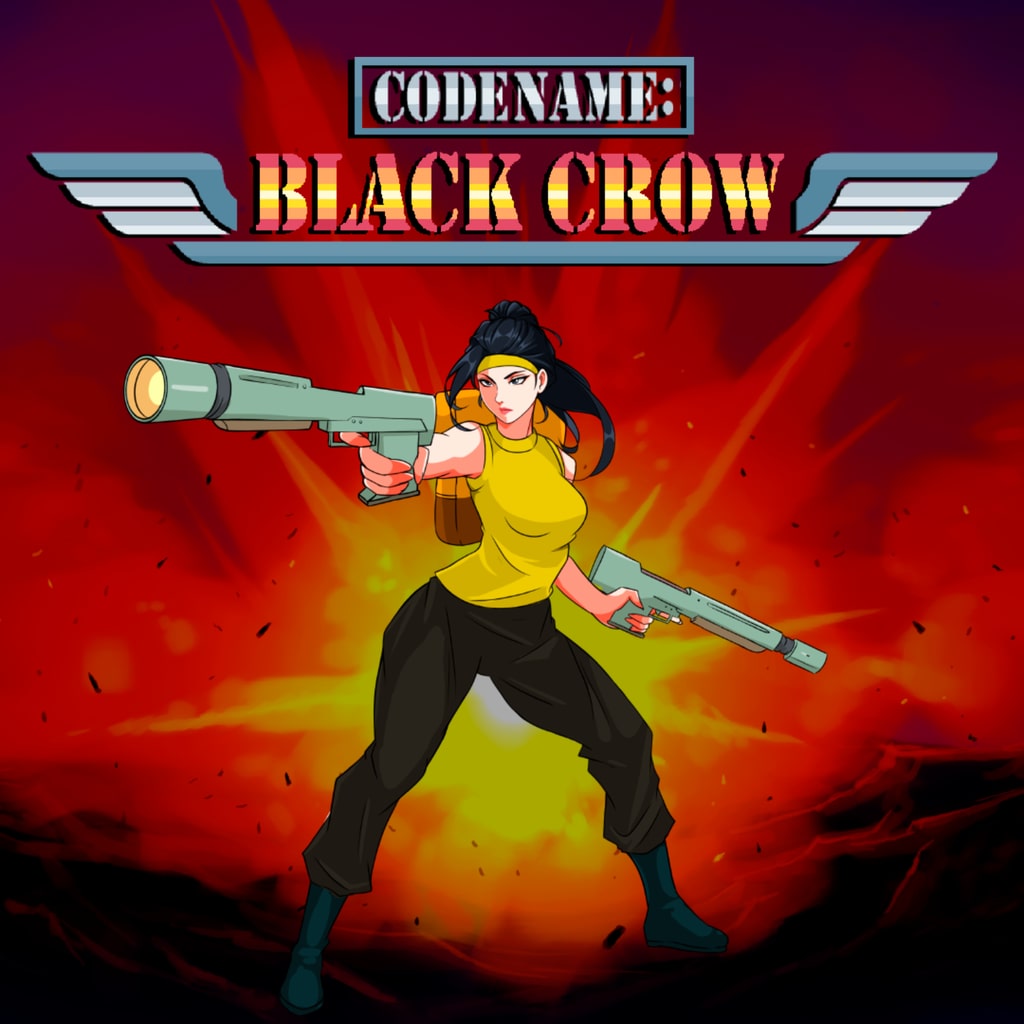
We often speak of the “games” we played as children, but for some, the playground was a battlefield and the games were matters of life and death. Codename: Black Crow explores this haunting inversion through the eyes of Aurora, a soldier trying to outrun a past forged in conflict. Developed by SEEP and launched on consoles by Ratalaika Games, the title balances the relentless, twitch-reflex adrenaline of a 16-bit shooter with a grounded, emotional story of reclaiming one’s identity. As I guided Aurora through the ruins of her past, I found a reminder that while we cannot choose where we come from, we can choose what kind of person emerges once the smoke clears.
At first glance, Codename: Black Crow looks like a straightforward retro shooter. The chunky pixel art, explosive firefights, and overhead perspective all scream “arcade throwback.” Yet within its opening hour, it becomes clear this is something more reflective and ambitious. Beneath the bullets lies a game deeply concerned with trauma, survival, and the difficult process of rebuilding yourself after violence has defined your entire life.
A Soldier Searching for Herself
Aurora is one of the more compelling protagonists to emerge from the indie retro scene in recent memory. Raised as a child soldier in a remote region of Mexico, she has spent most of her life surviving rather than living. Years after the events of Biomech Hell, the ghosts of her upbringing resurface, dragging her into another deadly conflict.
The narrative unfolds through tightly written dialogue and beautifully illustrated anime-inspired stills from Coconut Art. These sequences could have felt disconnected from the pixel-heavy gameplay, but instead they create an effective contrast. The gritty, low-resolution world conveys survival and violence, while the illustrations reveal the humanity beneath.
What impressed me most is the game’s restraint. Aurora is not written as a clichéd action hero spouting constant one-liners. She feels exhausted, cautious, and emotionally worn down by years of conflict. The story rarely pauses for melodrama. Instead, it lets quieter moments carry weight. A brief conversation by a campfire or a silent pause before entering a hostile zone says more than pages of exposition.
The game also deserves credit for avoiding simplistic morality. Characters exist in shades of grey, shaped by desperation and circumstance rather than cartoonish villainy. That nuance gives the story a lingering emotional texture that stays with you long after the credits roll.
Survival Before Power Fantasy
Unlike many retro shooters that immediately arm players with devastating firepower, Codename: Black Crow begins with vulnerability. Aurora starts with little more than a knife, minimal supplies, and uncertainty about what lies ahead. Survival feels earned rather than guaranteed.
Exploration is central to the experience. The world comprises over 100 interconnected areas filled with enemy outposts, hidden resources, and environmental hazards. Your radar becomes an essential tool, helping you navigate dangerous terrain and encouraging careful scouting over blind aggression.
The crafting system adds another welcome layer of progression. Gathering scrap and materials allows Aurora to create upgrades, improve weapons, and unlock useful gear. It never becomes overly complex, yet it gives the game a satisfying sense of momentum. Every scavenged resource feels valuable because survival is never entirely secure.
There is a constant tension between pushing forward and retreating to regroup. Ammunition can become scarce during longer expeditions, healing items are precious, and enemy patrols often overwhelm careless players. That measured pacing makes every victory feel meaningful.
Combat That Balances Chaos and Control
Combat in Codename: Black Crow strikes a sweet spot between arcade immediacy and tactical decision-making. The shooting feels fast and responsive, yet there is enough weight to movement and positioning that encounters never devolve into mindless chaos.
Enemies arrive in aggressive waves, forcing players to adapt constantly. Some rush directly at Aurora, while others lock down areas with suppressive fire or explosives. Boss encounters, meanwhile, are massive tests of endurance and pattern recognition. These fights feel appropriately brutal without tipping into frustration.
The weapon variety also helps maintain momentum. Firearms, explosives, crafted upgrades, and specialised gear all encourage experimentation. Finding a new weapon genuinely changes how you approach combat rather than simply increasing damage numbers.
One particularly satisfying aspect is how the game rewards preparation. Entering a hostile outpost with upgraded equipment, stocked healing supplies, and crafted enhancements creates a sense of strategic ownership over success. You survive because you prepared to survive.
Still, the game is not without rough edges. Enemy AI occasionally becomes predictable during extended encounters, and some later combat arenas rely a little too heavily on overwhelming enemy numbers rather than smarter encounter design. Yet even in its messier moments, the game retains an undeniable momentum that keeps pulling you forward.
The Beauty of Retro Melancholy
Visually, Codename: Black Crow knows exactly what atmosphere it wants to create. The 16-bit pixel art evokes memories of late-era SNES and Genesis shooters, but the game layers modern lighting effects and environmental detail on top of that nostalgic foundation.
Rain-soaked ruins, abandoned military compounds, and flickering industrial facilities all carry a bleak, war-torn identity. The environments feel lived-in rather than decorative. Every ruined structure suggests a history that predated Aurora’s arrival.
The soundtrack complements this perfectly. Synth-heavy tracks pulse beneath firefights, while quieter ambient pieces allow reflective story moments to breathe. It captures the loneliness of wandering through hostile territory without overplaying the melancholy.
What surprised me most was how cohesive the entire presentation feels. Nothing exists purely for nostalgia’s sake. Every retro-inspired choice supports the emotional tone of the experience.
Thunderflash Lives Again
One of the smartest additions is the inclusion of Thunderflash 2 as an unlockable bonus. Rather than feeling like a throwaway extra, it offers a compelling contrast to the main campaign.
While Black Crow is slower, more reflective, and survival-focused, Thunderflash 2 delivers pure arcade chaos. Unlocking it after completing the campaign feels like discovering a hidden relic from another era. It also reinforces how much SEEP has evolved as a developer, showing the transition from straightforward retro action towards more layered storytelling.
For longtime fans of the studio’s earlier work, it is a rewarding inclusion. For newcomers, it offers a fascinating glimpse into the roots of the design philosophy behind Black Crow itself.
Final Verdict
Codename: Black Crow succeeds because it understands that emotional storytelling and arcade action need not be separate. It combines the immediacy of classic shooters with a genuinely affecting story about trauma, survival, and identity.
The crafting systems, exploration mechanics, and RPG progression add depth to the relentless combat, while Aurora herself provides the emotional anchor that keeps the experience grounded. A few repetitive encounters and rough AI moments prevent it from being truly great, but they never overshadow the heart beating beneath the pixel-art violence.
This is more than a nostalgic shooter wearing retro aesthetics for comfort. It is a game about scars, resilience, and learning to move forward when your childhood was stolen from you long before you understood what childhood even meant.