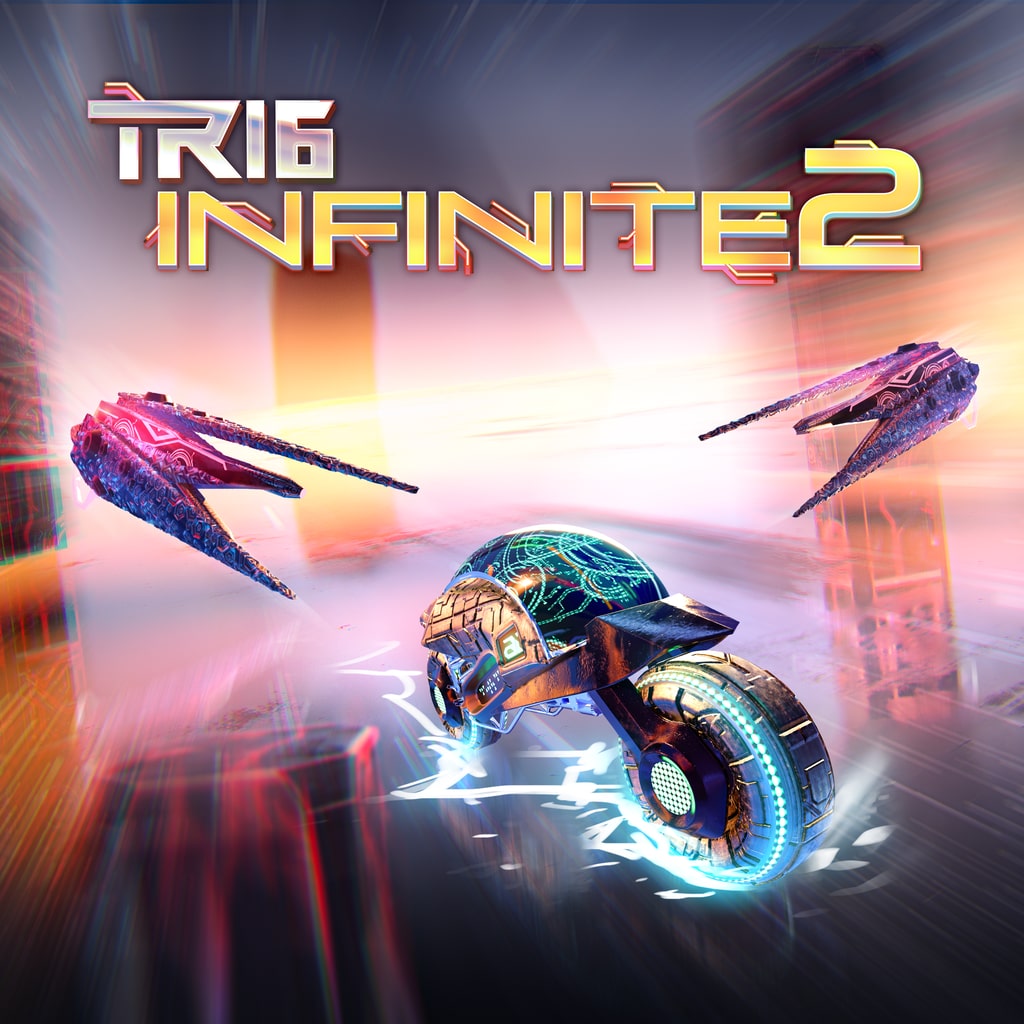
There is a very specific kind of childhood freedom tied to speed. It lives somewhere between the wobble of a bike racing downhill too fast and the panic of realising your feet can no longer slow you down. For a few terrifying, exhilarating seconds, momentum takes complete control. Tri6: Infinite 2 captures that exact sensation with startling precision.
Developed by Clockwork Origins, this neon-drenched arcade racer wastes no time pretending to be anything other than pure, reflex-driven chaos. There are no realistic handling systems, no lengthy career modes, and no cinematic story distractions that pull focus from the core experience. The premise is brutally simple: survive for as long as possible while the game steadily transforms into a high-speed death trap determined to break your concentration. Somehow, through that simplicity, Tri6: Infinite 2 becomes one of the most addictive arcade racers I’ve played in years.
The Endless Loop
At its heart, Tri6: Infinite 2 is built on a simple premise. You pilot futuristic vehicles through procedurally generated cyber tracks suspended in a glowing digital void. The longer you survive, the faster the game becomes. Obstacles appear with greater aggression, turns tighten, mines clutter the racing line, and rival AI drivers grow increasingly hostile. Every collision is catastrophic.
This is not a forgiving racer. One mistake usually means instant death and a hard reset to the beginning. Yet rather than feeling punishing, the design creates an intoxicating rhythm in which every run becomes an opportunity to push a little further than before.
Part of what makes this work so well is the restart speed. Failure barely interrupts the experience. Within seconds, you are already back in another procedurally generated nightmare tunnel, chasing a better score. That immediate loop creates the dangerous “one more run” energy that defines the best arcade games. Hours disappear frighteningly quickly here.
Speed as a Physical Feeling
What surprised me most was how physical Tri6: Infinite 2 feels despite its minimalist presentation. The original game already captured speed, but the sequel elevates it dramatically through visual design and improved track generation. Neon reflections streak across the screen, while glowing particle trails blur behind opponents. Camera shake intensifies during near misses. The soundtrack pulses with electronic aggression, syncing beautifully with the escalating pace.
At high speeds, the game stops feeling like a racing game and starts resembling a survival simulator that tests human reaction time. The procedural generation deserves enormous praise because it rarely feels random. Tracks curve naturally, creating flows that encourage instinctive movement rather than memorisation. Some runs emphasise narrow technical sections, while others focus on wider, high-speed sweeps littered with hazards. The layouts evolve organically enough that even after dozens of attempts, I rarely felt I was simply replaying recycled content. That unpredictability gives Tri6: Infinite 2 its identity. You are not learning static courses. You are adapting in real time to chaos.
Power-Ups That Actually Matter
Many arcade racers treat power-ups as afterthoughts, but Tri6: Infinite 2 integrates them into the flow surprisingly well. The game features ten offensive and defensive abilities, ranging from shockwaves and mines to rockets and temporary defensive boosts. Importantly, these tools never overshadow the driving itself. They supplement survival rather than replace skill.
A well-timed shockwave can clear an otherwise impossible cluster of hazards. Mines can punish aggressive AI opponents that tail too closely. Defensive abilities buy precious seconds during particularly overwhelming track sections.
The balancing feels smart because power-ups create tactical decisions without slowing the momentum. Everything still revolves around movement, timing, and survival.
The AI also deserves recognition here. Opponents become noticeably more dangerous during longer runs, aggressively boxing players into hazards or forcing risky manoeuvres. They are not simply moving obstacles. They actively contribute to the tension once speeds reach absurd levels.
Precision Over Complexity
One of the smartest choices Clockwork Origins made was to refuse to overcomplicate the formula. Modern racers often drown in progression systems, upgrade trees, or open-world distractions. Tri6: Infinite 2 strips all of that away in favour of mechanical clarity. Controls are razor-sharp, vehicle movement feels immediate, and every failure is understandable. When you crash, you know why.
That precision creates fairness, even in the game’s most brutal moments. The challenge comes from execution rather than randomness. This philosophy extends beautifully into the game’s presentation. The cyber aesthetic remains clean and readable despite the overwhelming visual energy. Obstacles are easy to identify, incoming threats remain visible even at ridiculous speeds, and the track design avoids visual clutter that could compromise reaction time. There is a confidence in this restraint. Tri6: Infinite 2 knows exactly what kind of experience it wants to deliver and commits fully to it.
Chasing Scores and Losing Time
The addition of weekly challenges and global leaderboards dramatically strengthens the sequel’s longevity. Arcade racers live or die by their ability to create obsession, and Tri6: Infinite 2 understands that psychology. Every failed run plants the idea that improvement was only seconds away. Every leaderboard placement motivates players to shave off another mistake.
The weekly challenges help keep the experience fresh by altering rules and introducing unusual track conditions. Some events prioritise aggressive power-up use, while others focus entirely on pure evasive driving. These rotating modifiers subtly shift strategies without compromising the game’s core identity.
It also helps that runs remain relatively short. Even successful attempts rarely overstay their welcome, making the game perfect for quick sessions that inevitably spiral into hour-long marathons.
The Cost of Relentlessness
For all its strengths, Tri6: Infinite 2 will not appeal to everyone. The difficulty curve is unapologetically steep. Casual players expecting a relaxed arcade racer may bounce off quickly as the speed escalates. The game demands constant focus and quick reactions, especially during longer runs, when even blinking feels dangerous.
There are also moments when visual overload becomes an issue. While the aesthetic is generally legible, the combination of glowing trails, explosions, power-up effects, and rapidly shifting environments can occasionally be overwhelming in especially chaotic sequences.
Fortunately, these moments are relatively rare, and the game usually regains clarity before frustration fully sets in. Still, this is a game designed for players who enjoy repetition, mastery, and mechanical improvement. Those seeking narrative depth or broader variety may find the experience somewhat narrow.
The Arcade Spirit Lives
What makes Tri6: Infinite 2 memorable is not just its speed but its grasp of arcade philosophy. This is a game built entirely around immediacy. It demands your attention now. It demands your reflexes be engaged every second. It demands your heart rate be elevated as you narrowly squeeze through impossible gaps at catastrophic velocity. And remarkably, it succeeds without relying on bloated systems or artificial progression hooks. There is something refreshingly honest about that design.
The game respects the player enough to recognise that pure mechanics, when polished, are enough to create obsession. Every dodge, every near miss, every miraculous recovery becomes its own tiny story of survival.
By the end of my time with Tri6: Infinite 2, I stopped chasing leaderboard positions and started chasing flow itself. That rare, beautiful moment when instinct fully takes over and the chaos suddenly feels manageable. Right before the inevitable crash.
Final Verdict
Tri6: Infinite 2 is a brutally addictive arcade racer that turns speed into pure survival instinct. Its refined procedural generation, razor-sharp controls, and hypnotic visuals create an experience that is both exhilarating and punishing in equal measure.
While its relentless difficulty and minimalist structure may alienate some players, those willing to embrace its uncompromising pace will find one of the tightest arcade experiences of the year. It understands the timeless thrill of moving just a little too fast and daring yourself to stay in control anyway.