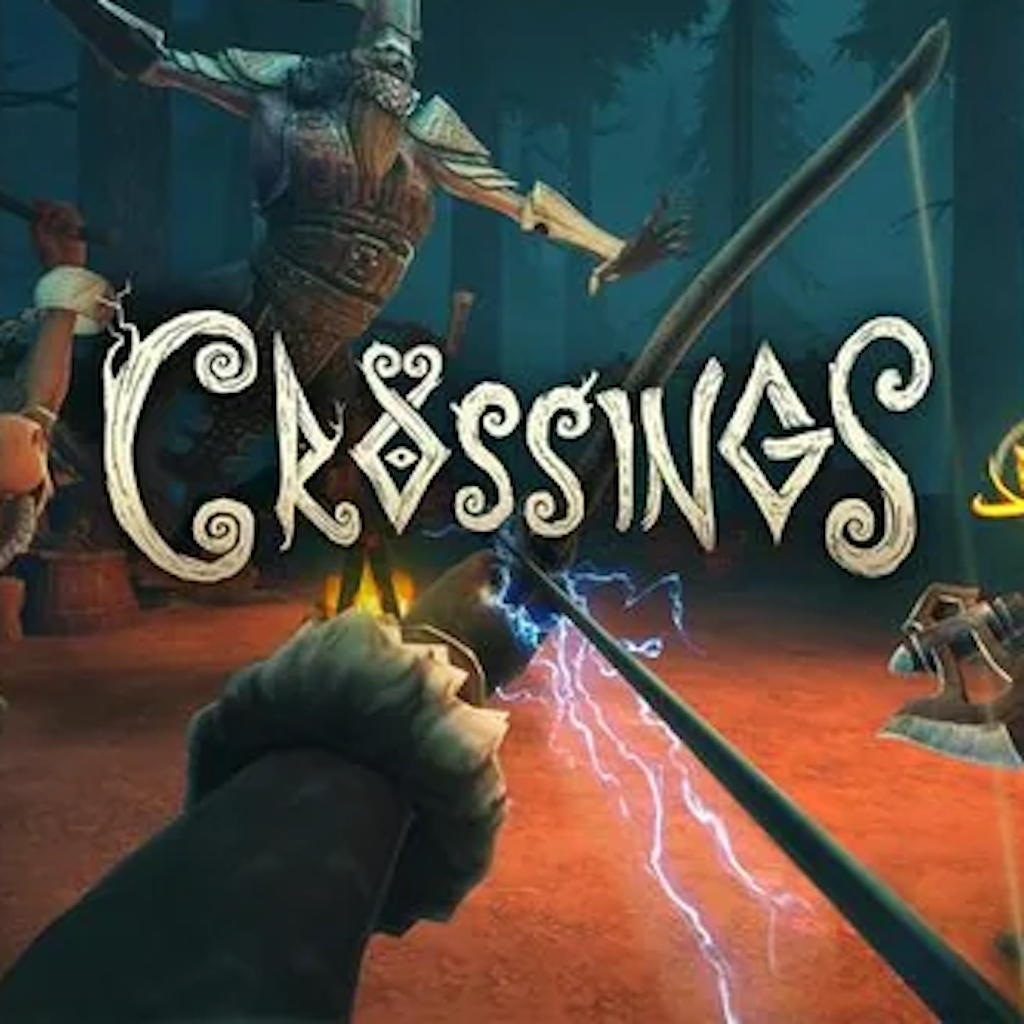
Crossings is an ambitious and confident VR roguelite that demonstrates how well physical combat and replay-driven design can coexist in virtual reality. Set within a bleak, myth-inspired Norse afterlife, the game casts players as a fallen warrior trapped in a cyclical realm of death, rebirth, and brutal combat. Through repeated runs, shifting environments, and steadily expanding abilities, Crossings builds a satisfying loop that rewards persistence, experimentation, and mechanical mastery.
In a crowded Meta Quest landscape, Crossings stands out not because of flashy visuals or spectacle, but because it understands the fundamentals of VR engagement: physicality, presence, and consequence. Every swing, block, and spell cast feels meaningful, and every failure feeds directly into future success.
World and Tone: A Grim, Living Afterlife
The setting of Crossings is a fractured afterlife shaped by Norse myth, where ruined forests, cavernous halls, and ancient structures blend into a constantly shifting landscape. Rather than presenting a heroic vision of Valhalla, the game opts for something more somber and mysterious — a realm defined by fog, decay, and repetition.
Narrative delivery is intentionally restrained. There are no lengthy cutscenes or heavy exposition. Instead, the story emerges through atmosphere, environmental cues, and the player’s repeated journeys through the realm. You are not here to save the world in a traditional sense; you are here to endure it, understand it, and carve your own path forward.
This understated storytelling suits the roguelite structure well. The theme of endless struggle aligns naturally with the cycle of death and rebirth, giving mechanical repetition a strong narrative justification.
Combat: Built for VR From the Ground Up
Combat is where Crossings truly excels. Unlike many VR action titles that struggle to make melee feel weighty or precise, Crossings commits fully to physical, skill-driven combat.
Melee Systems
Weapons feel distinct and deliberate. Swords, axes, and blunt instruments all behave differently, with momentum, swing direction, and timing playing crucial roles. Wild flailing is rarely effective; success comes from controlled swings, well-timed blocks, and smart positioning.
Blocking and dodging are essential mechanics, not optional flourishes. Enemies punish carelessness, forcing players to read attack patterns and respond with intent. This creates combat encounters that feel tense and earned rather than chaotic or forgiving.
Gesture-Based Magic
Magic adds a powerful layer of depth. Rather than relying on simple button presses, spells are cast using hand gestures, reinforcing immersion and creating a genuine sense of spellcraft. Successfully executing spells under pressure feels rewarding, especially when combined with melee attacks.
Magic is not overpowered, but it is versatile. Defensive wards, elemental attacks, and utility spells allow players to tailor their approach, turning difficult encounters into manageable challenges when used intelligently.
Roguelite Structure: Meaningful Progress Through Failure
At its core, Crossings is a roguelite built around repeated runs through procedurally shifting environments. Each run presents new layouts, enemy combinations, and opportunities, ensuring that no two attempts feel exactly the same.
Death sends you back to the beginning, but it never feels wasted. Permanent progression systems allow you to unlock new gear, abilities, and passive bonuses between runs. This steady sense of growth is key to the game’s appeal — even failed attempts contribute to long-term improvement.
Crucially, progression never trivialises the challenge. While upgrades make you stronger, success still depends on player skill. The game avoids the pitfall of turning later runs into mindless power trips, maintaining tension throughout.
Enemy Variety and Difficulty Curve
Enemies draw heavily from Norse mythology and dark fantasy archetypes. Early foes introduce basic combat rhythms, while later encounters mix enemy types in ways that test multitasking, positioning, and stamina management.
Boss encounters are standout moments. These fights demand full engagement with the game’s systems, combining melee precision, magic usage, and spatial awareness. They feel like genuine milestones rather than arbitrary difficulty spikes.
While balance is generally strong, certain weapon and upgrade combinations can occasionally feel overpowered once discovered. However, this experimentation is part of the roguelite appeal, encouraging players to explore different builds and strategies.
Level Design: Shifting Paths, Consistent Pressure
Environments in Crossings are procedurally rearranged between runs, creating a sense of unpredictability without sacrificing cohesion. Forest paths twist differently, chambers open into new configurations, and familiar landmarks appear in unfamiliar contexts.
This design keeps exploration engaging while ensuring players can still learn the world’s logic over time. The environments are not sprawling, but they are dense and purposeful, designed to support frequent combat encounters and tactical movement.
Visuals and Audio: Atmosphere Over Spectacle
Visually, Crossings opts for clarity and atmosphere rather than high-end spectacle. Environments are moody and restrained, with fog, muted colours, and strong lighting choices reinforcing the game’s somber tone.
While the graphics won’t rival big-budget VR releases, they serve the gameplay well. Combat remains readable even in hectic situations, and performance is stable enough to maintain immersion.
Audio design is effective across the board. Weapon impacts carry satisfying weight, ambient soundscapes enhance tension, and enemy audio cues provide valuable feedback during combat. Music is subtle but thematically appropriate, never overwhelming the action.
Accessibility and Comfort
Crossings supports a range of playstyles, including standing and seated play, with movement options designed to minimise discomfort. Combat is physically demanding, particularly during longer sessions, but the game avoids excessive camera motion that could cause nausea.
Gesture recognition for magic is responsive and forgiving enough to avoid frustration, striking a good balance between immersion and usability.
Replayability and Longevity
Replay value is one of Crossings’ strongest qualities. Procedural layouts, varied weapons, unlockable abilities, and build experimentation ensure that each run offers something new. The desire to refine strategies and push further into the afterlife provides strong motivation to return.
The game is clearly designed with long-term engagement in mind, rewarding both short sessions and extended play for dedicated players.
Strengths and Weaknesses
Strengths:
- Excellent VR-native melee combat
- Satisfying gesture-based magic system
- Strong roguelite progression loop
- Atmospheric world and cohesive tone
- High replay value
Weaknesses:
- Visual presentation prioritises function over polish
- Some balance inconsistencies with certain builds
- Limited narrative depth beyond atmosphere
Final Verdict
Crossings is one of the strongest VR roguelites currently available on Meta Quest. Its commitment to physical combat, thoughtful progression systems, and atmospheric design create an experience that feels purpose-built for virtual reality rather than adapted to it.
While it may not appeal to players seeking story-driven adventures or visual spectacle, those who value skill-based combat, replayability, and immersive physical engagement will find a great deal to enjoy here.