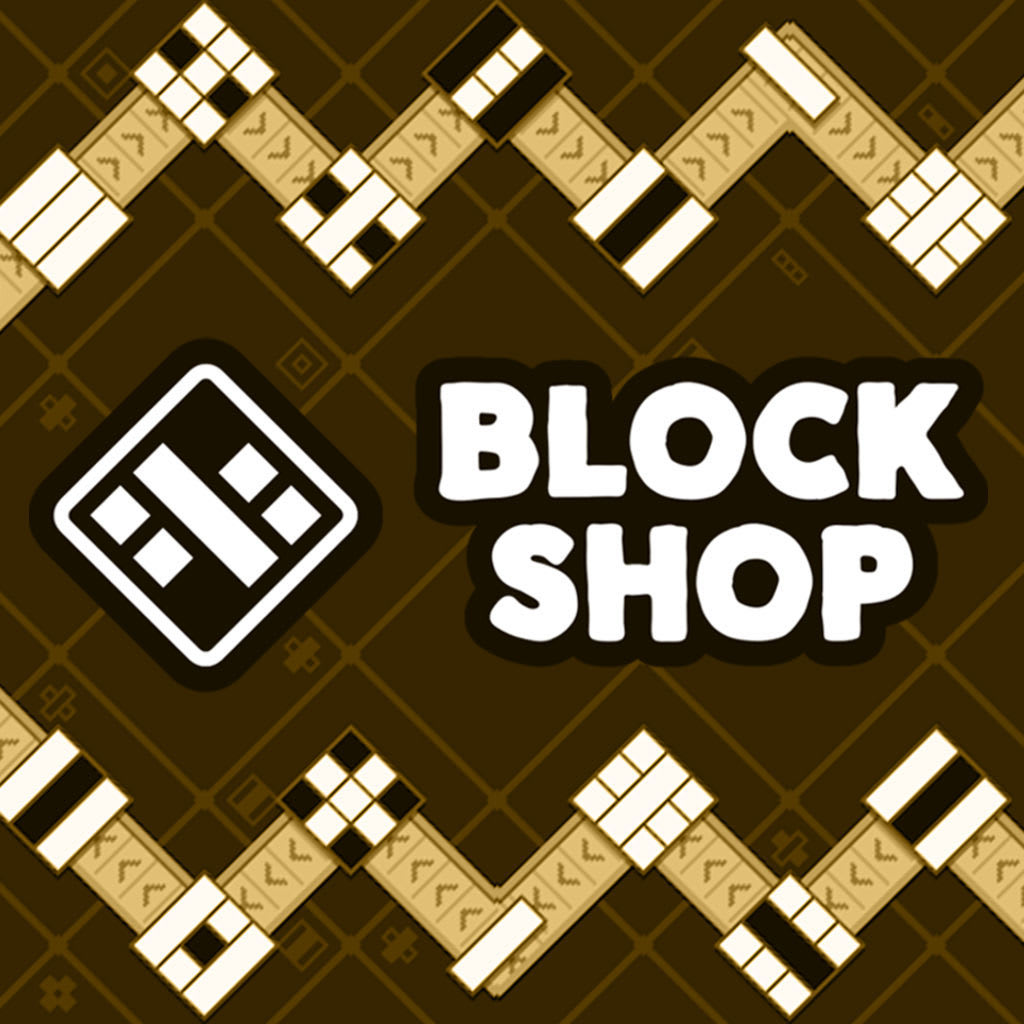
There are plenty of games that ask you to manage a shop, and plenty that ask you to solve increasingly complex block puzzles. Block Shop brings both ideas together, gives them a friendly little shake, and decides that what the world really needs is a shop where the biggest challenge is working out where on earth you are going to put everything. Developed and published by Shipmates, this cosy puzzle experience puts you in the running to become the new Block Shop Operator, which sounds like a fairly prestigious position until you realise that the interview process involves arranging an increasingly ridiculous number of blocks without running out of space.
That premise gives Block Shop a wonderfully simple hook. You are not building some enormous retail empire or worrying about complicated economic spreadsheets. Instead, you are dealing with shelves, stock, customer orders and geometric merchandise, with the humble grid becoming your greatest ally and your most irritating enemy. What begins as an easy exercise in placing shapes gradually develops into a surprisingly absorbing test of spatial awareness, planning and the ability to look at a nearly full board and convince yourself that there must still be a way out of the mess you have created.
It is the sort of game that feels immediately approachable yet has enough depth to keep your brain working. You can sit down for a short session, solve a few puzzles and wander away, or find yourself saying that you will just clear one more row before suddenly realising that considerably more time has passed than you intended. That is usually a very good sign for a puzzle game.
Running The Shop
The basic concept is beautifully straightforward. You are given blocks of different shapes and need to place them on your available grid, fitting everything together as efficiently as possible. Complete rows and columns can then be cleared, opening up valuable space and allowing you to continue managing your stock.
The trick is that every decision has consequences. Placing a block simply because it fits can create an awkward little pocket of empty space that becomes a nightmare a few moves later. A seemingly harmless decision at the beginning of a puzzle can eventually leave you staring at a board with nowhere sensible to put the next piece, and that is when Block Shop starts showing its teeth.
It creates a lovely rhythm between immediate decisions and long-term planning. You need to think about where the current block belongs, but you also need to consider what might arrive next and whether the space you are creating will actually be useful. It is that combination that stops the game from becoming little more than a digital version of fitting boxes into a cupboard.
Every Block Has A Job
The variety of block shapes is central to the experience. Some pieces are wonderfully easy to place, while others seem deliberately designed to make you question every decision you have made up to that point. Learning to recognise the useful spaces on the grid becomes increasingly important as the puzzles grow more complex.
Rotating and positioning the pieces feels intuitive, so the challenge comes from the puzzle rather than from wrestling with the controls. That is exactly how it should be. When something goes wrong, you want to be annoyed at yourself for putting the wrong block in the wrong place, not because the game failed to understand what you were trying to do.
There is also a satisfying tactile quality to moving everything around. Blocks click into position with pleasing little sounds, and clearing a completed line provides that tiny moment of reward that makes you want to immediately create another one. It is a simple feedback loop, but Block Shop understands that puzzle games live or die by these small moments.
More Than Just Filling Shelves
The retail theme gives the traditional block puzzle formula a little extra personality. Rather than simply filling an anonymous grid, you are organising stock for a working shop. Customer orders can ask for particular colours or shapes, encouraging you to pay attention to what is coming in rather than treating every block as interchangeable.
That makes the shop feel purposeful. You are not just clearing lines because the game tells you to. You are trying to fulfil orders, keep your available space under control and make enough money to improve your operation. It is light management rather than a full-blown business simulator, but that is probably the right decision.
The game never gets bogged down in complicated spreadsheets or endless menus. Instead, the retail mechanics provide a little context for the puzzle-solving. It gives the whole thing a cosy sense of progression without taking attention away from the blocks themselves.
When The Deliveries Arrive
One of the more interesting ideas is the arrival of sudden stock surges. Just when you think you have the shop nicely organised, more deliveries can arrive and throw everything into disarray. It cleverly adds pressure without turning Block Shop into a frantic time-management game.
Suddenly, that carefully preserved patch of empty floor space becomes incredibly valuable. You might have been saving it for a particular shape, only to discover that the latest delivery has given you a completely different problem to solve. It encourages you to adapt rather than simply follow a predetermined strategy.
These moments are where the retail theme and the puzzle mechanics work particularly well together. Shops are supposed to be organised, but anyone who has ever worked around stock deliveries will know that reality does not always align. Block Shop captures a little of that chaos without making the experience stressful.
Ten Machines And A Bigger Challenge
Progression unfolds across multiple worlds and ten distinct block-transforming machines, giving the game welcome variety as you move through its increasingly complex challenges. The machines help prevent the core mechanics from feeling static, while the different worlds give you something new to work towards.
There are more than 100 puzzles in total, a healthy amount of content for this kind of experience. The gradual increase in complexity gives you plenty of time to get comfortable with the basic systems before the game starts asking you to make much more careful decisions.
That progression is important because Block Shop is at its best when it makes you feel clever rather than overwhelmed. The early puzzles give you confidence, the middle sections make you think twice, and eventually you reach situations where a single misplaced block can undo several minutes of careful planning. It is a satisfying learning curve.
Making A Business Out Of Blocks
The money you earn can be reinvested in the shop, allowing you to expand your shelf grids, unlock useful clearing tools and customise your store’s appearance. These upgrades give your successes a little more meaning, as completing puzzles is not simply about reaching the next level.
The ability to improve the size and efficiency of your operation also adds a gentle sense of progression. You begin with a modest setup and gradually work towards something that feels more capable. It is not the deepest management system you will ever encounter, but it provides enough motivation to keep playing.
The cosmetic options are a nice touch, too. They do not fundamentally change the gameplay, but they give the shop a little personality. After spending hours arranging blocks, it is nice to have something that makes the place feel like it belongs to you.
A Shop That Feels Good To Use
Visually, Block Shop adopts a clean, colourful vector style that suits the game’s relaxing nature. The shop interiors are bright and welcoming, while the individual blocks are clearly differentiated. This clarity becomes increasingly important as the board gets busy and you need to identify shapes quickly.
There is no unnecessary visual clutter. The grid boundaries remain clear, the pieces are easy to recognise, and the interface generally gets out of the way. That might sound like a small thing, but good puzzle design relies heavily on being able to understand the board at a glance.
The audio complements the presentation nicely. Light background music creates a relaxed atmosphere, while the clicks of blocks being placed, cash register sounds, and satisfying clearing effects give the game a pleasing tactile quality. There is something particularly enjoyable about completing a row and hearing that little chime, especially when you know the resulting empty space has just saved your entire puzzle.
When Cosy Gets Complicated
The biggest strength of Block Shop is also potentially its biggest weakness. The core gameplay does not change dramatically, so whether you enjoy the game will largely depend on how much you like spatial puzzles. There are new machines, worlds and complications, but you are still fundamentally arranging blocks and making the best use of your available space.
For me, that simplicity is mostly a positive. There is something wonderfully relaxing about knowing exactly what you are supposed to do while still having to think carefully about how to accomplish it. The game does not need constant surprises because the puzzle itself provides enough variation.
Later levels can become delightfully chaotic, though. What was once an open and forgiving grid can quickly become a nightmare of awkward shapes and dwindling space. That is where patience becomes just as important as intelligence, because sometimes the best move is not the most obvious one.
The Perfect Fit
There is a particularly satisfying moment in Block Shop when you have been staring at a crowded board and suddenly spot the solution. You place one piece, then another. A line clears, and everything starts falling into place. It is not flashy, but it creates the same little rush of satisfaction that has kept block-based puzzle games popular for decades.
That is ultimately what makes Block Shop work. It takes a familiar idea and wraps it in a theme that feels natural rather than forced. The shop provides the setting, customer orders give a little purpose, upgrades give you something to work towards, and the blocks remain the star of the show.
It is also a wonderfully easy game to recommend to someone who enjoys puzzles but does not necessarily want something intimidating. You can learn the basics almost immediately, yet the later challenges can still make you sit back and think. That balance is not always easy to achieve.
Final Verdict
Block Shop is a charming, cleverly designed puzzle game that gives familiar grid-based mechanics a cosy retail makeover. Its combination of block placement, line clearing, customer orders and shop upgrades creates a satisfying loop that is easy to understand yet increasingly difficult to master. With more than 100 puzzles, multiple worlds and ten different block-transforming machines, there is plenty here to keep puzzle fans occupied.
The retail mechanics are deliberately light, which works in the game’s favour. They provide context and progression without getting in the way of the main attraction. The clean visuals, tactile sound effects and responsive controls also make every interaction feel satisfyingly polished.
There are moments when the increasingly crowded grids can become frustrating, particularly when a poor decision several moves earlier suddenly comes back to haunt you. Some players may also find the basic formula a little repetitive over a longer session. For anyone who enjoys spatial puzzles, however, that repetition is more likely to become an addictive rhythm than a serious problem.
Ultimately, Block Shop understands the simple pleasure of making everything fit. It takes something as ordinary as organising stock and turns it into a surprisingly absorbing mental workout, all while maintaining a warm, welcoming atmosphere. It is cosy without being sleepy, challenging without being cruel and simple without feeling empty.
The shop is open, deliveries are arriving, and there is a suspiciously large pile of blocks waiting for someone to sort them out. If you enjoy puzzle games that reward planning, patience and the occasional moment of staring blankly at a screen while muttering “there must be a way”, Block Shop has plenty to offer.