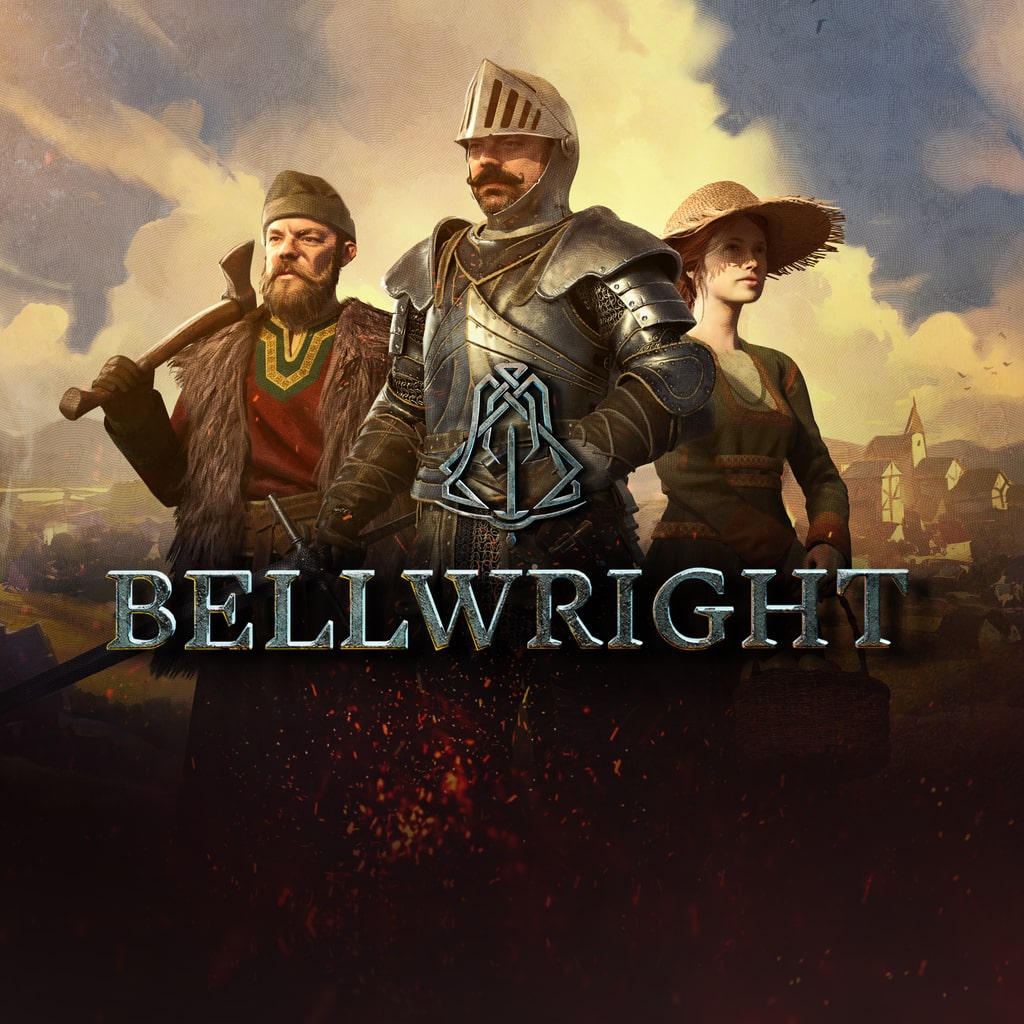
A special kind of satisfaction is unique to certain sandbox games. It comes from looking back at a once-empty world and recognising every road, workshop, farm, and fortress as the result of your own efforts. Bellwright understands that feeling better than most. What begins as a tale of survival and exile slowly evolves into a sweeping story of rebellion, leadership and nation-building, constantly finding new ways to expand its ambitions.
Developed by Donkey Crew and now arriving on consoles after a successful PC run, Bellwright is one of those rare games that seems almost impossibly large in scope. It blends survival mechanics, town management, role-playing progression and large-scale warfare into a single experience. On paper, that sounds like a recipe for chaos. In practice, it becomes one of the most absorbing medieval sandboxes available today.
The premise immediately gives players a strong sense of purpose. Framed for the murder of the Crown Prince and forced into exile, your character has spent years in the shadows. After narrowly surviving an assassination attempt, evidence emerges suggesting there is far more to the story than anyone realised. Returning to your homeland, you begin the long process of uncovering the truth while rallying ordinary people against an increasingly oppressive Crown.
While the central mystery remains compelling throughout the campaign, Bellwright’s greatest strength lies in how naturally it weaves narrative motivation into its gameplay systems. Every village liberated, every recruit gained and every new settlement constructed feels connected to the larger rebellion. You are not simply checking objectives off a list. You are actively building a movement.
From Campfire to Kingdom
The opening hours feel familiar to anyone who has spent time in survival games. You gather branches, hunt wildlife, craft simple tools and establish a basic shelter. The early game is grounded and intimate, focusing on the immediate needs of survival in a dangerous world.
What makes Bellwright special is how quickly it expands beyond those foundations. Before long, your simple camp becomes a functioning settlement populated by villagers who rely on your leadership. Workshops appear. Farms begin producing food. Supply chains emerge. What was once a personal struggle for survival becomes a communal effort to build something larger than yourself.
The progression curve is remarkably satisfying because every new development feels earned. Watching a small outpost gradually evolve into a bustling medieval town creates a sense of ownership that many city-builders struggle to achieve. You remember gathering the wood used to build the first structures. You remember recruiting the workers who now maintain them. Every success carries emotional investment.
The game’s world also deserves praise for encouraging exploration. Hidden resources, new recruits, quests and opportunities are scattered across the landscape, giving players a constant reason to venture beyond their settlements. Exploration never feels disconnected from progression because nearly every discovery contributes meaningfully to your growing rebellion.
The People Make the Rebellion
One of Bellwright’s smartest design decisions is treating its villagers as more than background decoration. Every recruit serves a purpose and has their own strengths, weaknesses and areas of expertise.
Some become skilled craftsmen capable of producing superior equipment. Others excel at farming, hunting or gathering resources. A few emerge as valuable warriors who can strengthen your armies on the battlefield. Building an effective settlement becomes as much about managing people as managing resources.
The automation systems strike a strong balance between complexity and accessibility. Assigning tasks, setting work priorities and organising production chains feel rewarding because the results are immediately visible. Villagers go about their routines, transporting goods, harvesting crops and crafting equipment without constant supervision.
There is genuine satisfaction in watching an efficient settlement operate smoothly. Resources flow where they are needed. Workshops remain active. Food supplies stay stocked. The entire community begins to function like a living organism. This transforms management from a chore into one of the game’s most compelling features.
Steel, Strategy and Survival
Combat adds another layer to Bellwright’s already impressive list of systems. Rather than relying on simple button mashing, battles utilise directional attacks and blocks that demand timing, positioning and awareness.
Weapons feel distinct, encouraging experimentation with different fighting styles. Whether wielding a sword, swinging a heavy hammer or engaging enemies at range with a bow, combat remains engaging throughout the campaign. Victory often depends as much on patience and observation as on raw aggression.
Where Bellwright truly separates itself from many survival games is in its large-scale warfare. As your rebellion grows, so do the conflicts you face. What begins as small skirmishes eventually develops into sizeable military engagements involving organised formations and coordinated tactics.
Commanding squads during battle adds an entirely new dimension to gameplay. Positioning troops, issuing orders and adapting to changing battlefield conditions create moments that feel closer to a strategy game than a survival sandbox. Watching soldiers equipped and trained by your own settlements march into battle delivers an incredible sense of payoff.
These moments capture the heart of Bellwright’s design philosophy. Every system feeds into another. Exploration fuels settlement growth. Settlements sustain armies. Armies liberate territory. Liberated territory creates new opportunities. The entire experience forms an interconnected web of progression.
A World Worth Fighting For
Visually, Bellwright offers an impressive recreation of medieval life. Dense forests, rolling fields and rustic villages create an inviting world that feels grounded without becoming dull. Unreal Engine 5 brings the countryside to life with detailed lighting, impressive draw distances and convincing environmental effects.
The atmosphere benefits greatly from the game’s slower pace. There are moments when simply riding through the countryside at sunrise becomes surprisingly memorable. Bellwright understands the importance of quiet moments between battles, allowing players to appreciate the world they are working so hard to liberate.
Audio design also contributes significantly to immersion. The sounds of blacksmiths at work, villagers going about their daily routines and soldiers preparing for war reinforce the feeling of a living, breathing world. While the soundtrack rarely steals the spotlight, it consistently supports the tone of the adventure.
Not Without Friction
As impressive as Bellwright is, it occasionally struggles under the weight of its ambition. The biggest issue on consoles is menu navigation. While the developers have clearly worked hard to adapt the experience for controllers, certain management screens still feel more natural with a mouse and keyboard. Assigning priorities, organising inventories and navigating complex settlement menus can be cumbersome.
The game also suffers from minor technical imperfections. AI pathfinding occasionally produces odd behaviour, particularly during large battles. Some animation glitches and clipping issues appear from time to time. None of these problems are severe enough to derail the experience, but they serve as reminders that Bellwright remains an extraordinarily complicated game beneath the surface.
The learning curve may also intimidate newcomers. Bellwright throws a vast number of systems at players, and mastering them all requires time and patience. Those willing to invest that effort will find one of the deepest sandbox experiences available. Those looking for immediate gratification may feel overwhelmed during the opening hours.
Final Verdict
Bellwright is an extraordinary achievement. It successfully combines survival gameplay, settlement management, role-playing progression and battlefield strategy into a cohesive experience that rarely feels fragmented. Few games manage to deliver such a convincing sense of growth, transforming players from lonely exiles into leaders capable of reshaping an entire kingdom.
Its menus can occasionally feel cumbersome on consoles, and a handful of technical rough edges remain. Yet these shortcomings do little to diminish what Donkey Crew has accomplished. The sheer scale of the experience, combined with its remarkably satisfying progression systems, creates a sandbox that is difficult to put down once it gets its hooks in.
For fans of medieval role-playing, city-building, and large-scale strategy, Bellwright offers exceptional value and an adventure that can consume dozens of hours. It is not merely a survival game. It is a story about building something worth fighting for, one village, one recruit and one victory at a time.