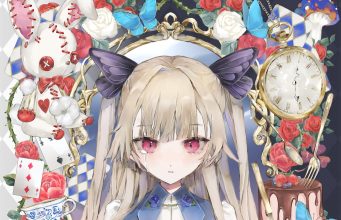
Seven years after the events of its predecessor, Arcadia Fallen II arrives not as a direct continuation but as a confident evolution. Developed and published by Galdra Studios, this standalone sequel shifts the focus to a new protagonist navigating life at the Seven Winds Academy—a prestigious institution for mages set against a backdrop of rising political tension within the Empire.
Where the original leaned heavily into visual novel storytelling with light RPG elements, Arcadia Fallen II refines that formula into something more deliberate, more expressive, and ultimately more player-driven. With its innovative “tone label” dialogue system, five romanceable companions, and a narrative that responds thoughtfully to your decisions, this sequel prioritises agency without sacrificing cohesion.
But while its strengths are clear, the experience is not without limitations. Beneath its charm and polish lies a game that occasionally plays it safe—particularly when it comes to challenge and long-term engagement.
Story & Setting: A World on the Brink
The setting is one of Arcadia Fallen II’s greatest strengths. The Seven Winds Academy initially presents itself as a safe haven—a place where students worry more about exams and social dynamics than about the unrest brewing beyond its walls. But that illusion gradually fractures as the story unfolds.
You play as a new student whose background is shaped by your chosen magical discipline. Whether you specialise in combat magic, support abilities, or more scholarly pursuits, your choice subtly influences how characters perceive you and how certain situations play out.
The narrative balances slice-of-life academy moments with a slowly escalating central mystery. Sneaking out after curfew, bonding with classmates, and navigating romantic tensions all feel natural within the structure of student life. Yet there’s always an undercurrent of something larger—political instability, hidden truths, and secrets buried deep within the academy itself.
Importantly, returning players are rewarded with “legacy choices,” which allow certain elements of the world to reflect decisions made in the first game. However, newcomers won’t feel lost. The story is self-contained enough to stand on its own, making this an accessible entry point into the series.
The Tone Label System: Choice Without Anxiety
Perhaps the most distinctive feature of Arcadia Fallen II is its “tone label” system—a deceptively simple innovation that fundamentally changes how players engage with dialogue.
Rather than guessing how a line will be delivered, each dialogue option is clearly marked with its emotional intent. Sarcastic, sincere, confrontational, playful—you know exactly how your character will come across before committing.
This does two important things:
- It removes frustration often associated with dialogue-heavy games, where unintended tones can lead to unwanted outcomes.
- It encourages role-playing, allowing you to consistently shape your character’s personality.
The result is a system that feels both player-friendly and narratively rich. You’re not just choosing outcomes—you’re shaping how they unfold.
It’s a small design choice with a massive impact, one other narrative-driven games would do well to learn from.
Characters & Relationships: The Heart of the Experience
At its core, Arcadia Fallen II is about people. The five romanceable companions are not merely optional distractions—they are central to the game’s emotional resonance.
Each character is thoughtfully written, with distinct personalities, personal struggles, and evolving relationships with the protagonist. Whether you’re building a slow-burn romance or simply forming strong friendships, interactions feel meaningful rather than transactional.
The game avoids common genre pitfalls. Characters aren’t reduced to archetypes, and their development unfolds naturally over time. Dialogue feels organic, aided in no small part by the tone label system, which helps conversations maintain emotional consistency.
However, while the writing is strong, the stakes can sometimes feel muted. The game’s commitment to avoiding “wrong choices” means consequences are rarely severe. This makes for a more relaxed experience but can occasionally reduce tension in key narrative moments.
Gameplay & Structure: Light RPG, Heavy Narrative
Mechanically, Arcadia Fallen II sits comfortably between a visual novel and a light RPG. Exploration is limited yet purposeful, with areas of the academy and surrounding environments unlocking as the story progresses.
Puzzles are tied to your chosen magical discipline, offering some variation across playthroughs. They are generally straightforward, providing a welcome break from dialogue-heavy sequences.
That said, players expecting deep RPG systems may find the experience lacking. Combat is minimal, and progression systems are relatively simple. This is very much a story-first game, with gameplay serving as a supporting framework rather than the main attraction.
The pacing reflects this. The game moves at a measured, deliberate pace, allowing relationships and narrative threads to develop naturally. For some, this will feel immersive and relaxing. For others, it may feel slow.
Presentation: Style Over Spectacle
Visually, Arcadia Fallen II adopts a stylised, illustrated aesthetic that prioritises charm over realism. Character portraits are expressive, environments are colourful, and the overall art direction beautifully reinforces the game’s tone.
Animations are limited, as expected for the genre, but effective. The focus is on conveying emotion rather than technical complexity, and the game succeeds in that regard.
The soundtrack deserves particular praise. It complements both the tranquil academy setting and the more dramatic story beats, enhancing the atmosphere without overwhelming it.
Performance across platforms is stable, with quick load times and minimal technical issues. While it doesn’t push hardware boundaries, it doesn’t need to—the presentation is cohesive and well-executed.
Replayability: Choice Matters… to a Point
Replay value is present but somewhat limited. Different dialogue choices, romance paths, and magical disciplines offer variety, yet the overall narrative structure remains consistent.
The absence of “bad endings” or major fail states makes the experience more inclusive but also reduces the incentive to replay for drastically different outcomes.
Still, completionists and fans of character-driven stories will find reasons to return—particularly to explore alternate relationships and uncover hidden story details.
Final Verdict
Arcadia Fallen II is a thoughtful, well-crafted sequel that recognises its strengths and leans into them with confidence. Its tone-label system is genuinely innovative, its characters compelling, and its world rich with quiet intrigue.
While it may lack the mechanical depth or high-stakes tension some players expect, it excels as a narrative experience—one that prioritises player expression, emotional authenticity, and accessibility.
This is not a game about winning or losing. It’s about choosing who you are, how you connect with others, and the kind of story you want to tell.