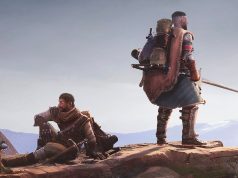
Few strategy games in history have demonstrated longevity quite like Age of Empires II. Originally released in 1999 and revitalized through its Definitive Edition, the game has evolved into a living platform for historical storytelling and competitive RTS design. With The Last Chieftains, released February 17, 2026, developer teams Forgotten Empires, Tantalus Media, and Wicked Witch deliver one of the most culturally focused expansions yet — and a landmark moment as the first major expansion to launch simultaneously on PlayStation 5 alongside PC and Xbox platforms.
Rather than revisiting familiar European or Asian battlefields, The Last Chieftains turns its attention toward medieval South America, introducing new civilizations, campaigns, and mechanical experimentation that meaningfully expand both single-player storytelling and multiplayer strategy.
The result is an expansion that feels less like optional content and more like a thematic rebalancing of the game’s global historical scope.
A New Focus: Medieval South America
Historically, Age of Empires II has often centered its campaigns on well-documented imperial powers. The Last Chieftains deliberately shifts that perspective, exploring indigenous civilizations whose histories are less frequently represented in mainstream strategy games.
The expansion introduces three new playable civilizations:
Mapuche
A mobility-focused faction emphasizing aggressive cavalry tactics. The Kona, a melee cavalry unit dealing increased damage to wounded enemies, encourages momentum-based warfare, rewarding players who maintain offensive pressure. Supporting them is the Bolas Rider, a ranged cavalry unit capable of slowing opponents — ideal for pursuit and battlefield control.
Muisca
An Andean civilization built around disciplined infantry formations. Units like the Guecha Warrior, whose death heals nearby allies, create fascinating risk-reward combat scenarios. Meanwhile, the Temple Guard grows deadlier the longer it survives in combat, encouraging sustained engagements rather than quick skirmishes.
Tupi
Specialists in jungle warfare, the Tupi excel at unconventional tactics. Blackwood Archers, trained in pairs, allow rapid ranged scaling, while Ibirapema Warriors deliver area-of-effect damage that punishes clustered enemy formations.
Each civilization feels mechanically distinct without breaking competitive balance — a hallmark of the Definitive Edition’s modern design philosophy.
The Settlement Mechanic — A Meaningful Evolution
The expansion’s most impactful gameplay addition is the Settlement system.
Instead of separate drop-off buildings for wood, food, and gold, South American civilizations rely on a unified Settlement structure that replaces Mills, Lumber Camps, and Mining Camps. This change dramatically alters early-game strategy.
Benefits include:
- Streamlined economic planning
- More flexible base layouts
- Faster adaptation to shifting resource needs
However, centralization introduces vulnerability. Losing a Settlement can cripple an economy instantly, forcing players to think carefully about positioning and defense.
This mechanic subtly reshapes familiar build orders, refreshing gameplay without alienating longtime players.
Campaigns — History Through Narrative Choice
The Last Chieftains adds three fully voiced campaigns totaling 15 scenarios, each centered on legendary historical figures:
- Lautaro (Mapuche) — a resistance narrative against colonial expansion.
- Pacanchique (Muisca) — a story balancing loyalty, leadership, and myth surrounding El Dorado.
- Arariboia (Tupi) — a politically complex tale of alliance and survival amid European arrival.
Unlike earlier campaigns, these stories introduce branching narrative decisions that influence later missions. While not radically altering outcomes, choices add emotional investment and replay value.
Mission design stands out for environmental storytelling. Dense jungles, mountainous terrain, and culturally inspired architecture create scenarios that feel distinct from traditional European battlefields.
The campaigns succeed not only as gameplay challenges but as educational storytelling — presenting history through perspective rather than conquest alone.
Naval Overhaul — Quietly Transformative
Launching alongside the DLC, Update 169123 introduces a significant naval rework affecting all players.
The new Hulk-line ships — Hulk, War Hulk, and Carrack — specialize in countering Fire Ships using grappling-hook mechanics for close combat. Naval battles now feel more tactical and less dominated by single-unit counters.
While technically part of a broader update, the changes complement the expansion’s focus on strategic diversity.
Naval engagements now reward positioning and fleet composition more than sheer production volume.
Reworked Incas Civilization
To maintain regional authenticity, the Incas receive a substantial redesign.
The traditional Eagle Warrior line has been replaced with the Champi Scout and Champi Warrior, units reflecting regional weaponry and combat styles. The redesign integrates the Incas more naturally into the South American roster while refreshing strategies for longtime players.
It’s a bold adjustment that largely succeeds, though competitive veterans may require time to adapt.
Multiplayer Impact
One of the expansion’s greatest achievements is how smoothly the new civilizations integrate into ranked multiplayer.
Each faction introduces fresh strategic possibilities:
- Mapuche aggression alters cavalry meta timing.
- Muisca infantry encourages prolonged engagements.
- Tupi area damage punishes careless formations.
Importantly, none feel overtuned. Early competitive impressions suggest thoughtful balancing, allowing experimentation without destabilizing established playstyles.
Cross-platform availability — particularly the PlayStation 5 launch — broadens the multiplayer ecosystem significantly, marking a major accessibility milestone for the franchise.
Visual & Audio Enhancements
The expansion shines visually through environmental detail.
New flora, fauna, and architectural sets create lush battlefields filled with personality. Small touches — such as animated capybara herdables — add charm without distracting from gameplay clarity.
Voice acting across campaigns is strong, grounding historical narratives with emotional authenticity.
The soundtrack blends traditional instrumentation with the series’ iconic orchestral style, reinforcing regional identity while maintaining the classic Age of Empires tone.
Performance & Technical State
Performance remains excellent across platforms. Load times are fast, stability is consistent, and controls translate surprisingly well to console interfaces.
The PlayStation 5 version deserves particular praise. Controller navigation feels refined, proving that classic RTS gameplay can successfully adapt beyond mouse-and-keyboard origins.
Replay Value & Longevity
Replayability is substantial thanks to:
- Three campaigns with branching choices
- New multiplayer strategies
- Civilization experimentation
- Updated naval gameplay
For competitive players, the expansion effectively refreshes the meta. For solo players, campaigns offer several evenings of high-quality historical storytelling.
Pros & Cons
Pros
- ✔ Three well-designed and culturally distinct civilizations
- ✔ Innovative Settlement mechanic refreshes economic strategy
- ✔ Strong narrative campaigns with meaningful choices
- ✔ Excellent multiplayer integration and balance
- ✔ Successful console launch expands accessibility
Cons
- ✘ Campaign branching has limited long-term consequences
- ✘ Learning new economic mechanics may challenge veterans initially
- ✘ Naval overhaul impacts feel subtle outside dedicated maps
Final Verdict
Age of Empires II: Definitive Edition – The Last Chieftains exemplifies how a decades-old strategy game can continue evolving without losing its identity. By shifting focus toward South American history and introducing meaningful mechanical experimentation, the expansion enriches both gameplay and cultural representation.
The Settlement system alone reshapes early-game strategy enough to feel genuinely new, while campaigns demonstrate a growing maturity in how the series approaches historical storytelling.
Most importantly, the expansion respects its audience. It doesn’t reinvent Age of Empires II — it deepens it, expanding the world while reinforcing the timeless strategic foundations that made the game endure for over twenty-five years.
For veterans, it’s essential content. For newcomers arriving via console platforms, it’s a welcoming entry point into one of strategy gaming’s greatest legacies.