There’s a particular warmth to games that don’t want to challenge you so much as carry you somewhere gentle. Lotzo and The Ray of Light, the newest original IP from Spacefarer Games, fits squarely into that space. It’s a colorful, non-violent 3D platformer built around movement, atmosphere, and the quiet joy of restoring a fading world.
Comparisons to Spyro the Dragon and Ori and the Blind Forest feel inevitable — not because it imitates either mechanically, but because it shares their luminous fantasy DNA. Yet Lotzo isn’t interested in intensity or spectacle; it prioritises comfort and accessibility.
And for the most part, it succeeds.
A World Fading Into Twilight
The premise is simple yet evocative. The celestial worlds were once radiant, powered by the mystical Ray of Light. Now the Ray has splintered, the skies are dimmed, and magical creatures are losing their glow.
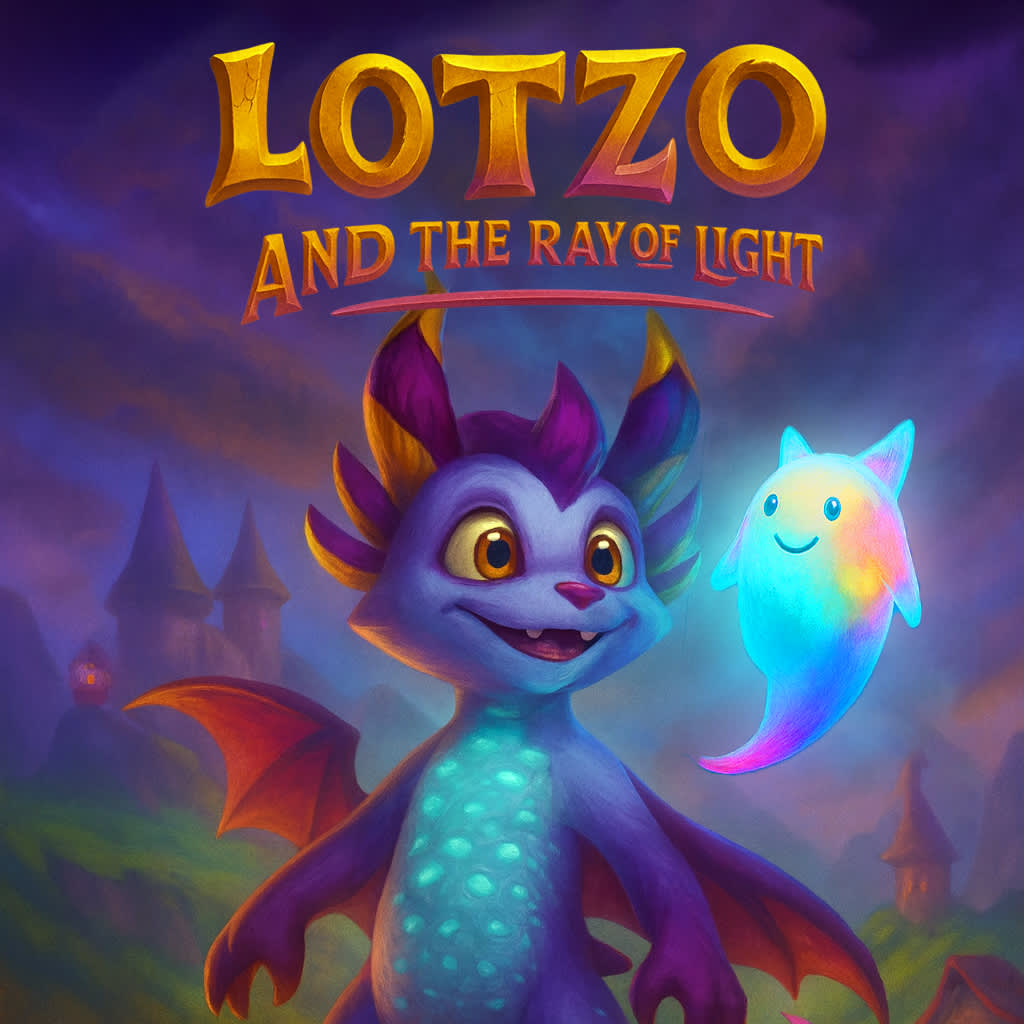
You play as Lotzo — a small purple guardian with turquoise markings and fluttering red wings. Accompanied by a cheerful floating spirit, you traverse floating islands and glowing forests to gather scattered light fragments and restore colour to the land.
It’s a familiar “heal the world” narrative, presented with sincerity rather than melodrama. Dialogue is sparse. The story unfolds visually as environments regain vibrancy.
You don’t conquer darkness.
You gently replace it with warmth.
Joyful Movement as the Core
If Lotzo has a defining strength, it’s movement.
From the moment you take control, the emphasis is clear: this is a traversal-first experience. Lotzo glides gracefully through the air, double-jumps with buoyant animation, and dashes forward in a burst of turquoise light.
The controls are responsive without feeling twitchy. There’s an intentional floatiness that complements the serene tone. You’re encouraged to experiment with verticality — leaping between floating platforms, diving into wind currents, and chaining glides into dashes.
As you collect light fragments, new abilities unlock — air rolls, backflips, and extended glides. These aren’t combat upgrades. They’re expressions of freedom.
The pleasure comes from motion itself.
A Companion in the Sky
Lotzo’s floating spirit companion serves both narrative and gameplay functions.
It highlights hidden light fragments, nudges you toward objectives, and assists in environmental puzzles. Think less overt guidance markers and more subtle luminescent hints.
Puzzles are gentle in complexity. Activate glowing runes in sequence. Redirect beams of light. Navigate platforming routes that require thoughtful timing.
The spirit never dominates the experience. Instead, it feels like a supportive presence — reinforcing the game’s non-threatening design philosophy.
Non-Violent by Design
One of Lotzo’s most notable qualities is its near-total absence of combat.
There are hazards — collapsing platforms, energy barriers, environmental obstacles — but no enemies to defeat in traditional terms.
This design choice transforms tension into curiosity. Exploration becomes the primary motivator. Rather than clearing areas of threats, you’re searching for light fragments to restore brilliance.
It creates a zen-like rhythm. Glide. Land. Discover. Restore.
For players fatigued by combat-heavy adventures, this approach feels refreshing.
That said, it also limits mechanical depth. Without adversarial systems, the game leans entirely on traversal and environmental variety to maintain engagement.
Painterly Aesthetic and Light Restoration
Visually, Lotzo and The Ray of Light is most confident when it leans into its painterly identity.
The “soft-texture” art style resembles a storybook brought to life. Edges are rounded. Surfaces feel brushed rather than rendered. Lighting blooms gently across surfaces.
As you restore regions, dynamic lighting shifts dramatically. Twilight fades into warm hues. Desaturated landscapes blossom with color.
This feedback loop — visual restoration tied directly to player progress — is emotionally satisfying. You see the world healing under your guidance.
On Nintendo Switch, performance remains stable. The game’s relatively small file size (around 1 GB) reflects efficient design rather than graphical compromise.
Handheld mode showcases the vibrant colours especially well.
Level Structure and Progression
The world is divided into distinct regions — floating archipelagos, glowing groves, crystalline cliffs. Each area introduces new traversal challenges and environmental puzzles.
Progression is gated by collected light fragments, encouraging exploration before advancing.
However, the structure is relatively linear. While optional collectables exist, there’s little deviation from the primary path.
For players seeking open-ended exploration akin to larger 3D platformers, the scope may feel modest.
The game’s runtime is compact—roughly 5–7 hours, depending on how thorough you are.
Emotional Tone
Spacefarer Games clearly intended Lotzo to feel emotional and atmospheric rather than adrenaline-fueled.
The soundtrack supports this vision with soft orchestral themes and gentle ambient layers. Music swells subtly as areas are restored, reinforcing the sense of progress.
Character designs are expressive without being exaggerated. Lotzo’s animations convey curiosity and determination through posture and movement rather than dialogue.
The overall mood is hopeful — never bleak.
Where It Shines
Strengths:
- Fluid, satisfying movement system
- Distinctive painterly art style
- Non-violent, accessible design
- Dynamic lighting tied to progression
- Warm, emotionally resonant atmosphere
The commitment to joyful traversal sets it apart.
Where It Falters
Weaknesses:
- Limited mechanical depth
- Linear structure
- Puzzles remain simple throughout
- May feel overly gentle for players seeking challenge
The absence of combat creates serenity — but also reduces complexity.
Final Verdict
Lotzo and The Ray of Light is a heartfelt, accessible 3D platformer that prioritises movement, atmosphere, and emotional warmth over intensity or challenge.
Its painterly visuals and dynamic lighting create a world worth restoring. Its traversal mechanics feel joyful and intuitive. Its non-violent design makes it welcoming to players of all ages.
However, its simplicity can limit long-term engagement. Those seeking deep puzzle systems or high-stakes platforming may find it too gentle.
But that gentleness is intentional.
In a gaming landscape often defined by chaos and combat, Lotzo offers something softer — a storybook journey to bring light back to a dim world.
And sometimes, that’s exactly the kind of adventure we need.