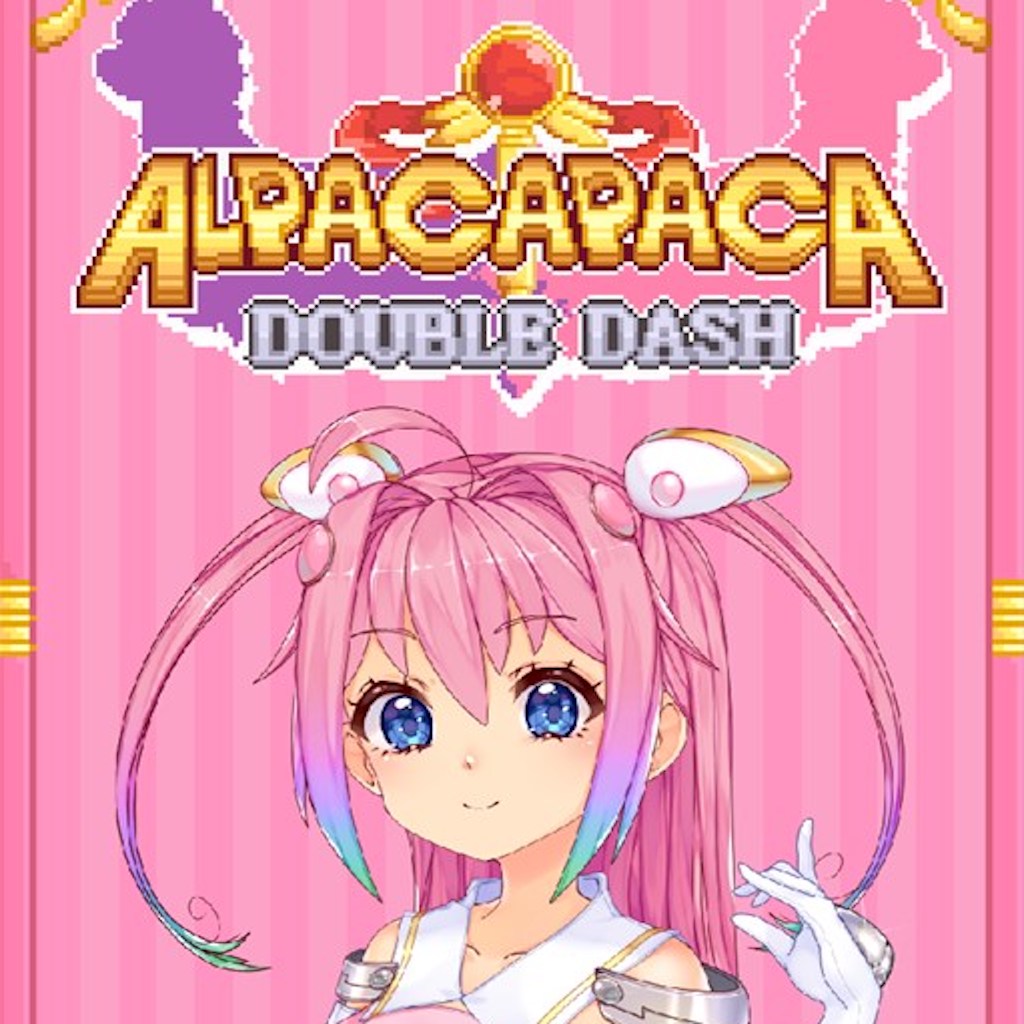
There are few indie sagas as persistently strange as Synnergy Circle Games’ alpaca universe. What began as a string of cheerful, low-budget endless runners has steadily evolved into something more narratively playful. Alpacapaca Double Dash, the latest entry in the series, marks the biggest tonal and structural shift yet.
Now optimized for Xbox Series X|S and priced at a modest £4.19 ($5.99), Double Dash abandons its predecessor’s score-chasing roots in favor of a compact, choice-driven platformer wrapped in a surprisingly clever metafictional premise: three cursed storybooks, each lacking a true protagonist, and a cast of characters battling to claim the narrative spotlight.
It’s odd. It’s colorful. And it’s far more thoughtful than its alpaca-themed exterior suggests.
A Book Without a Hero
The premise is disarmingly sharp. You enter three separate storybooks, each cursed because its original protagonist has vanished. Without a central hero, the remaining characters begin competing to fill the void. Knights, rogues, scholars, villains—each believes they deserve to become the story’s focal point.
Your role? Decide.
As you progress through platforming stages inside each book, your actions determine which character’s arc gains momentum. Save one from danger and their influence grows. Defeat another and their narrative fades.
It’s a light-touch system, but thematically rich. Double Dash doesn’t overwhelm you with branching dialogue trees. Instead, it embeds choice into gameplay moments—subtle nudges that affect which ending each book receives.
For a budget indie platformer, that’s an unexpectedly elegant idea.
Platforming with Personality
Mechanically, Alpacapaca Double Dash is straightforward. You jump, dash, avoid hazards, and traverse side-scrolling levels designed around brisk, accessible movement. The “Double Dash” moniker refers to the expanded dash mechanics, allowing quick bursts of speed and midair repositioning that keep movement fluid.
Controls feel responsive on Xbox Series X|S, and the platforming difficulty is calibrated for pick-up-and-play sessions. This isn’t precision-punishing design. It’s forgiving enough for casual players, but layered enough to reward clean movement.
Level layouts are compact and readable. Obstacles escalate gradually, introducing environmental traps, enemy patterns, and mild timing challenges. It never becomes grueling, but it maintains momentum.
The emphasis remains on flow rather than frustration.
Three Books, Three Tones
Each cursed book presents a distinct visual and thematic style.
One leans into medieval fantasy tropes, complete with crumbling castles and theatrical villains. Another skews whimsical, filled with exaggerated caricatures and surreal environments. The third book introduces darker undertones, balancing humor with subtle menace.
The visual design is bright and cartoonish, maintaining the franchise’s signature alpaca absurdity. Character sprites are expressive and charmingly exaggerated. Backgrounds are simple but vibrant.
The art direction doesn’t aim for depth—it aims for identity. And it succeeds.
Choice Without Overcomplication
The game’s most intriguing feature is how it handles narrative influence. Rather than branching the entire game into wildly divergent paths, Double Dash focuses on localized consequences.
Inside each book, characters react to your decisions. Dialogue shifts slightly. Certain segments adjust based on who you’ve favored. Ultimately, each book resolves with a conclusion shaped by your interventions.
It’s not a sprawling narrative system—but it’s enough to create replay curiosity.
You’ll likely wonder what would have happened had you supported the rival knight instead of the scheming bard.
For a title at this price point, the presence of any meaningful player agency is commendable.
Humor and Meta Commentary
Synnergy Circle Games leans into absurdity without collapsing into nonsense. There’s a playful self-awareness throughout. Characters argue over tropes. Some openly acknowledge the mechanics of storytelling. Others break the fourth wall in small, humorous ways.
The alpaca presence—never fully explained, always slightly surreal—remains intact.
The humor is light and accessible, rarely biting or cynical. It feels designed to amuse rather than challenge.
This tonal warmth makes the experience inviting, even when the narrative hints at deeper ideas about authorship and agency.
Where It Shows Its Budget
Alpacapaca Double Dash is undeniably small in scope.
Levels are short. Total runtime hovers comfortably under a few hours for a single playthrough. Enemy variety is limited. Boss encounters, while creative in concept, remain mechanically simple.
Audio design is serviceable but minimal. Music loops are cheerful but repetitive over longer sessions.
The game doesn’t overextend itself, but it also doesn’t push beyond its constraints.
Players seeking deep platforming complexity or dramatic narrative arcs may find it too lightweight.
Optimized and Polished Enough
On Xbox Series X|S, performance is stable and smooth. Load times are minimal, and transitions between books feel seamless.
The optimization ensures that even during busier screen moments, the framerate remains steady—a crucial factor for a dash-focused platformer.
There’s nothing technically groundbreaking here, but nothing distractingly flawed either.
A Palate Cleanser Game
What makes Alpacapaca Double Dash succeed is its timing. In a year crowded with sprawling RPGs and cinematic blockbusters, a short, colorful, slightly bizarre platformer can feel refreshing.
It doesn’t demand emotional investment. It doesn’t demand mastery. It simply invites you to play with the idea of storytelling while hopping through cheerful hazards.
At £4.19 ($5.99), expectations align cleanly with delivery.
Final Verdict
Alpacapaca Double Dash is a charming, metafictional platformer that swaps endless-running repetition for choice-driven storytelling within bite-sized, vibrant worlds. Its dash mechanics feel responsive, its premise clever, and its humor consistently light.
While limited in scope and depth, it delivers exactly what it promises: a short, colorful, slightly weird adventure that plays with the idea of who gets to be the hero.
It won’t redefine the genre.
But it will likely make you smile.