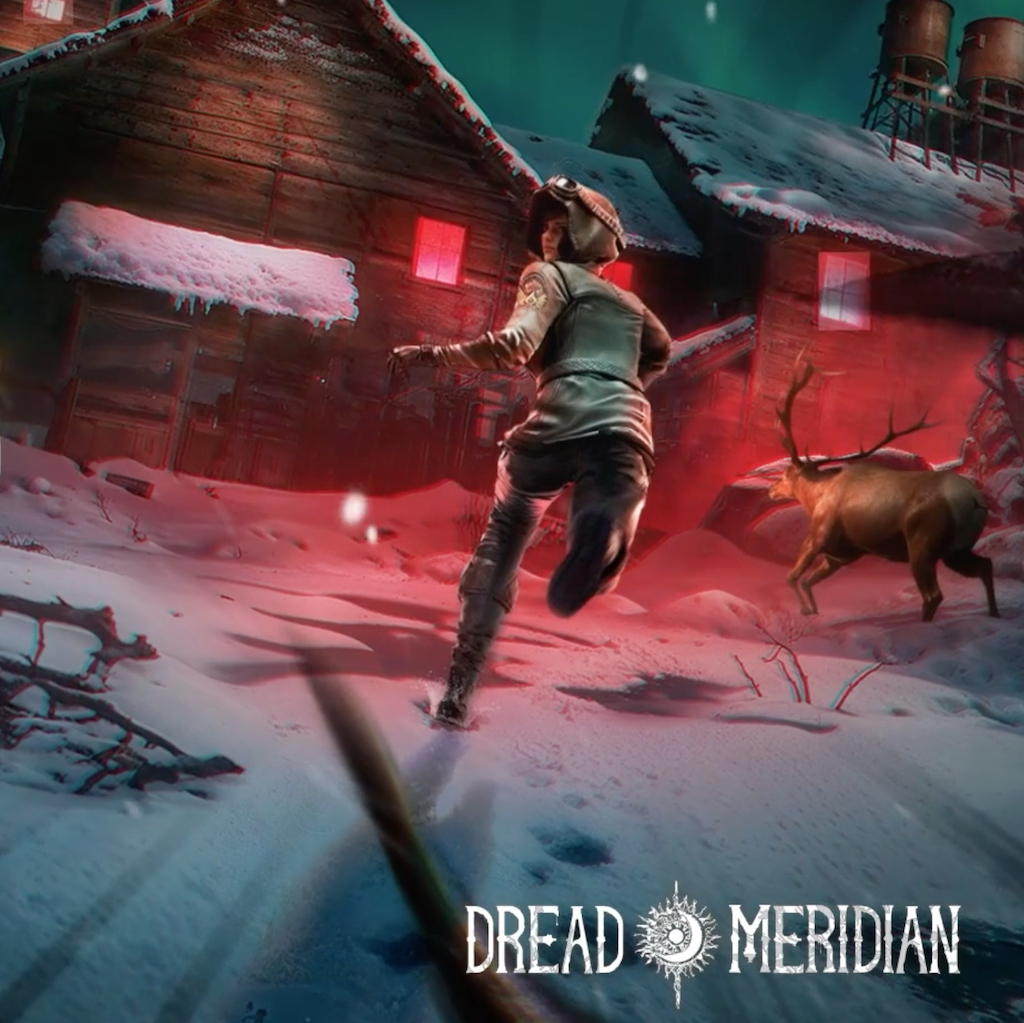
Built from the ground up for virtual reality, Dread Meridian leverages the immersive power of headsets to plunge players into the frigid, forlorn island of Oglanbyen — an isolated Arctic research station steeped in mystery and terror. The game casts you as Daniella, a researcher driven by desperation to find her missing twin sister in a place gone far beyond normal help. What begins as a rescue mission quickly devolves into a harrowing struggle for survival as you navigate bewildering environments, confront grotesque creatures, and inch ever deeper into a story rife with dread and unanswered questions.
The Horror of Isolation: Story & Setting
The narrative of Dread Meridian is evocative rather than explicit. Inspired by classic cosmic horror themes, the game places you in a bleak campaign where fear grows from environment more than exposition.
Oglanbyen’s frozen wasteland is its own antagonist: barren plains, dimly lit mine shafts, and derelict research facilities drip with atmosphere. You’ll sift through abandoned laboratories and cavernous tunnels, uncover cryptic logs and diary entries, and attempt to piece together what happened to both the island’s inhabitants and your sister. This slow-burn storytelling relies on environmental cues, unsettling audio design, and subtle worldbuilding rather than cinematic cutscenes — a design that works particularly well in VR.
Immersion is the game’s greatest strength here. The moment you step into the desolate landscape, you feel its oppressive cold and silence. Even when not actively scaring you, the world’s eerie quiet hints at unseen threats lurking just beyond sightlines — a subtle dread that lingers long after play sessions end.
Mechanics & Survival Gameplay
At its core, Dread Meridian blends survival horror staples with VR-specific interactions and tactical resource management.
Exploration & Inventory
Part of the fear comes from scarcity. Ammunition is limited, and encounters with hostile wildlife or mutated researchers force you to decide whether to fight, flee, or conserve. Guns and firearms can be found and customised with salvaged attachments to improve handling and performance. However, ammo is so limited that many players will find themselves relying heavily on Daniella’s combat knife as a practical fallback.
This imbalance reduces some of the tension you’d expect from survival horror. The knife’s effectiveness means that traditional resource pressure sometimes gives way to melee-heavy encounters rather than careful firearm management.
Puzzles & Secrets
The island is littered with puzzles and locked pathways that require logic and observation. These range from safe combinations hidden in notes to environmental riddles tied to Daniella’s personal story. While the puzzles add variety beyond combat, their placement can sometimes slow narrative momentum, and checkpoint sparsity means failed attempts can be frustrating.
VR Design — Immersion vs. Rough Edges
Because Dread Meridian was developed specifically for VR rather than ported from a traditional format, many design decisions work in its favour. Interactions feel tactile: reaching for ammo, flicking switches, and physically aiming firearms all feel intuitive in a headset. Environmental scale and spatial audio amplify tension and draw the player deeper into Oglanbyen’s mystery.
However, technical execution is where the game’s ambition occasionally stumbles. Players may encounter:
- Clunky inventory hitboxes and awkward item management
- Visual glitches where textures fail to load correctly
- Audio inconsistencies where environmental sounds drop unexpectedly
- Lip-sync mismatches and overlapping dialogue
- Physics oddities during enemy encounters
These issues don’t completely ruin the experience, but they do pull you out of what could otherwise be a seamless sense of presence — especially in a genre where atmosphere is paramount.
Audio & Environmental Ambience
One of the game’s most successful elements is its sound design. Ambient audio — icy wind, distant rumblings, unsettling creature calls — punctuates exploration in ways that are deeply effective in VR. Terrifying moments often sound just as much as they look frightening.
Music is used sparingly but effectively, swelling during high-tension scenes and fading into unnerving silence when you least expect it. Weapon sounds and creature effects carry weight, though occasional audio drops can weaken immersion.
Strengths
- Immersive VR horror built specifically for the medium
- Oppressive, atmospheric frozen setting
- Strong environmental audio design
- Exploration and puzzle elements that enrich the experience
- Emotional narrative hook centred around Daniella’s search
Weaknesses
- Technical roughness and VR interaction issues
- Combat imbalance due to overreliance on melee
- Sparse checkpoints that can cause repetition
- Occasional immersion breakers from audio and animation glitches
Overall Experience
Dread Meridian is a well-intentioned, thematically rich survival horror that makes excellent use of virtual reality’s immersive capabilities. The frozen isolation of Oglanbyen, the lore-steeped exploration, and atmospheric audio design craft moments of genuine unease. When the game works, it pulls you into a chilling adventure that VR absolutely should deliver.
However, technical issues and design inconsistencies prevent it from reaching the heights its concept suggests. Combat balance sometimes undermines survival mechanics, and VR interaction jank occasionally disrupts immersion.
For horror enthusiasts with a VR headset and patience for rough edges, Dread Meridian offers enough chilling moments to justify the journey. With further polish and optimisation, it has the potential to become a standout VR horror experience.
Final Verdict
Dread Meridian delivers evocative atmosphere, immersive VR design, and a compelling survival horror premise, but technical roughness and design imbalance hold it back from excellence. It’s a worthwhile experience for VR horror fans, though it may feel frustrating for players expecting a fully polished release.