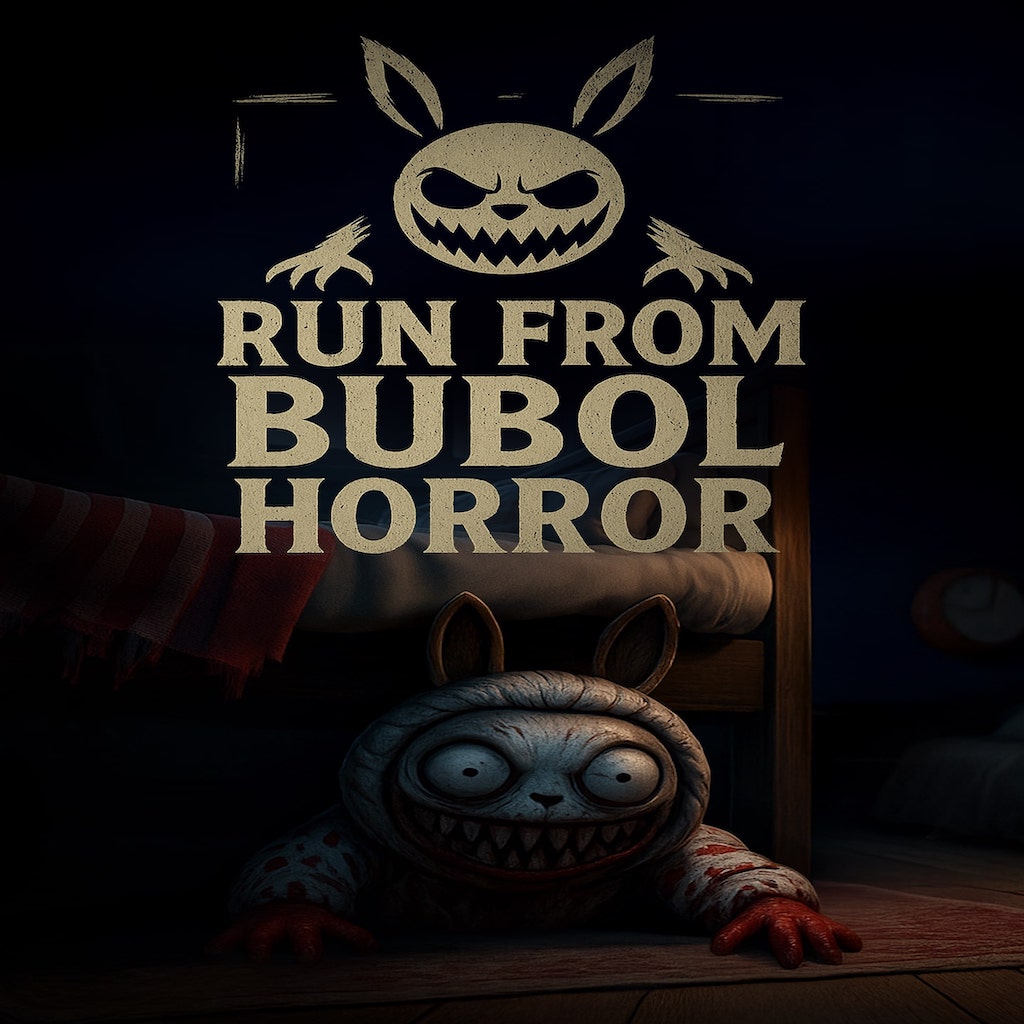
Indie horror has proven time and again that atmosphere and tension don’t require massive budgets or photorealistic graphics. Sometimes, all it takes is a strong central idea, a clear sense of pacing, and the confidence to keep players uncomfortable for as long as possible. Run from BLABLUBLAS Horror is a game that understands this philosophy well. It doesn’t aim to be subtle, nor does it waste time easing players in. Instead, it delivers a focused, high-pressure horror experience built around constant pursuit, environmental unease and the primal fear of being hunted.
From the moment the game begins, Run from BLABLUBLAS Horror establishes its core identity: you are trapped, something is after you, and survival depends entirely on how well you react under pressure. There’s no safety net, no comforting systems to fall back on, and very little explanation. What unfolds is a straightforward but effective horror loop that thrives on panic and repetition.
Fear Through Momentum
The defining feature of Run from BLABLUBLAS Horror is its relentless pacing. This is not a game about slow exploration or methodical puzzle solving. Instead, it thrives on urgency. Players are constantly encouraged — often forced — to keep moving. Standing still is rarely an option, and hesitation is usually punished.
This design creates a persistent sense of stress. Even when nothing is visibly happening, the knowledge that danger can emerge at any moment keeps tension high. The game leans heavily into chase mechanics, with BLABLUBLAS acting as a looming threat that transforms familiar spaces into deadly traps. The fear doesn’t come from not knowing what’s chasing you — it comes from knowing exactly what will happen if it catches you.
While this approach sacrifices subtlety, it excels at delivering adrenaline-fuelled horror. Each escape feels earned, and each failure reinforces the need to stay alert. The simplicity of the loop — move, hide, escape, repeat — is exactly what makes it effective.
Level Design and Environmental Pressure
The environments in Run from BLABLUBLAS Horror are designed with function rather than spectacle in mind. Corridors are tight, rooms are dimly lit, and layouts are intentionally confusing. This isn’t accidental. The game frequently disorients players, forcing them to make split-second navigation decisions under extreme pressure.
Visual clarity is deliberately limited. Shadows obscure corners, lighting flickers unpredictably, and environmental details blend together just enough to make orientation difficult. This design choice amplifies panic, especially during chase sequences, where one wrong turn can mean instant failure.
While the environments may not be visually diverse, they are effective. Each space feels hostile, reinforcing the sense that the world itself is working against you. Doors that once felt like safe havens quickly become temporary reprieves, and areas that seem familiar can suddenly turn lethal when BLABLUBLAS enters the scene.
Sound Design as a Weapon
Sound plays a crucial role in Run from BLABLUBLAS Horror. Audio cues are often your first — and sometimes only — warning that danger is approaching. Distant footsteps, distorted noises and sudden audio spikes keep players constantly on edge, even when nothing is happening visually.
The game uses silence effectively as well. Long stretches without sound build anticipation, making every noise feel significant. When the chase begins, the audio shifts dramatically, escalating tension and reinforcing the urgency to escape. This audio-driven design ensures that fear isn’t limited to what you see — it’s what you hear, and what you imagine might be just out of view.
The soundscape is not subtle, but it doesn’t need to be. Its purpose is to overwhelm, and it succeeds in doing so.
Mechanics Kept Intentionally Simple
Run from BLABLUBLAS Horror doesn’t burden players with complex systems. Movement, interaction and hiding are the primary mechanics, and they’re kept deliberately straightforward. This ensures that players spend less time thinking about controls and more time reacting instinctively.
This simplicity makes the game immediately accessible, but it also exposes its limitations. There’s little mechanical evolution as the game progresses, and players who survive long enough will begin to see the patterns beneath the chaos. Once you understand how BLABLUBLAS behaves and how environments are structured, fear gradually gives way to familiarity.
That said, the game compensates for this by tightening its pacing and increasing pressure rather than introducing new mechanics. It’s a design choice that prioritises intensity over depth, and while it may not satisfy players seeking variety, it remains effective within its narrow focus.
Repetition and Replay Value
Like many short-form horror experiences, Run from BLABLUBLAS Horror relies on repetition. Failure is common, and progress often requires multiple attempts. Each run teaches players more about enemy behaviour, environment layout and survival strategies.
For some, this trial-and-error structure enhances immersion, reinforcing the sense of being trapped in a hostile loop. For others, repetition may diminish fear once the unknown becomes familiar. The game walks a fine line here, and whether it succeeds largely depends on player tolerance for repetition.
Replayability is limited. Once the core experience is understood and completed, there’s little incentive to return beyond personal challenge or curiosity. This is a game designed to be experienced intensely rather than repeatedly.
Atmosphere Over Narrative
Narrative takes a back seat in Run from BLABLUBLAS Horror. There’s minimal context, little explanation, and no traditional storytelling framework. Instead, the game relies on atmosphere to convey its tone.
This lack of narrative depth may disappoint players who enjoy lore-heavy horror experiences, but it also allows the game to remain focused. By refusing to overexplain, Run from BLABLUBLAS Horror keeps players immersed in the immediate threat rather than distracted by exposition.
The result is a raw, unfiltered horror experience that prioritises feeling over meaning.
Where the Horror Weakens
Despite its strengths, Run from BLABLUBLAS Horror isn’t without flaws. Its reliance on constant chase sequences means tension rarely has time to breathe. Without moments of calm or variation, the experience can feel exhausting rather than unsettling.
Additionally, the game’s limited mechanical depth and environmental variety prevent it from sustaining long-term engagement. Once fear subsides, there’s little beneath the surface to keep players invested.
Technical rough edges may also be noticeable, particularly in movement or collision during high-pressure moments. While these issues don’t break the experience, they can occasionally disrupt immersion.
Final Verdict
Run from BLABLUBLAS Horror is a focused, high-intensity indie horror experience that thrives on urgency, panic and constant threat. It doesn’t aim to redefine the genre, but it understands how to deliver fear through simplicity and relentless pacing. While its lack of depth, narrative context and variety may limit its longevity, it succeeds as a short, adrenaline-driven horror experience that leaves players breathless and on edge.
For fans of chase-based horror and minimalistic design, Run from BLABLUBLAS Horror offers a tense, uncompromising journey that delivers exactly what it promises.