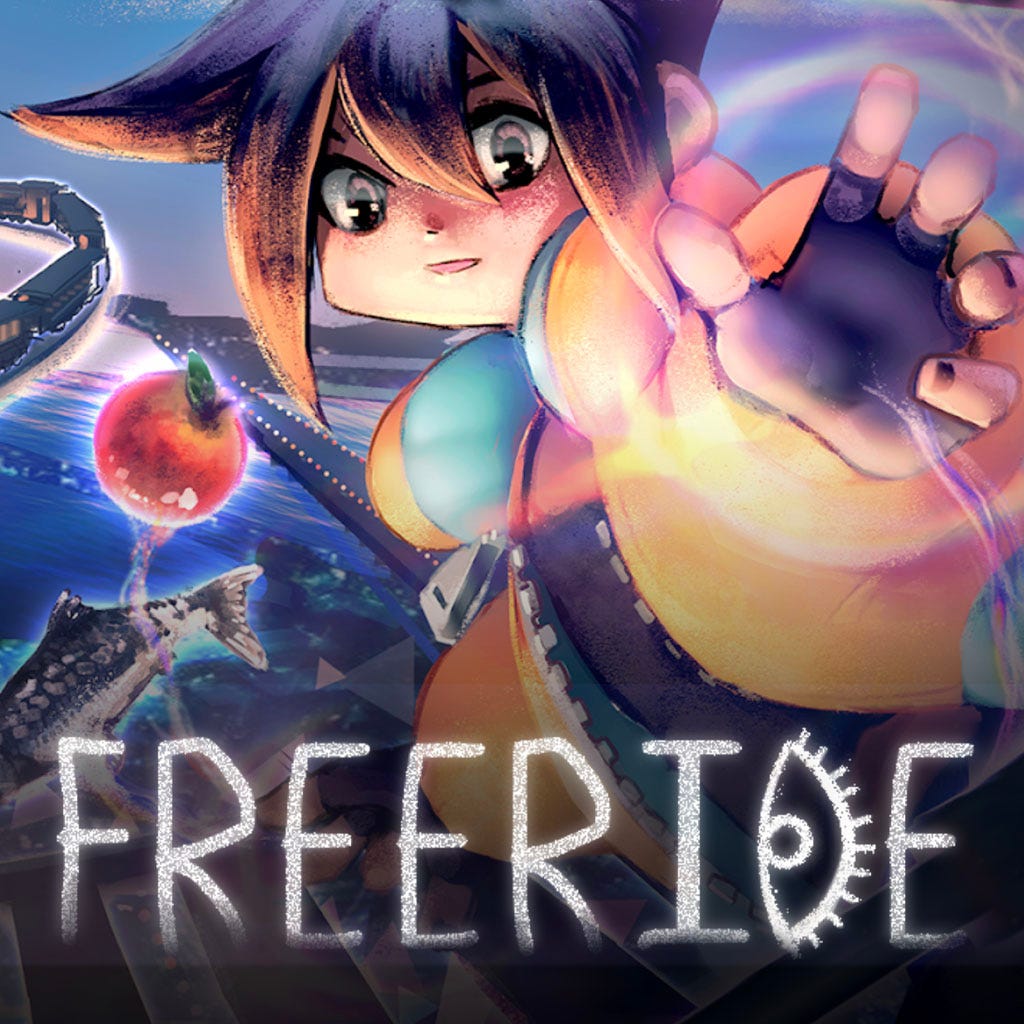
At a time when many games feel compelled to drown players in tutorials, progression systems, seasonal content and relentless pop-ups, Freeride takes a refreshingly different approach. It strips things back to the essentials: movement, flow and the simple joy of carving your own path through wide-open terrain. The result is a game that may not chase blockbuster spectacle, but instead delivers something far rarer — a calm, confidence-driven experience that trusts the player to find their own fun.
From the moment you drop into Freeride, the game makes its philosophy clear. There’s no lengthy exposition, no overbearing instructions, and very little hand-holding. You are placed into a sprawling environment and encouraged to move, experiment and learn through play. This minimalist design ethos defines nearly every aspect of the experience, and for the most part, it works beautifully.
Momentum Is the Message
At its core, Freeride is about motion. Whether you’re gliding downhill, weaving through natural obstacles, or chaining together stylish lines, the game’s primary focus is on how movement feels. Controls are responsive and intuitive, striking a careful balance between accessibility and depth. New players can quickly get to grips with the basics, while more experienced hands will find plenty of nuance in mastering speed control, precision turns and risk-reward decision-making.
There’s a tactile satisfaction to every successful run. Small adjustments matter, and mistakes feel fair rather than frustrating. When you wipe out, it’s rarely because the game failed you — it’s because you pushed too hard, misjudged a line, or got greedy chasing speed. That sense of accountability reinforces Freeride’s emphasis on skill and awareness, making improvement feel genuinely earned.
A World Designed for Discovery
Freeride’s environments are deliberately open-ended, encouraging exploration rather than funneling players down rigid paths. Hills, slopes and natural features are laid out in a way that supports creativity, allowing players to approach the same terrain in countless ways. You might discover a perfect line through a wooded area, stumble upon a hidden shortcut, or simply enjoy the satisfaction of a clean, uninterrupted descent.
Visually, the game leans into a clean, understated aesthetic. Rather than pushing hyper-realism, Freeride opts for clarity and atmosphere. Environments are easy to read at high speed, which is crucial for a game so dependent on momentum and reaction time. Lighting and colour choices give each area its own identity without overwhelming the senses, reinforcing the game’s calm, almost meditative tone.
Sound design complements this approach nicely. Ambient audio, subtle environmental cues and restrained music choices work together to keep players immersed without becoming distracting. There’s a quiet confidence in the presentation — Freeride doesn’t need bombastic soundtracks or constant audio reinforcement to sell its experience.
Progression Without Pressure
One of Freeride’s most appealing qualities is its relaxed approach to progression. Instead of rigid objectives or aggressive reward systems, the game allows players to improve at their own pace. Success is measured less by unlocks and more by personal mastery — smoother runs, cleaner lines and a deeper understanding of the terrain.
That said, this design choice may not appeal to everyone. Players who crave constant feedback, structured challenges or clearly defined goals may find Freeride a little too hands-off. The game is intentionally content to let players set their own ambitions, which can feel liberating or aimless depending on what you’re looking for.
Still, for those willing to embrace its philosophy, Freeride offers a uniquely satisfying sense of progression. Improvement is subtle but meaningful, and the absence of pressure makes it easy to lose track of time as “just one more run” turns into an entire evening of play.
Where It Falls Short
Freeride’s commitment to minimalism, while admirable, does come with trade-offs. Some players may find the lack of variety in mechanics and modes limits long-term appeal. The game is deeply focused on doing one thing well, but it doesn’t always expand beyond that core loop in significant ways.
Additionally, while the environments are thoughtfully designed, they can occasionally feel a little too restrained. More visual variety or environmental storytelling could have helped elevate the world further without compromising the game’s clean design philosophy.
These are not deal-breaking issues, but they do prevent Freeride from reaching its full potential. A few additional systems or optional challenges could have broadened its appeal without diluting its identity.
A Quietly Confident Experience
Ultimately, Freeride is a game that knows exactly what it wants to be — and, crucially, what it doesn’t. It’s not trying to dominate streaming platforms or chase competitive trends. Instead, it offers a focused, meditative experience built around movement, flow and personal expression.
For players who appreciate games that respect their time and intelligence, Freeride is a welcome reminder that simplicity can be powerful. It may not shout for your attention, but it earns it through thoughtful design and a strong understanding of its core mechanics.
Final Verdict
Freeride won’t be for everyone, but for those willing to meet it on its own terms, it delivers a rewarding and refreshingly uncluttered experience. It’s a game about the joy of motion, the satisfaction of mastery, and the quiet thrill of finding your perfect line.