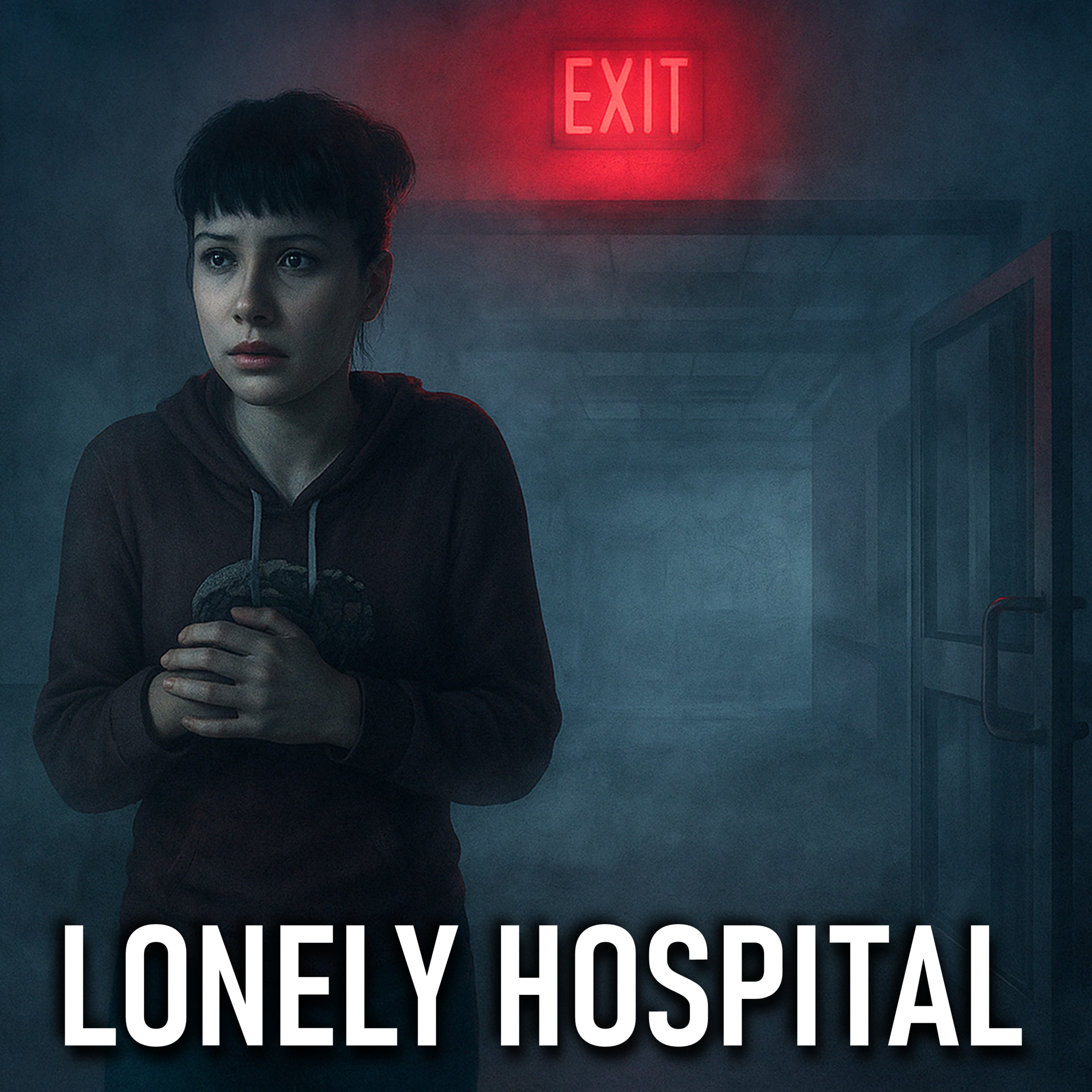
In a sea of horror and exploration games that lean on jump scares and predictable tropes, Lonely Hospital stands out by quietly unsettling players in a far subtler way. It doesn’t rely on loud sound cues or sudden phantom figures leaping from the shadows; instead, it taps into something more enduring — existential dread, isolation, disorientation, and the fear of being truly alone. This is not a game built for adrenaline junkies demanding heart-pounding chaos at every turn. This is horror as reflection.
Lonely Hospital blends exploration, light puzzle solving, and narrative discovery into a surreal journey through an abandoned medical facility. As the name suggests, the setting is a hospital — but one that feels eerily unmoored from reality, where the sterile and familiar becomes uncanny and quietly oppressive. It’s a game that asks: what does it feel like to wander through a place that should be a sanctuary but instead becomes the physical embodiment of solitude?
Whether Lonely Hospital will resonate with you hinges on how much you value mood and psychological atmosphere over conventional horror mechanics. For those drawn to ambient dread and slow-burn exploration, it offers a compelling, if occasionally flawed, experience.
Atmosphere: The Quietest Kind of Terror
What Lonely Hospital does extraordinarily well is its atmosphere. From the moment you step into the hospital’s hushed corridors, the game envelops you in a sense of unease that feels organic rather than invented. The lighting is soft, often dim, and shadows linger in corners just long enough to make you question what you saw. The soundscape — an ambient blend of distant echoes, buzzing fluorescents, and indistinct murmurs — plays a pivotal role in fostering a sense of abandonment and isolation.
This isn’t horror that screams; it whispers. It suggests rather than shows. The hospital feels uninhabited, yet alive in its silence — as though the building itself holds memory and breathes quietly around you. Unlike many horror games that lean heavily on jump scares, Lonely Hospital reserves shock moments for when it can disrupt the stillness without cheap theatrics. This makes each moment of genuine tension feel earned.
This atmospheric mastery is the game’s backbone. Even during stretches of narrative ambiguity or slower pacing, players are kept engaged through the power of the setting itself — an eerie, elegant character in its own right.
Narrative: Fragmented, Ambiguous, but Intentional
The story of Lonely Hospital doesn’t unfold with clear exposition or linear storytelling. Instead, narrative fragments are revealed through environmental clues, discovered notes, faded signs, and subtle changes in the environment. There is no central narrator guiding you; you are left to interpret, infer, and assemble meaning from the remnants of an abandoned place.
This narrative style will be divisive. Players seeking straightforward storytelling or character-driven plots may find the ambiguity frustrating or opaque. Lonely Hospital doesn’t hand you answers; it gives you breadcrumbs and expects you to connect them. The result is a story that feels personal — unique to each player based on what they notice and how they interpret it.
For those willing to embrace this open-ended narrative style, the payoff is rewarding. The game deals with themes of regret, unseen history, institutional memory, and the emotional residue left behind in places where life and death once intersected daily. These are heavy concepts, and they sit surprisingly well within a game whose mechanics are intentionally light.
However, not all narrative threads are fully realised. Some sections flirt with intriguing ideas — ethical ambiguity, surreal transformations, memory distortion — but don’t always coalesce into a final thematic statement. This can leave players with a sense of narrative richness that is nonetheless incomplete. Whether this feels like poetic ambiguity or unfinished design depends on the player.
Gameplay and Mechanics: Exploration Over Action
Gameplay in Lonely Hospital is deliberately restrained. Movement and interaction are straightforward: walk through corridors, examine objects, solve occasional puzzles, and uncover narrative fragments. There is no combat, no extensive inventory management, and no skill-based challenges. This is a game about presence, not reflexes.
The puzzle elements are subtle and well integrated. They rarely feel like arbitrarily placed obstacles, instead existing as natural extensions of exploration. You might need to restore power to a wing to access new areas, align symbols to unlock a door, or piece together clues from scattered documents to progress. These tasks are never overwhelming, nor are they meant to be. They serve as gentle ways to punctuate exploration and draw players deeper into the hospital’s quiet mysteries.
This emphasis on exploration over action is a strength in the context of Lonely Hospital’s goals. It sustains the atmosphere rather than interrupting it with mechanics that don’t serve the tone.
That said, the lack of gameplay variety can impact pacing. Extended periods of walking and observation without visual change or novelty risk monotony for players who prefer interactive complexity or mechanical evolution. The game’s design deliberately avoids busywork, but this minimalism isn’t for everyone.
Visuals and Audio: Subtle, Subdued, and Effective
Visually, Lonely Hospital steers away from hyper-realism or hyper-stylisation. The aesthetic is clean, muted and intentionally washed of brightness — a perfect fit for a game about an abandoned medical space where memories linger like dust motes in shafts of weak light. Textures are detailed enough to communicate decay and abandonment without becoming grotesque or gratuitous.
Environmental storytelling through visuals is a consistent highlight. A wheelchair tilted in a corridor, an overturned chair in a consultation room, a child’s drawing on a cracked wall — these details convey narrative and emotion without any explicit dialogue.
Audio is equally thoughtful. Background ambience — the hum of faulty lighting, distant water drips, whispering winds through broken windows — reinforces a sense of solitude without ever becoming suffocating. Occasional musical swells are used sparingly, emerging at narrative pivot points to underscore a sense of revelation or dread.
The combination of visuals and sound results in an immersive environment that rewards players who invest attention. It’s not flashy, but it’s persistently effective.
Pacing and Engagement: A Meditative Rhythm
Lonely Hospital is not a fast game. Its pacing is measured, reflective, and often meditative. This is a deliberate choice: the game wants the player to feel the space, to linger in rooms longer than necessary, and to let silence become part of the experience.
For players open to this rhythm, the experience can feel deeply refreshing — a chance to explore, reflect and absorb rather than sprint toward objectives. For others, particularly those accustomed to more directed or high-tempo experiences, the pace might feel lethargic or aimless at times.
The game’s sparse narrative and lack of urgency can make some sections feel drawn out. Yet these moments are rarely without purpose; they underscore the sense of solitude and introspection that defines the experience.
Final Verdict
Lonely Hospital is an atmospheric, introspective exploration game that uses its environment to evoke both nostalgia and disquiet. It subverts traditional horror expectations by focusing on psychological unease rather than scares, and it uses its narrative ambiguity to invite interpretation rather than impose meaning.
Its greatest strength is mood — a persistent, pervasive, quietly unsettling atmosphere that lingers long after gameplay. Its restrained mechanics support this mood rather than working against it, and its environmental storytelling is both evocative and respectful of player interpretation.
However, its deliberate pacing, minimal gameplay variety, and narrative ambiguity won’t appeal to everyone. Players who crave high-intensity action, clear storytelling or mechanical complexity may find Lonely Hospital too understated for their tastes. But for those willing to embrace its slow rhythm and introspective design, it offers a unique and memorable journey through silence, memory and solitude.