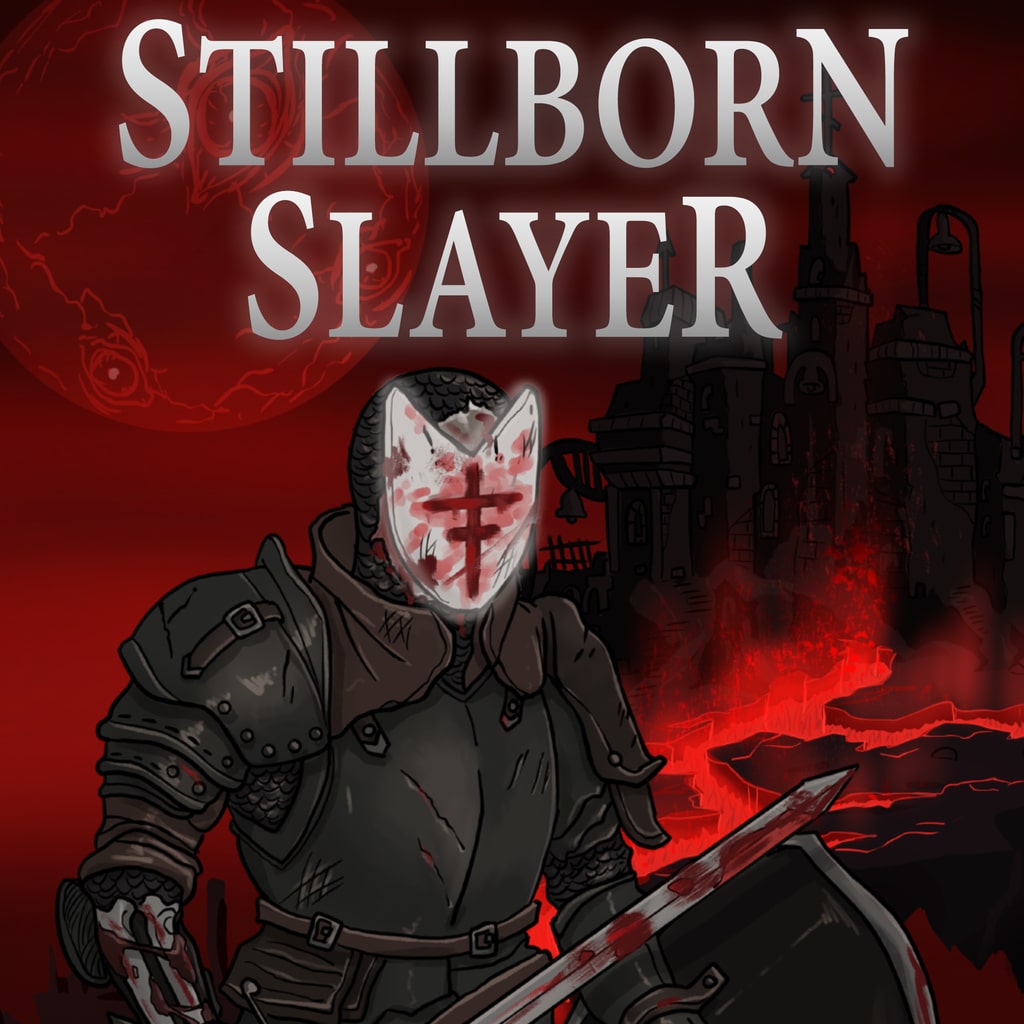
In an era where roguelikes have splintered into countless subgenres — deckbuilders, auto-battlers, metroidvania hybrids — it’s refreshing to see one that keeps its ambitions sharp and focused. Stillborn Slayer, developed by Apushev Vitaly and originally released on PC in 2023, now arrives on consoles via Ratalaika Games (February 20, 2026). It’s cheap, it’s brutal, and it wastes absolutely no time explaining itself.
At just £4.99 on consoles, Stillborn Slayer is clearly positioned as a budget-friendly, skill-driven experience. But don’t mistake its low price for low intensity. This is a compact action roguelike that leans hard into bullet hell territory — and it expects you to learn fast or die often.
You will die often.
The Resurrection Loop
The premise is elegantly grim.
You are a nameless, deceased adventurer resurrected by a necromancer. Your purpose? Traverse the cursed Dark Continent and slay the Horned God responsible for an endless night of corruption.
There’s no sprawling dialogue tree. No overly indulgent lore dumps. Instead, narrative is delivered through atmosphere, environmental tone, and a looming sense of decay. The “corruption” mechanic — tracking your deaths — hints at larger consequences, though the full extent of its impact remains intentionally opaque.
It’s minimalist storytelling done effectively. The world feels hostile and indifferent. You are not a chosen hero — you’re a disposable weapon.
And the game treats you as such.
Bullet Hell in Hack-and-Slash Clothing
Stillborn Slayer is often described as a hack-and-slash roguelike, but that undersells its true nature. This is, at its core, a top-down bullet hell with melee trappings.
Enemies don’t just swing at you. They flood the screen with intricate projectile patterns. Bosses fill arenas with spirals, spreads, walls, and delayed traps that demand precise movement and careful stamina management.
Dodging isn’t optional — it’s survival.
Combat is fast and responsive. Rolls feel snappy, hit detection is fair, and damage feedback is satisfying. But unlike traditional hack-and-slash games where aggression is rewarded unconditionally, here you must balance offense with survival instincts.
Charge in recklessly, and you’ll be erased in seconds.
Boss-Centric Design
The real highlights are the bosses — over ten of them — each serving as skill checks rather than simple damage sponges.
Early encounters introduce manageable projectile patterns. Mid-game bosses escalate into chaotic symphonies of glowing death. By the time you reach the later fights, you’re essentially playing a top-down dodge ballet.
The final boss in particular is a wall for many players. Projectile density ramps up dramatically, and build optimization becomes essential.
This is where the game’s build system shines.
Build Variety in a Compact Package
Stillborn Slayer keeps its equipment system streamlined:
- Two weapon slots
- One armor slot
- Two boost slots
That’s it.
Yet within this simplicity lies surprising flexibility. During runs, you’ll find new weapons and equipment that can radically shift your playstyle.
Want to be a melee bruiser with heavy burst damage? You can.
Prefer a long-range skirmisher focusing on mobility and projectile output? That’s viable too — and often recommended for late-game bosses.
Because you can swap gear mid-run, adaptation becomes key. If a boss overwhelms you up close, pivot to ranged. If you’re struggling with survivability, lean into mobility-enhancing boosts.
It’s not as deep as genre giants like Dead Cells or Hades, but for a £4.99 title, the system is impressively functional.
Procedural Peril
Each run is procedurally generated, meaning:
- Level layouts shift
- Enemy placements change
- Loot locations vary
- Secret paths appear unpredictably
The randomness ensures replayability, though the biome variety is modest. You won’t see wildly distinct environmental themes; the Dark Continent maintains its oppressive gothic tone throughout.
That said, procedural design serves the gameplay loop well. Memorization won’t carry you — adaptation will.
Atmosphere: Bleak and Unforgiving
Visually, Stillborn Slayer embraces high-contrast pixel art drenched in shadow.
The world exists in a state of perpetual night. Enemies emerge from darkness. Torches flicker faintly. The Horned God looms as an unseen menace.
The aesthetic is cohesive and appropriately grim. While not technically groundbreaking, it supports the oppressive tone effectively.
Sound design reinforces tension. Combat effects are crisp. Boss music leans into eerie, pulse-driven tracks that escalate urgency.
There’s no humor here. No levity. Just decay.
The Corruption Mechanic
One of the more intriguing systems is “corruption,” which increases as you die.
The game intentionally obscures its full consequences, encouraging community experimentation. Does corruption alter enemy behavior? Impact endings? Influence world states?
The ambiguity adds mystique, though some players may find the lack of clarity frustrating.
It’s a subtle narrative device — one that fits the game’s tone of uncertainty and decay.
Console Performance and Port Quality
Ratalaika’s console port is solid.
Controls translate cleanly to controller input. Twin-stick aiming feels responsive on PlayStation, Xbox, and Switch. Performance remains stable even during projectile-heavy boss fights.
Load times are short. Menu navigation is smooth. No technical hiccups mar the experience.
For a budget release, it’s a polished port.
Where It Falls Short
Despite its strengths, Stillborn Slayer isn’t flawless.
Limited Scope
This is a short experience. A successful run can be completed relatively quickly once mastered.
Modest Variety
Enemy types and environments, while functional, lack the diversity seen in higher-budget roguelikes.
Minimal Meta-Progression
Outside of skill improvement and understanding systems, there’s little in the way of permanent progression layers.
If you crave expansive unlock trees and sprawling biome diversity, this may feel lean.
But perhaps that’s intentional.
Value Proposition
At £4.99, it’s difficult to argue against Stillborn Slayer’s value.
You’re getting:
- Tight, skill-based combat
- Challenging boss design
- Procedural replayability
- Solid console performance
It’s a concentrated dose of roguelike intensity — not bloated, not padded.
For players seeking a short, punishing experience that rewards mastery, it’s an easy recommendation.
Final Verdict
Stillborn Slayer doesn’t attempt to redefine the roguelike genre.
Instead, it distills it.
Fast combat. Brutal bosses. Procedural runs. Minimal hand-holding.
Its bullet hell emphasis sets it apart from many hack-and-slash peers, demanding precision rather than pure aggression. The build system, while streamlined, offers enough flexibility to encourage experimentation. And the oppressive dark fantasy tone remains consistent throughout.
It’s short. It’s difficult. It’s unapologetic.
And at its launch price, it’s excellent value.