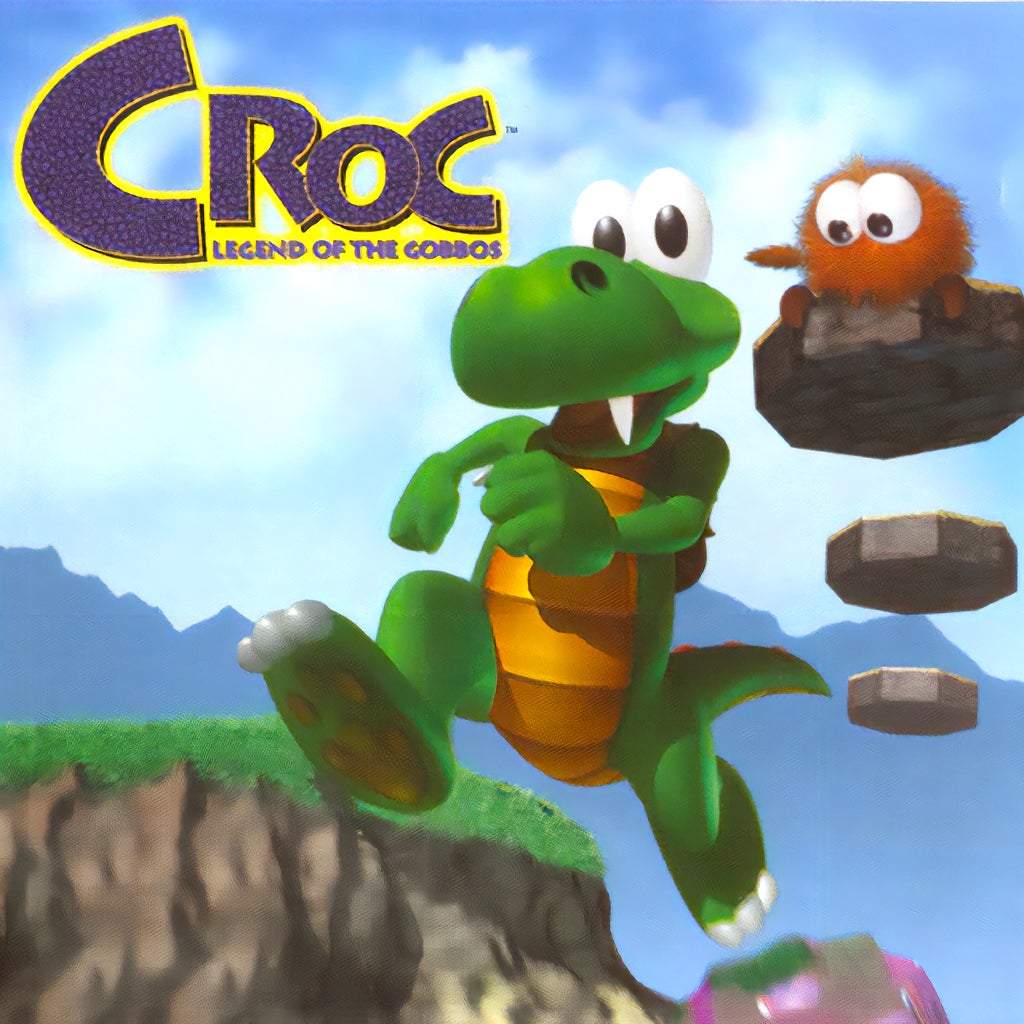
Croc: Legend of the Gobbos is a classic 3D platformer first released in the late ’90s, resurrected for modern audiences with a remastered edition that updates controls and graphics while keeping the original’s core intact. It’s a straightforward adventure following Croc, a friendly crocodile tasked with rescuing the whimsical Gobbo creatures from the villainous Baron Dante. Despite its charm and improved controls, Croc struggles to compete with modern platformers due to spotty platforming mechanics, stiff enemy encounters, and a lack of depth—but its nostalgia and simplicity might still appeal depending on player patience.
Story and Setting
The story threads a simple, endearing tale. Found as an orphaned baby by the Gobbos, Croc is raised among these furry creatures in their peaceful village until Baron Dante kidnaps them all. Croc’s mission is to journey through forest, ice, desert, and castle-themed worlds to save his friends. The narrative is light and innocent, framed in a whimsical cartoon style. It’s perfect for younger players or those drawn to classic platformers, though it will feel very familiar to anyone versed in the genre’s tropes.
Gameplay and Platforming
Gameplay centers on running, jumping, tail-spinning enemies, and platform puzzles. The levels break down into multiple connected rooms filled with obstacles and enemies. Crystals serve as health, much like Sonic’s rings, dropping when hit and disappearing quickly, adding a layer of risk management. Croc’s moveset is simple—tail swipes and ground pounds—with no weapon upgrades or complex combos. This simplicity suits new or young players but can leave veterans wanting more.
The remaster improves control responsiveness, integrating analogue stick support alongside the original tank controls. This change brings a fresh feel, making Croc handle more smoothly and mitigating some of the original’s frustrating quirks. However, platforming remains inconsistent and sometimes unforgiving, with Croc occasionally failing to make jumps despite precise inputs or falling unexpectedly due to uneven collision. These old-school platforming challenges can lead to repeated deaths and testing moments of patience. Enemy hitboxes feel off at times, and some enemy placements are unfairly punishing, requiring players to memorize patterns rather than react organically.
Level Design and Challenges
The game consists of four main worlds and a secret fifth, each with thematic levels culminating in boss fights. These levels generally follow a linear path but hide Gobbos to rescue and color crystals to collect. Rescuing all Gobbos unlocks bonus levels and the secret final island. Rescue often requires backtracking or unlocking gates, adding light puzzle elements.
Difficulty ramps noticeably as the game progresses. Later stages require more precise platforming, faster reactions, and greater caution, with fewer extra lives and more challenging enemy configurations. This progression can feel abrupt, transforming Croc from a casual experience to a demanding test of skill unexpectedly. Boss fights are repetitive, relying on simple “attack-dodge-attack” patterns with limited variety, serving more as checkpoints than engaging climaxes.
Visuals and Audio
The remaster updates the original’s visuals with polished textures, smoother animations, and improved lighting. The colorful worlds retain their playful charm, and despite aging designs, the art style holds nostalgic appeal. Character models for Croc and the Gobbos exude personality, while enemy designs reflect ’90s platforming staples.
The soundtrack remains catchy and upbeat, complementing the game’s whimsical tone, and sound effects provide adequate feedback during combat and exploration. Though nothing groundbreaking, audio and visuals synergize effectively to invoke fond recollections for players familiar with the original.
Accessibility and Replayability
Croc is forgiving in terms of checkpoint placement, allowing quick retries without significant setbacks. Players can collect crystals and lives dropped during navigation, making gradual progress feasible despite occasional mishaps. The game supports short play sessions, with levels broken into manageable rooms that suit players who prefer brief bursts over marathon sessions.
The incentive to find all Gobbos, crystals, and secret levels encourages exploration and replayability for completionists. However, beyond collecting and platforming mastery, there is limited incentive to revisit areas. The remaster lacks new content, and some design flaws from the original persist, meaning the core experience centres heavily on nostalgia.
Final Verdict
Croc: Legend of the Gobbos rides a wave of nostalgia and simplicity, delivering basic but charming platforming gameplay with improved controls and visuals. Its straightforward story and character design appeal primarily to younger audiences or those seeking a retro trip. However, its uneven platforming, repetitive boss battles, and hitbox quirks limit its appeal for modern platformer fans expecting silky smooth mechanics and depth.
The remaster excels at preserving the spirit of the original but stops short of elevating it to a must-have classic for contemporary audiences. For those craving a gentle, old-school platformer with predictable structure and light challenge, Croc remains a fun, accessible choice. However, players looking for refined mechanics or innovative level design may find themselves frustrated.