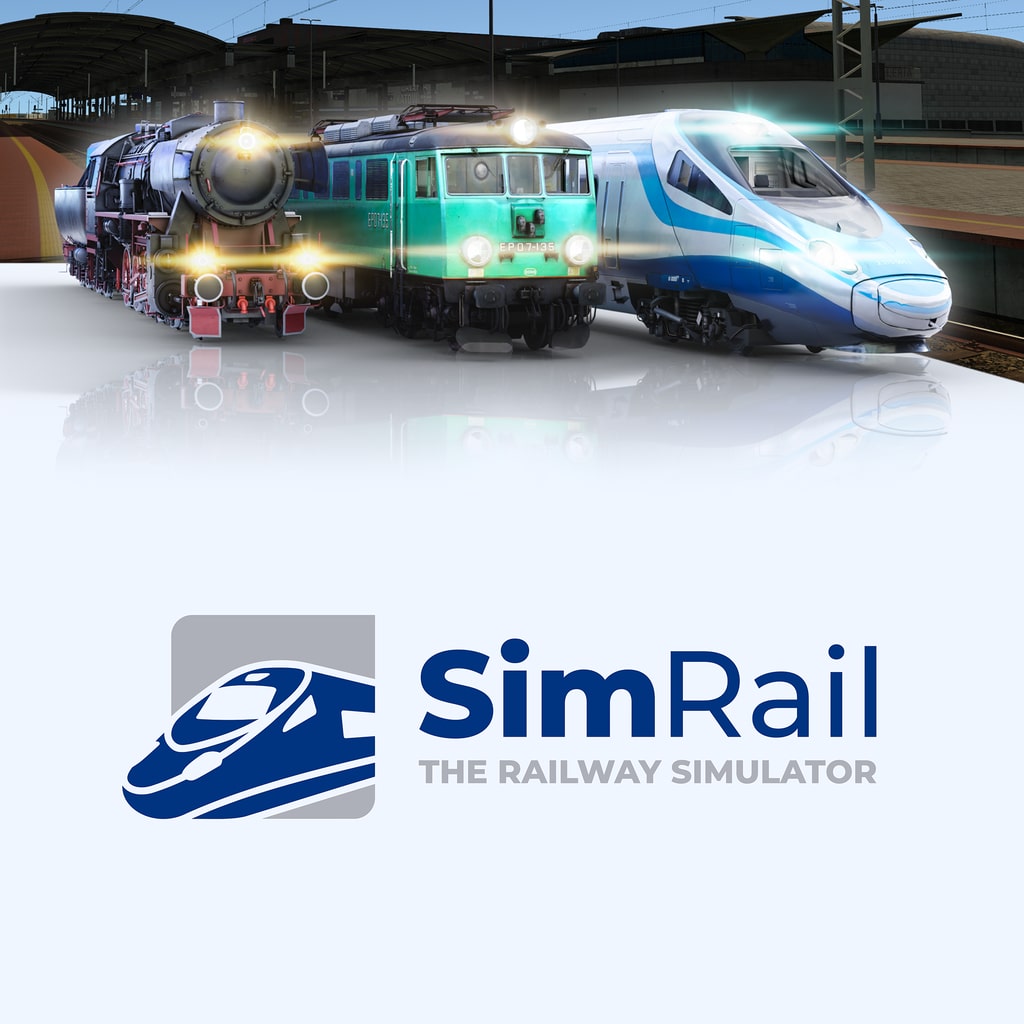
Train simulators occupy a unique corner of the gaming world, appealing to players who find joy in precision, logistics, and the rhythmic hum of iron rails. SimRail – The Railway Simulator is a recent entrant in this niche, and it boldly stakes its claim as one of the more detailed and technically ambitious sim experiences. Built from the ground up with rail realism as its guiding principle, SimRail is closer to a professional simulator than a gamified interpretation — and that’s precisely its strength.
Unlike mainstream train sims that prioritise accessibility for casual players, SimRail serves enthusiasts and aspiring dispatchers seeking an authentic replication of railway operations. From timetable adherence and signalling systems to rolling stock physics and route design, this is a title that rewards patience, immersion, and methodical thinking.
However, this laser focus on realism comes with trade-offs: a steep learning curve, sparse handholding, and systems that may feel overwhelming to newcomers. That said, for the right audience — those entranced by steel wheels and timetable precision — SimRail offers a deeply satisfying journey on rails.
Core Simulation Systems
At its core, SimRail – The Railway Simulator is a systems simulation first and a game second. The experience is grounded in detailed mechanical behaviour, operational accuracy, and a fidelity that rail fans will appreciate.
Driving and Physics
Train handling in SimRail is nuanced. Locomotives don’t accelerate at the tap of a button — they respond to throttle adjustments, brake modulation, track gradient, and load weight. Maintaining scheduled speeds requires careful balancing of power and services, with preemptive braking on descents and gradual throttle increases on ascents becoming essential skills.
The physics model isn’t arcade-like. Trains carry momentum; weight matters; and switching between traction modes — diesel, electric, and steam (where applicable) — feels distinct. Drivers are rewarded for learning their vehicle’s quirks, with each class of locomotive offering slightly different responses to the same inputs.
This system rewards meticulous planning and observant play. However, it also demands patience — sudden starts or stops don’t feel natural, and novice players may struggle to keep engines on time without practice.
Operations and Timetable Management
What truly sets SimRail apart is its emphasis on real-world railway operations. This isn’t just about driving trains from point A to point B — it’s about running a railway.
Players must contend with:
- Timetable adherence: Delays have cascading effects on network scheduling.
- Signalling logic: Signals must be respected, and understanding block sections is critical.
- Traffic management: On busy routes, coordinating multiple trains requires foresight.
- Operational continuity: Weather, mechanical wear, and scheduling conflicts all influence performance.
This level of systems depth elevates SimRail above many competitors. You’re not merely piloting trains; you’re responsible for orchestrating movement across an interconnected network.
The game includes dispatch and control interfaces that mirror real railway systems, making it feel less like a “game” and more like a professional simulation tool. Players familiar with real-world signalling terminology, timetable formats, and dispatching protocols will immediately recognise the fidelity on display.
For everyone else, this creates a steep learning curve, but one that ultimately pays dividends in satisfaction once mastered.
Routes and Environments
SimRail features a selection of meticulously crafted routes, each with its own character and operational challenges. From winding countryside branches to complex urban networks with heavy traffic density, route design balances scenic variety with practical scenarios that reinforce core skills.
Environments are richly detailed without sacrificing performance. Trees sway gently, stations bustle with ambient activity, and weather effects — rain, fog, nighttime lighting — subtly impact visibility and ambience. The focus remains on functional detail rather than photorealistic excess, which is fitting for a sim that prioritises clarity and precision over cinematic presentation.
Although the number of routes at launch is modest compared to some competitors, each comes with layered complexity. Hourly passenger services, freight duties, and mixed-traffic schedules ensure long playthroughs exploring every facet of the map.
There’s also strong support for community content, with mission editor tools allowing creative players to design and share their own scenarios.
Visuals and Audio Design
Graphically, SimRail does not chase realism for aesthetics’ sake, but it achieves what matters most: functional clarity. Tracks, signals, catenary, and rolling stock are modelled with practical accuracy. Visual cues such as signal aspects, track switches, and gradient markers are clear and unambiguous — essential in a game where misreading a sign can lead to derailment or delays.
Textures and models are solid if not spectacular. The game’s look is clean and practical rather than dramatic, which suits its simulation identity. Night lighting and weather effects add necessary variety without compromising readability.
Audio design follows a similar ethos. Locomotive sounds — engine chuffs, electric hums, brake squeals — are authentic and detailed. Ambient sound captures station announcements, distant horns, and community noise, contributing to a convincing world without distracting from gameplay focus.
Crucially, audio serves both immersion and information, not just mood.
Accessibility and Learning Curve
SimRail’s biggest hurdle is its accessibility. Before even operating a train with confidence, new players must grasp:
- The interplay of throttle, brake, dynamic braking, and traction modes
- Signalling and track occupancy logic
- Dispatch controls and timetable adherence
- Route planning and conflict resolution
Tutorials exist but feel introductory rather than comprehensive. Much of the learning is experiential, and players may need to consult external guides or communities to fully understand advanced systems.
This design is a strength if you want a deep sim — but a barrier if you’re hoping for a gentle introduction to train simulation. The game clearly targets devoted enthusiasts and those intrigued by rail operations as systems, not just transportation spectacle.
Engagement and Pacing
Pacing in SimRail is deliberate. Hours can pass in what feel like minutes when you’re coordinating multiple services, optimizing schedules, and analysing signalling blocks. Conversely, waiting on long freight runs can feel slow if you don’t engage with simultaneous tasks.
This ebb and flow mirrors real rail operations — moments of high activity followed by sustained, contemplative intervals. For players who enjoy layered management, this pacing is a feature; for others, it may feel uneven.
The absence of pressure from failure states (beyond delayed schedules or lost reputation) supports long play sessions without stress, reinforcing the idea that this is a sim to be experienced, not raced through.
Replayability and Longevity
Replayability is strong if you enjoy mastery and optimisation. Community content, route editors, and variable scenarios provide extended engagement. Long-term players can deep-dive into:
- Network optimisation
- Scenario challenges
- Custom timetable design
For those who treat sims as ongoing projects, SimRail offers years of depth. For casual players, the breadth of systems may feel daunting unless they’re specifically seeking deep simulation.
Final Verdict
Pros:
- Deep, authentic railway operations simulation
- Strong balance between driving and management systems
- Functional, clear visuals and immersive audio
- Great replay value with community and editor support
Cons:
- Steep learning curve with limited onboarding
- Niche focus may not appeal to casual players
- Some routes and content can feel repetitive without expansion packs
Summary:
SimRail – The Railway Simulator is a rich, detailed, and ultimately rewarding experience that delivers on its promise of real-world rail simulation. Its systems depth, operational fidelity, and thoughtful design make it a standout for players passionate about trains, logistics, and methodical management. It’s not an easy ride — but for those willing to invest the time, the journey is deeply satisfying.