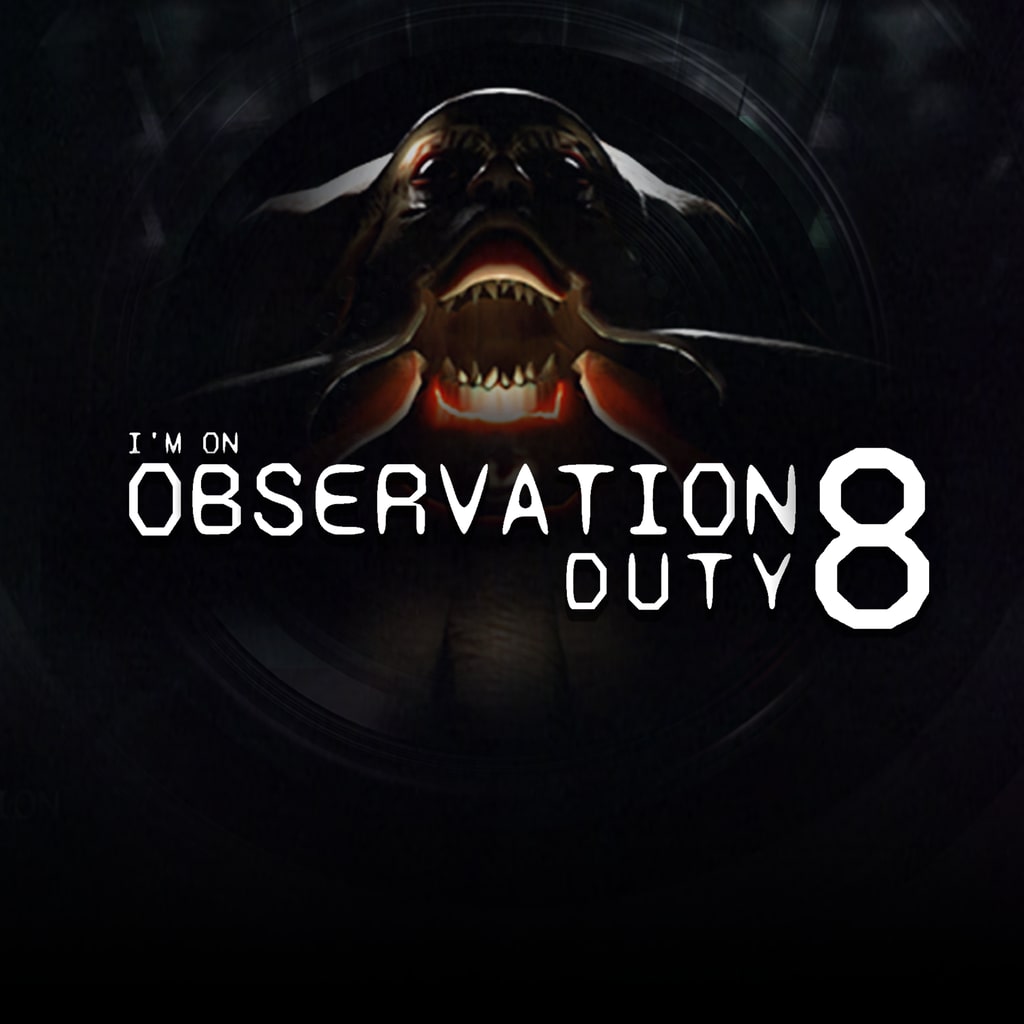
The I’m on Observation Duty series has quietly built a cult following over the years, thriving on one of the simplest yet most compelling horror concepts in gaming: watch a collection of security or static cameras and report anomalies before the world spirals into surreal chaos. With each entry, the series has experimented with new locations, styles, and twists on its signature formula. I’m on Observation Duty 8 feels like the most confident evolution yet — a game that understands exactly what fans want while still pushing its unsettling, uncanny atmosphere into new territory.
It’s still about watching. It’s still about noticing. And it’s still about that rising panic when you realise something has changed in the room you’ve been staring at for minutes… but you can’t quite tell what.
A Familiar Formula Perfected
At its core, Observation Duty 8 sticks to the structure that made the series work: you monitor multiple rooms using static cameras and must report anomalies — anything that shouldn’t be there — before the level becomes overrun. Miss too many, and the environment collapses into failure. Catch them in time, and you inch closer to surviving until dawn.
This formula remains brilliantly tense because it weaponises the mundane. A cup moving two inches feels as threatening as a towering intruder. A painting changing expression can be more unsettling than a ghostly figure. The game’s horror doesn’t rely on loud jump scares (though they still happen) — instead, it’s about uncertainty, doubt, and the fear that you didn’t notice something important.
I’m on Observation Duty 8 refines that structure with tighter pacing, cleaner visuals, and new anomaly categories that keep even veterans guessing.
Visual Upgrades and Cleaner Presentation
One of the first things returning players will notice is a noticeable improvement in visual clarity. Environments are more detailed without becoming cluttered. Lighting is more atmospheric but still readable. Object placement feels deliberate, making subtle changes easier (or harder) to notice depending on the room.
Rooms feel more lived-in and less like abstract puzzles. Kitchens are cluttered but logical. Bedrooms feel personal. Outdoor environments capture a convincing sense of space. This helps anomalies feel more immersive — a missing object is only unsettling if you believed it belonged there in the first place.
The UI remains simple and unobtrusive. Reporting anomalies is smoother, and camera switching is snappier. The game refines rather than reinvents, which feels appropriate for this series.
New Locations That Push the Concept Forward
Observation Duty 8 introduces several new maps, each with their own identity and mechanical twist:
- The Abandoned Estate, where entire corridors can warp in shape
- The Astral Research Facility, mixing sci-fi surrealism with bureaucratic coldness
- The Forest Outpost, an outdoor map where anomalies blend into natural environments
- The Old Town Block, a multi-building street segment that forces you to track far more visual information
Each map feels unique, not just in aesthetics but in rhythm and difficulty curve. Anomalies range from tiny object shifts to large-scale events where entire sections distort or new spaces appear. Because each level introduces subtle rule changes, players never feel fully comfortable.
Anomaly Variety: Subtle to Spectacular
Long-time fans will be glad to know that anomaly diversity is at its best in this entry. You’ll find:
- Object movement
- Object duplication
- Object disappearance
- Shadow figures
- Distortion events
- Camera malfunctions
- Sound anomalies
- Entity intrusions
- Environmental warping
- Perspective shifts
- Time anomalies
The game has become more playful — and more devious — with how anomalies appear. Sometimes the change is tiny: a chair rotated slightly. Other times it’s explosive: a creature filling the entire hallway, an extra door appearing where none existed, or a room becoming impossibly stretched.
The balance between routine anomalies and “big events” is excellent, maintaining tension without falling into predictability.
Difficulty That Rewards Patience and Sharp Eyes
Observation Duty 8 remains challenging. In fact, it’s arguably one of the hardest entries in the series, especially for players who attempt the larger maps.
What makes the difficulty engaging rather than frustrating is the game’s reliance on memory and instinct. You slowly “learn” each environment. You begin to recognise when a book has shifted or a shadow seems unfamiliar. The early hours are overwhelming; later ones feel empowering as you build confidence.
This balance is the hallmark of the series, and the eighth entry preserves it beautifully.
Atmosphere: Minimalist Yet Unsettling
The game doesn’t bombard players with sound, but every audio cue that appears matters. Low hums, distant footsteps, reverberating tones, unintelligible whispers — these audio anomalies often hit harder than visual ones.
The soundscape never overwhelms the meditative quality of scanning rooms, but it heightens dread at key moments. Silence becomes suspicious. Familiar sounds become warnings. Even basic navigation begins to feel oppressive as the night wears on.
Where Observation Duty 8 Stumbles
The game isn’t without flaws:
- Some maps feel overly large, requiring frequent camera switching that can fatigue players.
- Certain anomalies remain too subtle, leading to occasional frustration when losing a run over something nearly invisible.
- Replay-heavy structure may not appeal to players wanting constant progression.
- A few jump scares feel slightly cheap, though they are rare.
None of these issues undermine the core experience, but they may limit the audience to players who appreciate repetition as part of the tension.
Pros & Cons
Pros
- Refined and polished formula, offering the most confident version of Observation Duty’s signature gameplay yet.
- Excellent new maps, each with distinct visual identities and mechanical twists that keep players on edge.
- Greater anomaly variety, ranging from tiny object shifts to dramatic environmental warps.
- Improved visual clarity, making rooms easier to read without losing atmospheric tension.
- Smooth UI and faster camera navigation, helping maintain pacing during stressful anomaly rushes.
- Deeply unsettling atmosphere, relying on subtle audio cues and uncanny imagery rather than cheap jump scares.
- Strong difficulty curve, rewarding memory, attention, and keen observation skill.
- Huge replay value, thanks to randomised anomaly patterns and large map layouts.
Cons
- Some maps are very large, leading to frequent camera cycling that may fatigue players.
- Certain anomalies are extremely subtle, occasionally causing frustrating losses.
- Gameplay relies heavily on repetition, which may not appeal to players who prefer constant progression.
- A few jump scares feel out of place, clashing with the otherwise subtle horror tone.
Final Verdict
I’m on Observation Duty 8 is a confident, polished, and satisfyingly unsettling entry in one of indie horror’s most distinctive series. It doesn’t reinvent the formula — it perfects it. New maps, improved visuals, sharper anomaly design, and a smoother interface make this one of the strongest instalments yet, offering hours of tense, hypnotic observation-based gameplay.
For fans, it’s an absolute must-play. For newcomers, it’s one of the easiest starting points, thanks to its refined pacing and clearer visual design.
It proves once again that horror doesn’t need loud monsters or complex mechanics — sometimes, all you need is a room, a camera feed, and the sinking realisation that something has changed.