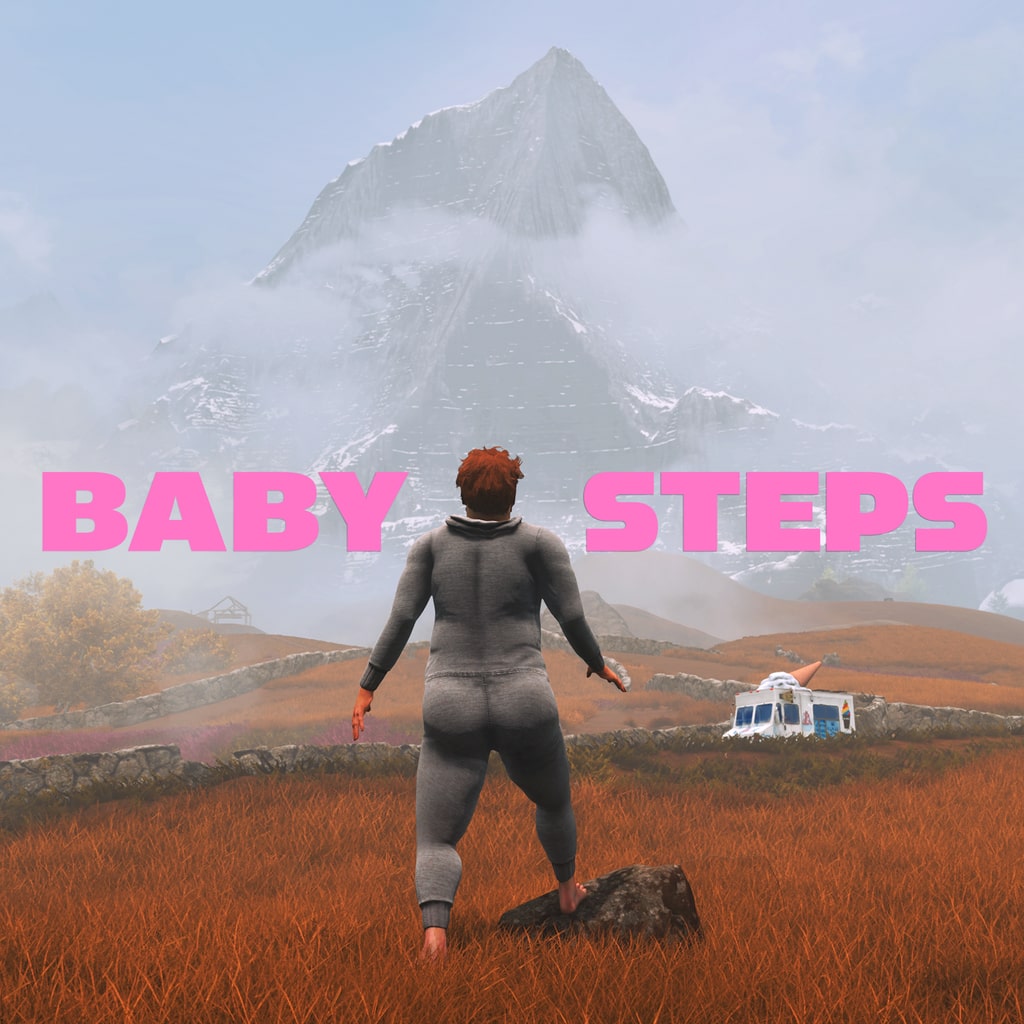
Baby Steps is a truly distinctive game that polarizes players with its combination of deliberately tricky controls, punishing difficulty, and a surprisingly heartfelt narrative. Developed by Big Robot and released in 2025, it invites players to take on the role of Nate, a bumbling, socially awkward 35-year-old who finds himself mysteriously transported from his basement to an enigmatic wilderness. The goal? To climb an enormous mountain and find a way back home. On the surface, it might resemble an abstract hiking simulator, but underneath lies a rich concoction of frustration, humour, exploration, and narrative reward that resonates deeply with players willing to persevere.
Gameplay and Controls
Baby Steps differentiates itself with a profoundly unique control scheme that challenges traditional notions of movement in games. Players control Nate’s legs independently by using the triggers to lift feet and the analogue stick to position each step before placing it back down. This intentionally awkward, physics-based walking mechanic is reminiscent of games like QWOP and Getting Over It but refined into a more approachable yet still challenging experience.
The controls make every movement deliberate, requiring players to find a rhythm and balance akin to real-life walking, albeit through a very graceless avatar who moves with the comedic clumsiness of a moose on ice. It quickly becomes addictive: you’ll fall extensively, and the game expects it, making failure an integral part of the experience. Recovering from stumbles and mastering the controls offers deep satisfaction akin to mastering a complex rhythm game or conquering a punishing platformer. Success is hard-fought and often feels rewarding in proportion to the effort invested.
World and Exploration
Unlike linear rage games, Baby Steps offers an open world filled with surprises, hidden paths, and quirky landmarks. The mountain Nate climbs is divided into visually distinct regions with varied challenges—from cavernous ruins and dense forests to bizarre carnival-like shrines. Each region offers unique environmental hazards such as ice patches, sand, and steep slopes that further complicate movement and demand strategic pacing.
Exploration is deeply encouraged and rewarding: scattered throughout the world are collectibles like hats and tasks such as carrying objects to outposts, which add moments of levity and challenge. These side activities inject variety and allow players to approach the primary goal in multiple ways. Although the pacing can be slow due to the complex movement mechanics, the game’s meticulously crafted environments create a strangely charming and immersive wilderness that invites methodical discovery.
Narrative and Humor
Underneath the difficulty lies a surprisingly sharp, witty, and unexpectedly poignant narrative. Nate is a profoundly relatable protagonist—an underachiever who is socially anxious, withdrawn, and insecure, making the mundane act of walking and climbing a proxy for his personal growth. The story progresses through episodic campfire moments where Nate reflects on his past, doubts, and ambitions. The writing incorporates cringe humor and awkward social encounters that mix discomfort and comedy, giving the game a personality that’s equal parts endearing and bemusing.
This narrative approach elevates Baby Steps beyond mere frustration-fodder, inviting players to empathize and reflect while laughing off the frequent falls. Nate’s sarcastic inner monologues and interactions with other eccentric hikers deepen characterization and give context to the punishing journey ahead. In many ways, Baby Steps is as much about perseverance in life as it is about conquering a mountain in-game.
Challenge and Frustration
Baby Steps is unapologetically punishing, with a brutally high skill ceiling that can frustrate players who lack patience or prefer casual experiences. The absence of conventional quality-of-life features—no quick saves, no maps, and punishing progress loss after falls—amplifies tension and makes mistakes costly. Persistence is key: every slip can send Nate tumbling down large sections of the mountain, undoing progress and demanding repeated attempts.
This design choice echoes games like Getting Over It but with a distinctive open-world twist and a narrative core. Players who enjoy testing limits and embracing failure as learning will appreciate this challenge. However, those who value fast progression or less punishing controls might find it overwhelming. When the difficulty spikes, causing repetitive failures, the game’s uneven pacing can be off-putting.
Technical Presentation
While the visuals are not the game’s primary focus, Baby Steps employs a gritty, stylized aesthetic that suits Nate’s awkward world. Environments have a stark yet charming quality with muted, natural colors contrasting eerie ruins and unsettling oddities that underline the surreal nature of the journey. Occasional bugs and quirks—such as camera angle issues or physics unpredictability—can interrupt flow but generally do not detract significantly from the experience.
Sound design is effective, with ambient wilderness noises, Nate’s grunts and exclamations, and well-timed musical cues that enhance immersion. Though the graphics aren’t cutting-edge, the atmosphere and gameplay depth more than compensate.
Verdict
Baby Steps is a game of contradictions: simultaneously maddening and hilarious, frustrating and deeply rewarding, awkward yet charming. Its unique control scheme redefines how walking as a gameplay mechanic can be explored, demanding patience and perseverance from players much like life’s challenges. The open world offers rewards for exploration and experimentation, while the subtle storytelling injects emotional depth seldom found in games of this type.
It is not for everyone—if you dislike high difficulty or slow-paced gameplay, or have little tolerance for quirky humor, proceed with caution. But for players willing to embrace the challenge’s highs and lows, Baby Steps offers a remarkable, memorable journey filled with personal growth, laughter, and surprising warmth.