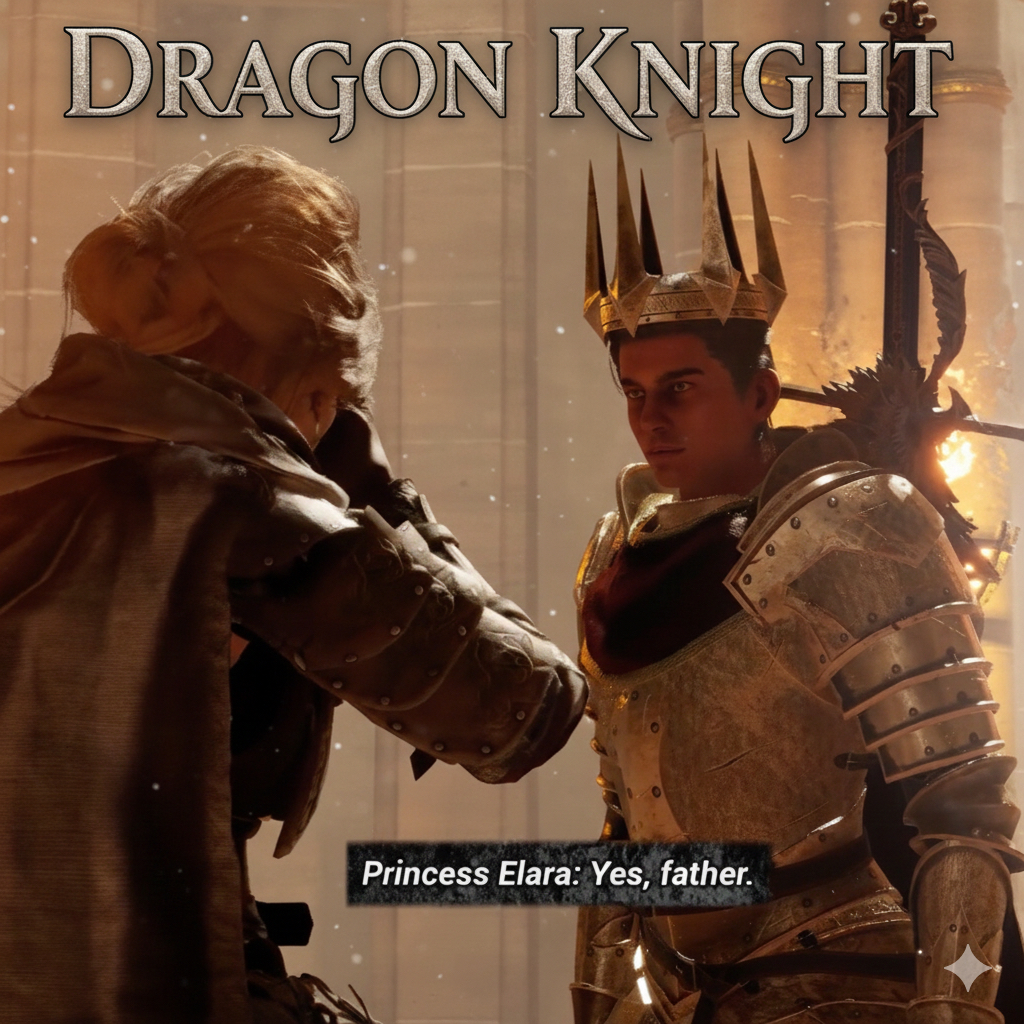
Few fantasy archetypes are as enduring as the dragon-slaying knight. It is a concept steeped in myth, heroism, and high-stakes adventure, and Dragon Knight embraces that legacy with unapologetic enthusiasm. Blending action-RPG combat, light progression systems, and classic fantasy worldbuilding, Dragon Knight positions itself as a traditional yet accessible experience — one that values familiarity over reinvention, but still manages to carve out its own identity through pacing, presentation, and mechanical clarity.
Rather than chasing sprawling open-world ambition or cinematic excess, Dragon Knight focuses on delivering a focused heroic journey. It is a game built around steady progression, readable combat, and the satisfaction of growing from a vulnerable novice into a capable champion. While it rarely surprises, it consistently delivers a polished and engaging loop that will appeal to players who appreciate straightforward fantasy adventures without unnecessary complexity.
Narrative Premise and Worldbuilding
Dragon Knight opens with a familiar yet effective setup: a realm pushed to the brink by the resurgence of dragons and the corruption that follows in their wake. You assume the role of a newly inducted knight, bound by oath rather than destiny, tasked with restoring balance across a kingdom fractured by fear and myth. The narrative does not aim for subversion; instead, it leans into archetype with confidence.
Storytelling is delivered through a combination of brief cutscenes, quest dialogue, and environmental cues. Villages bear scorch marks from dragon raids, ruined fortresses hint at past heroics, and NPCs speak with a weary reverence toward the beasts that now dominate the skies. While the writing avoids deep moral ambiguity, it benefits from clarity of purpose: this is a tale of courage, perseverance, and duty.
Characterisation is serviceable rather than exceptional. Supporting characters fulfil expected roles — mentors, scholars, merchants, and commanders — but they are written with enough personality to make interactions pleasant. Dialogue is concise, rarely overstaying its welcome, and keeps the player oriented toward the next objective. The result is a narrative that supports gameplay without overshadowing it, allowing players to remain focused on progression and combat.
Combat and Core Gameplay Loop
Combat is the backbone of Dragon Knight, and it is here that the game proves most consistently satisfying. Encounters are real-time, melee-focused affairs that prioritise timing, positioning, and enemy awareness over button-mashing. The control scheme is intuitive: light and heavy attacks, blocks, dodges, and special abilities mapped cleanly for accessibility.
Enemy design reinforces this approach. Standard foes telegraph their attacks clearly, encouraging players to learn patterns and respond accordingly. Larger enemies — particularly dragon-adjacent creatures and elite guards — demand patience and stamina management, punishing reckless aggression. Boss encounters, especially dragon fights, are highlights: these battles are staged with scale and spectacle, requiring players to exploit weak points, avoid area-of-effect attacks, and manage positioning in arenas designed to emphasise verticality and danger.
Progression feeds naturally into combat. Experience points unlock stat improvements and abilities that meaningfully alter playstyle, whether favouring heavier, defence-oriented builds or more agile, damage-focused approaches. Equipment upgrades further reinforce this loop, with weapons and armour offering incremental improvements rather than drastic power spikes. This measured progression ensures that difficulty remains fair and that player skill remains as important as numerical advancement.
Exploration and Level Design
Rather than a fully open world, Dragon Knight adopts a semi-linear structure, with interconnected regions that gradually unlock as the story progresses. This design choice benefits pacing, ensuring that players are rarely overwhelmed by choice and that environmental challenges scale appropriately with character growth.
Levels are thoughtfully constructed, blending combat arenas, traversal challenges, and optional side paths that reward exploration. Hidden chests, lore fragments, and optional mini-bosses encourage players to stray from the main route without making exploration feel mandatory. The environments themselves — forests, ruins, mountain passes, and dragon lairs — are visually distinct and thematically coherent, reinforcing the sense of a kingdom shaped by myth and conflict.
While exploration is enjoyable, it remains conservative. Players should not expect emergent gameplay systems or systemic world interaction; Dragon Knight favours handcrafted encounters over sandbox freedom. This restraint suits the game’s overall philosophy but may leave some players wishing for greater environmental interactivity or emergent surprises.
Visuals and Audio Presentation
Visually, Dragon Knight strikes a balance between stylisation and realism. Character models are sturdy and expressive enough to convey emotion, while environments benefit from strong lighting and texture work that highlight fantasy elements without overindulgence. Dragons, in particular, are well realised, with animations that convey weight, menace, and intelligence.
The colour palette shifts effectively between regions, using warm tones in safe havens and colder, harsher hues in corrupted or dragon-dominated areas. These visual cues subtly reinforce narrative context and emotional tone. While the game does not push technical boundaries, its art direction is consistent and appealing.
Audio design complements the visuals well. Sword clashes, shield blocks, and dragon roars carry satisfying weight, reinforcing the physicality of combat. The musical score leans heavily into orchestral fantasy themes, swelling during boss encounters and receding into ambient tones during exploration. Voice acting is competent across the board, delivering dialogue clearly even if performances rarely venture into standout territory.
Pacing and Player Engagement
One of Dragon Knight’s strengths is its disciplined pacing. The game introduces mechanics gradually, ensuring that players are comfortable before layering additional complexity. Early hours focus on foundational combat and exploration, while later stages introduce more demanding encounters and nuanced enemy behaviour.
Side content is present but restrained. Optional quests provide additional lore and rewards without bloating the experience, and completionists can pursue them without feeling pressured. This balance ensures that the core narrative remains focused and that play sessions feel purposeful.
However, this structure also exposes some repetition. Enemy archetypes recur frequently, and while combat remains enjoyable, players may begin to anticipate encounter patterns in later stages. The game mitigates this through escalating difficulty and varied boss design, but repetition is still noticeable over extended sessions.
Strengths and Limitations
Strengths:
- Solid, readable combat with satisfying progression
- Well-paced structure that respects player time
- Effective dragon boss encounters with scale and spectacle
- Cohesive fantasy presentation and strong art direction
- Accessible systems without sacrificing challenge
Limitations:
- Narrative and characters lean heavily on familiar tropes
- Exploration lacks systemic depth or emergent mechanics
- Enemy variety can feel limited in later stages
- Minimal innovation within the action-RPG genre
Final Verdict
Dragon Knight is a confident, well-crafted fantasy action-RPG that understands the appeal of classic heroism and executes it with polish and restraint. It does not seek to reinvent the genre, nor does it attempt to overwhelm players with sprawling systems or convoluted narratives. Instead, it delivers a focused journey defined by satisfying combat, steady progression, and a world that feels grounded in its mythic roots.
For players who enjoy traditional fantasy adventures — where skill, growth, and spectacle are balanced carefully — Dragon Knight offers a rewarding experience that respects genre conventions while delivering consistent quality. It may not surprise often, but it rarely disappoints.