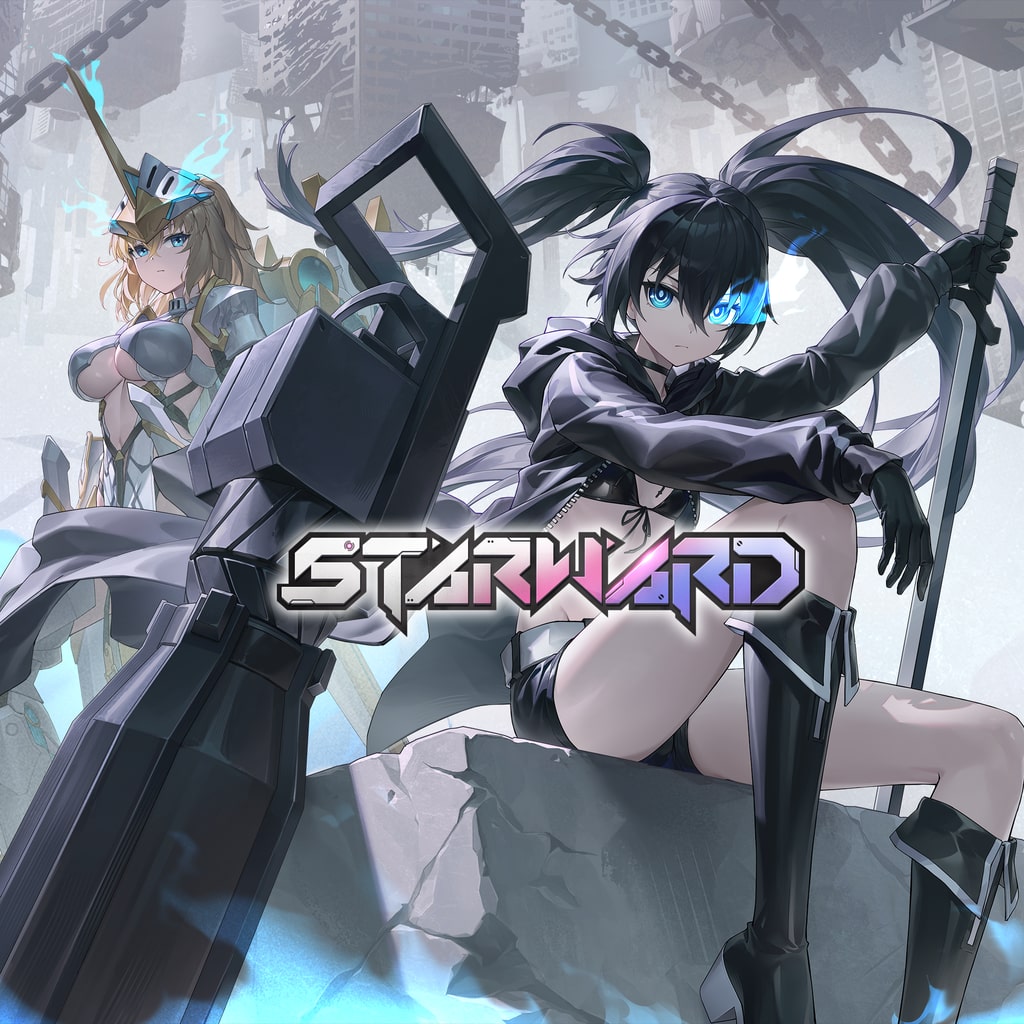
Arena fighters live and die by their sense of movement. Strip away the spectacle, and what remains is the feel of boosting, strafing, locking on, and outmanoeuvring an opponent in three-dimensional space. Starward, developed by Game Blender and published by Shengtian Games, understands this foundation well, even if it doesn’t always elevate it.
Originally released on PC in April 2024, it arrived on PlayStation 5, Xbox Series X|S, and Xbox One on April 16, 2026. Starward is a 3D arena fighting game built around fast-paced mecha combat. Its twist is aesthetic rather than structural: instead of traditional machines, players control “mecha girls,” anime-inspired characters equipped with high-powered weaponry and distinct combat roles.
It’s a game that leans heavily on a proven formula, one that will feel immediately familiar to fans of Japanese arcade-style versus combat. The question is not whether it works, but whether it does enough to stand out.
Core Gameplay & Combat System
At its heart, Starward is built on classic GVG (Gundam Versus-style) combat principles. Matches take place in open 3D arenas, with players locking onto opponents and engaging in a constant dance of ranged fire, evasive movement, and opportunistic melee strikes.
The control scheme is dense but intuitive once learned. Players have access to beam rifles, machine guns, charge shots, melee attacks, guarding, boosting, stepping, and dashing. The interplay between these systems creates a combat loop that rewards spatial awareness and timing over button-mashing.
Movement is the real star here. Boosting across the arena, cancelling momentum into evasive steps, and weaving through incoming fire all feel satisfying when executed well. There is a strong sense of flow once the mechanics click, particularly in higher-level play, where positioning and resource management become critical.
However, there is a barrier to entry. New players may find the pace overwhelming, especially given the number of systems operating simultaneously. The game provides tutorials, but they do not always fully prepare players for the intensity of live matches.
Modes & Match Structure
Starward offers three primary modes: 1v1, 2v2, and Arcade. PvP is clearly the main focus, with matches typically lasting around three minutes. This short duration keeps gameplay tight and encourages aggressive playstyles.
The 2v2 mode is where the game feels most complete. Team composition, coordination, and role synergy add a layer of strategy that 1v1 lacks. Players must not only manage their own positioning but also support or protect their partner, creating dynamic engagements that shift rapidly.
Arcade mode provides a more traditional single-player experience, though it feels secondary. It serves as a way to learn characters and mechanics, but it lacks the depth or narrative framing to stand as a compelling standalone component.
The COST System
One of the more interesting mechanics is the COST system, which governs team composition in 2v2 matches. Each character is assigned a value (3.0, 2.5, 2.0, or 1.5), and teams must balance their selections accordingly.
This introduces meaningful decision-making even before matches begin. Do you choose a high-cost, high-power character and pair them with a weaker support unit, or opt for a more balanced team? The system encourages experimentation and strategic diversity, particularly in competitive play.
It also adds tension during matches. Losing a high-cost unit carries greater consequences, forcing players to think carefully about risk and positioning.
Characters & Combat Roles
The roster of mecha girls is diverse in both design and function. Characters are broadly divided into roles such as vanguards (close-range fighters) and rearguards (long-range specialists), though individual playstyles vary within these categories.
Characters like Aliz, SkySaber, and XiaoLing focus on aggressive, close-quarters combat, while Elfin, Cavalry, and Hikari excel at ranged pressure and support. This role distinction is clear and effective, allowing players to quickly identify strengths and weaknesses.
Visually, the character designs lean heavily into anime aesthetics, drawing on a mix of cultural influences, including Chinese-inspired designs, fantasy elements, and traditional mecha styling. While this variety adds visual interest, it may not appeal to players seeking a more grounded or cohesive tone.
Mechanically, the roster is solid but not particularly experimental. Most characters fit established archetypes, and while they are enjoyable to use, few feel truly unique in how they interact with the core systems.
Visuals & Presentation
Visually, Starward is clean and functional, prioritising clarity over spectacle. Character models are detailed enough to stand out, and effects such as beam weapons and explosions remain legible even in chaotic encounters.
Arenas are varied but somewhat limited in interactivity. They serve as effective backdrops for combat but rarely influence gameplay in significant ways. This keeps matches focused but also limits environmental variety.
The user interface is dense yet informative, providing clear indicators for health, boost energy, lock-on status, and team conditions. Once familiar, it becomes an effective tool for managing the game’s many systems.
Audio & Atmosphere
Sound design is serviceable. Weapon effects are distinct, and audio cues provide useful feedback in combat. However, the soundtrack and overall audio presentation lack a strong identity.
Voice acting, where present, leans towards anime-style delivery, which suits the game’s aesthetic but may not resonate with all players. It adds personality, but not necessarily depth.
Performance & Online Play
On modern consoles, Starward runs smoothly, maintaining stable frame rates even during intense matches. Input responsiveness is strong, which is crucial for a game that relies heavily on timing and precision.
Online play is central to the experience, and performance is generally reliable. Matchmaking is functional, though the size of the player base may affect queue times depending on the region and platform.
Longevity & Replayability
Replayability is driven almost entirely by PvP. The combination of character variety, team composition, and mechanical depth provides a solid foundation for long-term engagement.
However, the game lacks broader progression systems or unlockables that might encourage continued play beyond competitive motivation. There is little narrative or cosmetic progression, which may limit its appeal to players seeking more structured rewards.
Final Verdict
Starward is a competent and enjoyable arena fighter that captures the feel of classic GVG-style combat. Its movement systems are satisfying, its combat engaging, and its team-based mechanics add strategic depth.
However, it struggles to distinguish itself beyond its aesthetic. The mecha girl concept is visually unique, but mechanically the game remains close to its inspirations. While this is not inherently a flaw, it can mean that players familiar with the genre may find it lacking in innovation.
For fans of fast-paced arena combat, particularly those who enjoy team-based play and high-mobility systems, Starward offers a solid experience. For others, it may feel like a well-executed but familiar entry in a niche genre.