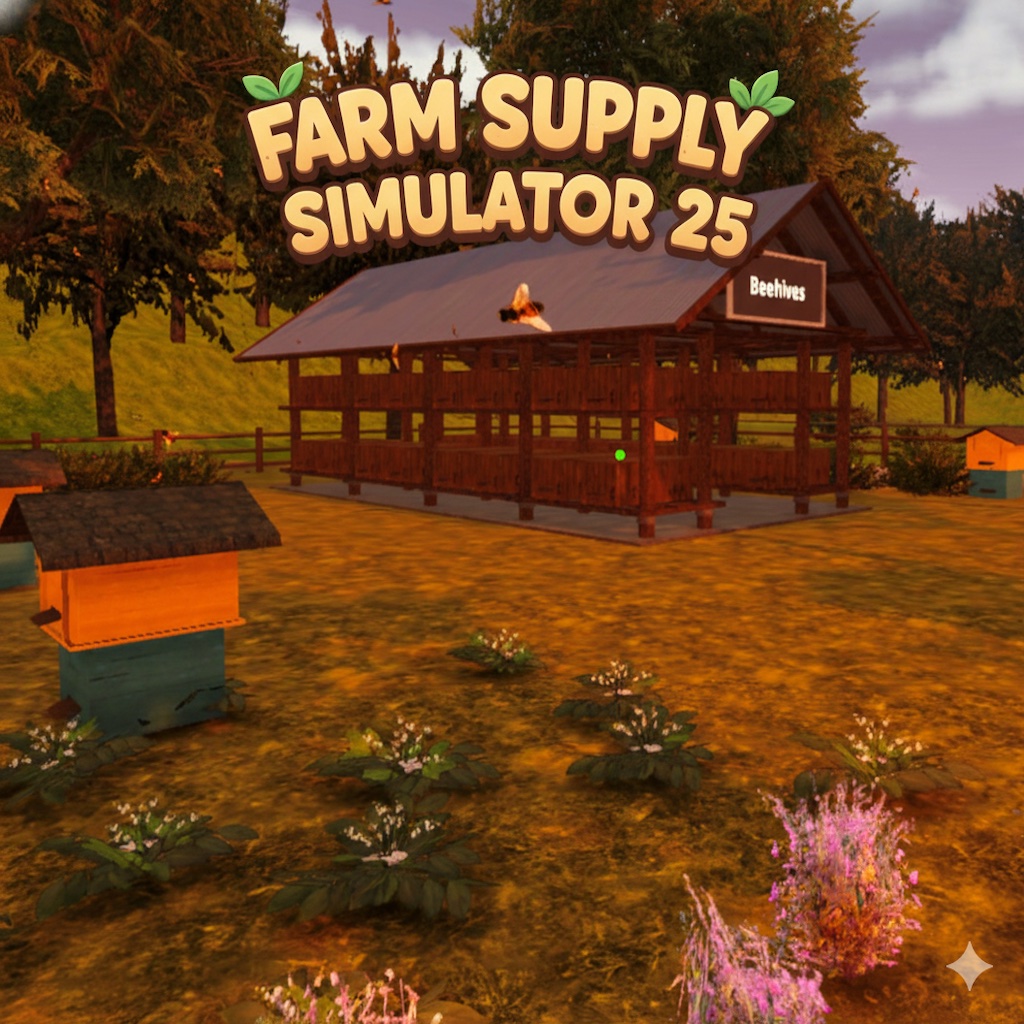
Life on the farm is rooted in rhythm, routine, and relentless management of resources — from seeds, tools and livestock to weather, budgets and supply chains. Farm Supply Simulator 25 embraces this multifaceted challenge with an ambitious simulation that mixes the operational tactility of classic farming sims with a deeper focus on inventory, logistics, and economic flow. Developed jointly by Superwolf Game Studio and Lycan Arts, this iteration feels less like another seasonal release and more like a purposeful evolution of the genre, redefining what it means to be a virtual steward of rural enterprise.
At its core, Farm Supply Simulator 25 tasks players with building and managing a thriving agricultural supply business. You are not simply planting crops and tending fields — you’re managing the entire ecosystem of farm productivity: sourcing inventory, maintaining equipment, scheduling deliveries, balancing finances, and responding to market demand. Ambitious in scope and gradual in progression, the game delivers a layered experience that rewards long-term strategy more than short-term gains.
A Deep Dive into Agricultural Logistics
Unlike many farming games that cast the player directly into tilling soil and herding animals, Farm Supply Simulator 25 starts further upstream. You begin with a modest supply depot on the outskirts of a mid-sized rural hub. Your first tasks involve organising stock, understanding local demand, and deciding what your farm economy needs most: feed, seeds, fertilizer, tools, or perhaps fuel for local machinery. Early on, the learning curve feels steep, not because the game hides mechanics, but because it insists you view the farm as a network of interdependent systems rather than a series of isolated tasks.
Movement between menus and the world is intuitive, with clear visual cues and layered interfaces that accommodate both macro and micro decision-making. Inventory screens are rich with information — stock levels, price volatility, forecast demand, and supplier reliability all play a role in shaping your decisions. The game’s central loop emerges from the interplay between supply procurement, storage management, and timely delivery to client farms. Each choice echoes through the system: buying bulk fertilizer at a low price helps in the short term, but if market demand collapses, you may be left with overstock and depleted finances.
Players familiar with the broader farming simulation genre will recognise elements recycled from other titles — market boards, seasonal fluctuation, crop decay — but Farm Supply Simulator 25 reframes these in service of its logistical narrative, making efficient resource movement as central to success as cultivation itself.
Visuals, Audio, and Presentation
Graphically, Farm Supply Simulator 25 strikes a pleasing balance between detail and readability. Supply depots, storage sheds, and fleets of supply vehicles are modelled with care, and field environments — whether lush green in spring or barren in mid-winter — convey seasonal shifts that have real gameplay impact. The user interface is clean and responsive, separating layers of information without clutter. Maps are scalable, zooming seamlessly from depot floor plans to regional overviews, and daily task lists are accessible without disrupting immersion.
The auditory design is steady and supportive rather than intrusive. Ambient sounds — the hum of machinery, cawing birds in fields, weather patterns — ground the experience, while music underscores the routine workday without distracting from decision-making. The soundtrack leans into pastoral motifs with subdued orchestration, effectively bridging the space between activity and contemplation.
Economic Systems and Strategic Depth
Where Farm Supply Simulator 25 shines brightest is in its economic model. Markets fluctuate according to dynamic seasonal supply and demand, local weather patterns, and global commodity influences. The player must decide whether to take risks on futures markets, hedge against anticipated shortages, or maintain conservative stock levels to avoid losses.
Contracts with client farms introduce additional strategic layers: fulfilling a long-term fertilizer supply agreement means committing inventory ahead of market shifts, while one-off tool deliveries may offer higher margins at the cost of greater risk. Negotiation elements allow players to engage directly with pricing, delivery windows, and penalty clauses that activate if you fail to deliver on time.
Freight and logistics are equally integral. Trucks and drones (unlocked later) must be scheduled, routes optimized, and fuel costs balanced against profit margins. Cargo capacity and delivery timelines matter, especially when fulfilling contracts with tight deadlines or temperature-sensitive products such as fertilisers or livestock feed. Inefficient routing or delayed dispatches can erode gains quickly, forcing players to re-evaluate strategy mid-session.
Even seemingly mundane tasks — restocking shelves, balancing warehouse space, allocating manpower — have ramifications. The result is a simulation that feels impressively systemic: nothing exists in isolation, and every decision invites consequence.
Progression and Player Agency
Progression in Farm Supply Simulator 25 is gradual but meaningful. Early stages emphasise learning and experimentation, encouraging players to test different supply strategies without punishing mistakes harshly. As your business grows, so too do expectations. More ambitious contracts, extended regional markets, and competitive rivals push players to refine operations and anticipate economic trends.
Unlockable technologies — automated inventory tracking, advanced forecasting analytics, and autonomous delivery vehicles — add power over time, but they also introduce new complexity. Managing a team of human staff and autonomous systems requires coordination, and players find themselves balancing efficiency with oversight. Too much automation can lead to bottlenecks if systems are left unchecked; too little automation can leave you overwhelmed during peak demand.
This balance between control and delegation adds emotional texture to progression. Players must decide which operational areas to focus on, making long-term choices early that resonate throughout later stages of play. These strategic forks enhance replayability, as no two supply empires necessarily evolve the same way.
Strengths and Limitations
Strengths:
- Deep, systemic logistics and economic simulation
- Rewarding balance of risk and long-term planning
- Accessible yet rich user interface
- Atmospheric presentation that supports immersion
Limitations:
- Slow initial pacing for players seeking action or instant gratification
- Minimal narrative drive beyond operational goals
- Some UI menus can feel dense during peak management periods
Final Verdict
Farm Supply Simulator 25 is a rare and satisfying entry in the broader farming and logistics genre. It reframes agricultural simulation not as an individual farm’s day-to-day tasks, but as the logistical ecosystem that underpins productive farming at scale. Its focus on supply, distribution, and economic nuance offers a depth that seasoned simulation fans will appreciate, and its layered systems ensure that every choice feels meaningful.
While the prologue’s deliberate pacing and operational focus may not appeal to players seeking instant narrative payoff or high-octane gameplay, those who enjoy patience, planning, and systemic problem-solving will find themselves immersed. Farm Supply Simulator 25 rewards thoughtful engagement, strategic foresight, and appreciation for the often hidden infrastructure that sustains agricultural life.