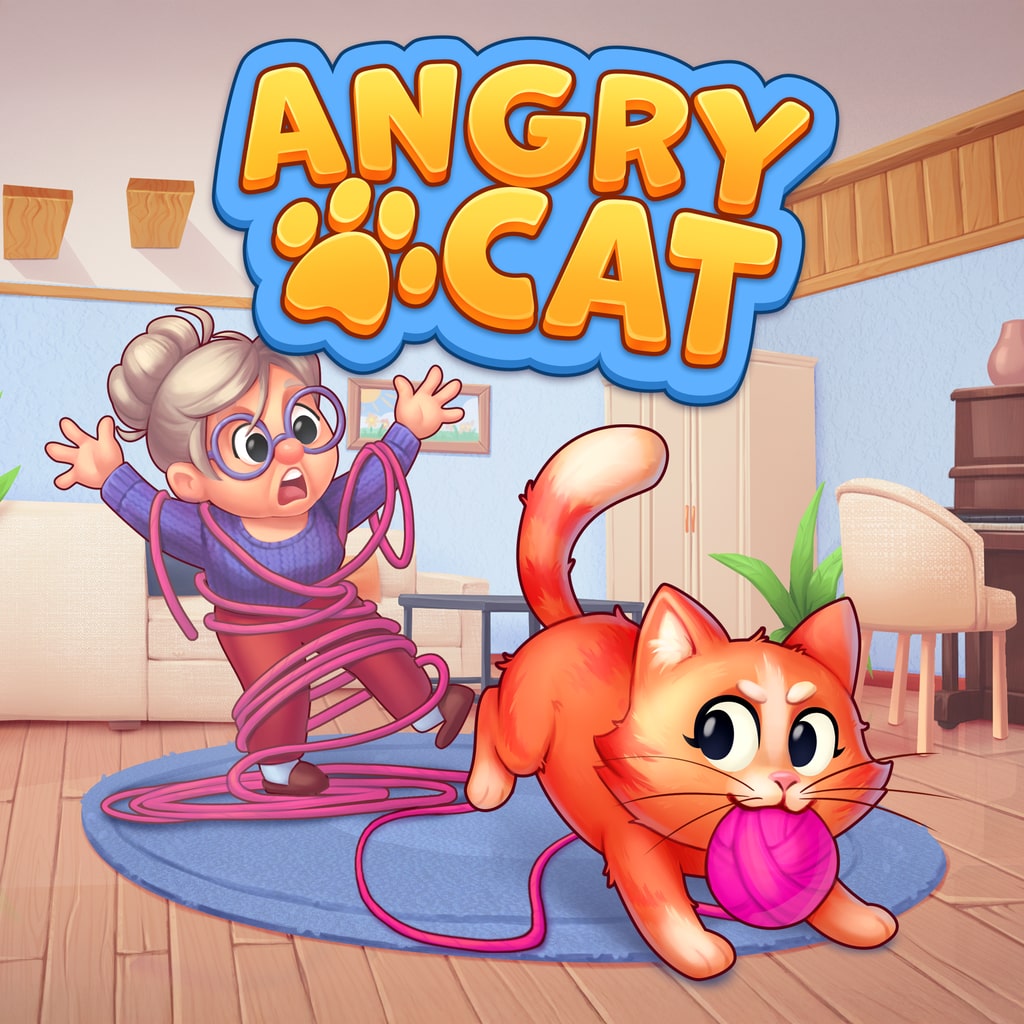
Angry Cat is a compact, fast-paced arcade experience that leans heavily into humour, exaggerated animation, and straightforward mechanics. Built around a single, expressive premise—an exceptionally grumpy cat causing chaos—the game positions itself firmly in the casual space, aiming for instant accessibility and short-session appeal rather than depth or long-form progression. It is unapologetically simple, but that simplicity is also where much of its charm lies.
Rather than attempting to overwhelm players with systems, tutorials, or narrative complexity, Angry Cat focuses on delivering a loop that is easy to understand, quick to restart, and satisfying in small bursts. It’s the kind of game designed to fill spare moments, offering light challenge, visual comedy, and a steady drip of rewards that encourage “just one more go.”
Core Gameplay
At its heart, Angry Cat revolves around reaction-based gameplay and timing. Players control the titular feline as it lashes out, dashes, or causes disruption within confined play spaces. The exact mechanics are intentionally straightforward—movement, attacks, and interactions are all mapped to intuitive controls, making the game immediately playable even for newcomers.
The challenge comes not from complexity, but from escalation. As levels progress, enemy placement, environmental hazards, and timing windows become tighter, demanding sharper reactions and better positioning. The game encourages learning through repetition, but failures are quick and low-stakes, ensuring frustration rarely builds.
This design philosophy makes Angry Cat feel approachable without being completely brainless. While early levels are forgiving, later stages require genuine attention and rhythm, particularly when multiple hazards overlap or enemies swarm from different angles.
Level Design and Structure
Levels in Angry Cat are compact and purpose-built, designed to be completed in short bursts. This suits the game’s arcade sensibilities, keeping pacing brisk and momentum high. Environments introduce new hazards gradually, ensuring players are rarely overwhelmed by unfamiliar mechanics all at once.
While the overall structure is linear, variety is maintained through changing layouts, obstacle placement, and enemy behaviour. Some levels focus on precise movement, others on crowd control or survival, subtly shifting how players approach each scenario.
However, the game does not attempt to disguise its repetition entirely. The core mechanics remain largely unchanged from start to finish, which may limit long-term appeal for players seeking evolving systems or dramatic twists. That said, within its intended scope, the level design does a commendable job of staying engaging.
Visual Style and Animation
One of Angry Cat’s strongest elements is its presentation. The art style is bright, cartoonish, and expressive, with exaggerated animations that sell the game’s comedic tone. The cat itself is full of personality—every movement, attack, and idle animation reinforces its permanently irritated demeanour.
Enemy designs and environmental elements follow the same playful aesthetic, ensuring visual cohesion throughout. Effects such as screen shake, impact flashes, and exaggerated reactions help reinforce feedback, making every successful hit feel satisfying.
While the visuals are not technically complex, they are clean, readable, and well suited to the game’s fast pace. Importantly, clarity is never sacrificed for style, which is crucial in a reaction-based title.
Audio and Tone
Sound design complements the visuals effectively. Snappy sound effects give weight to actions, while exaggerated audio cues underline the game’s comedic intent. The soundtrack is upbeat and energetic, helping maintain momentum without becoming distracting.
The overall tone is light-hearted and intentionally silly. Angry Cat never takes itself seriously, and that self-awareness works in its favour. It’s a game that understands its role as a stress-free diversion rather than an intense competitive challenge.
Progression and Replayability
Progression in Angry Cat is simple and transparent. Completing levels unlocks new stages, cosmetic items, or small gameplay modifiers that add light variety without altering the core mechanics. This keeps players engaged without introducing complexity that might undermine the game’s accessibility.
Replayability comes primarily from score chasing, mastery, and completion goals. Players who enjoy perfecting runs or clearing levels with maximum efficiency will find incentive to revisit earlier stages. However, those looking for long-term progression systems or deep unlock trees may find the experience finite once the main content is complete.
That said, Angry Cat does not overstay its welcome. Its strength lies in delivering a focused experience that ends before repetition becomes exhausting.
Accessibility and Audience
Angry Cat is clearly designed for a broad audience. Controls are intuitive, difficulty ramps gently, and the game avoids punishing mechanics that might alienate casual players. This makes it suitable for younger audiences, newcomers to gaming, or anyone looking for a low-commitment experience.
More experienced players may find the challenge level modest, but the game’s charm and polish help offset its lack of depth. It’s best approached as a palate cleanser rather than a main course.
Strengths and Weaknesses
Strengths:
- Instantly accessible gameplay with responsive controls
- Strong visual personality and expressive animation
- Short, well-paced levels ideal for quick sessions
- Humorous tone that remains consistent throughout
Weaknesses:
- Limited mechanical depth
- Repetition becomes noticeable over longer play sessions
- Minimal narrative or long-term progression
Final Verdict
Angry Cat succeeds by focusing on what it does best: delivering quick, satisfying bursts of arcade-style fun wrapped in a charming, humorous presentation. It doesn’t aim to be complex or ambitious, but within its modest scope, it is polished, approachable, and consistently entertaining.
For players seeking a casual, low-pressure game that prioritises personality and immediacy, Angry Cat is an easy recommendation. It may not hold attention for dozens of hours, but it doesn’t need to—its value lies in knowing exactly when to strike, scratch, and bow out.