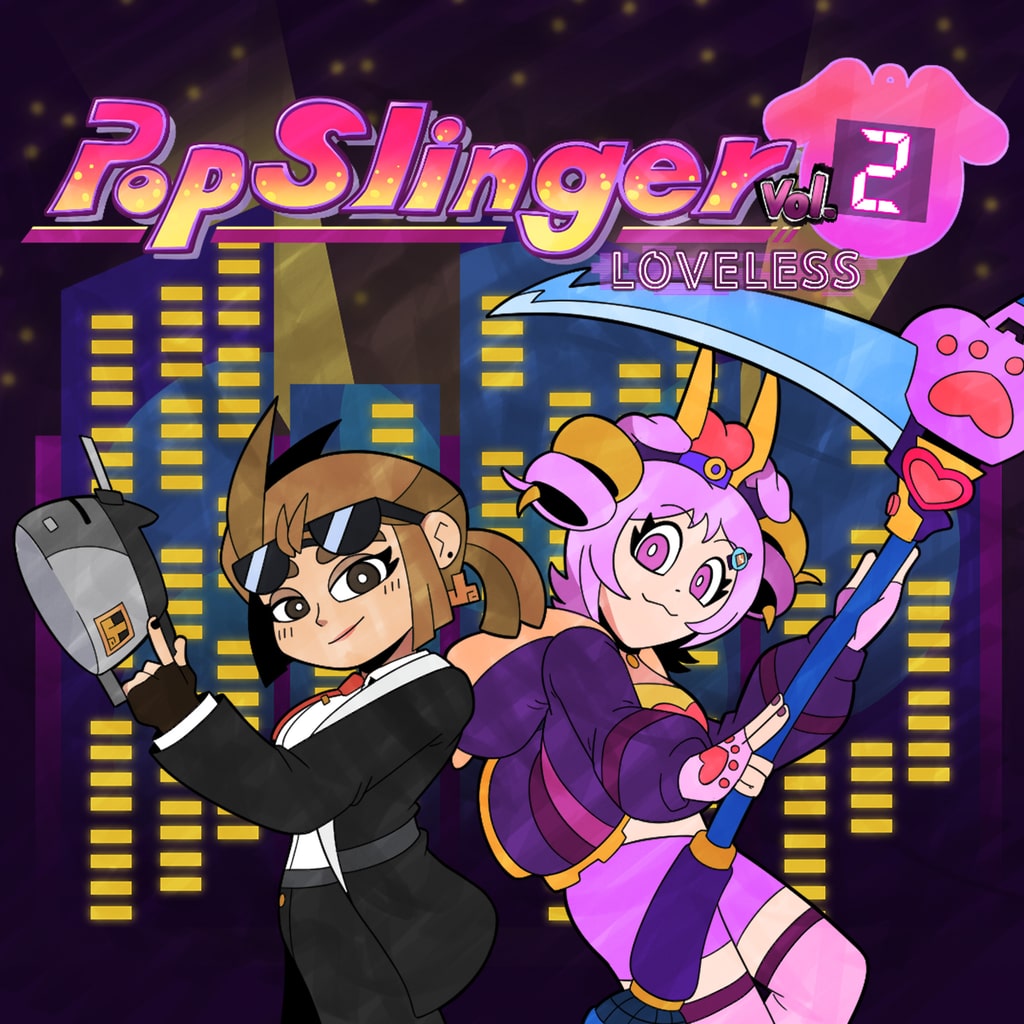
PopSlinger Vol. 2 – Loveless arrives as a confident, expressive sequel that fully embraces the eccentric identity established by its predecessor. Building on the original game’s blend of arcade shooting and music-driven gameplay, Loveless expands its scope with a stronger narrative focus, more refined mechanics, and a bold audiovisual presentation that refuses to blend into the background.
This is not a sequel content with small refinements. Instead, PopSlinger Vol. 2 pushes its creative vision forward, leaning hard into New Retro aesthetics, dynamic music systems, and emotionally charged storytelling. The result is a game that feels unapologetically stylish, occasionally messy, but undeniably memorable.
Story and World: Style With Emotional Ambition
The narrative takes centre stage far more than it did in the first PopSlinger. Players once again step into a surreal, pop-culture-infused world where music and identity are inseparable. This time, the focus shifts toward a rescue mission that pulls returning characters and new faces into a bizarre conflict involving the mysterious Loveless Sisters and the unstable Purple District.
While the story still embraces abstract storytelling and heightened reality, it aims for greater emotional resonance. Themes of identity, loss, obsession, and personal growth run throughout the campaign, conveyed through stylised dialogue, expressive character animations, and fully voiced cutscenes. These story moments give the game a sense of purpose beyond chasing high scores or perfect rhythm runs.
That said, narrative pacing can occasionally falter. Some transitions between story beats feel abrupt, and players less invested in character drama may find certain sections indulgent. However, the ambition on display is commendable, particularly in a genre that often sidelines narrative entirely.
Gameplay: Rhythm Shooter With Refined Flow
At its core, PopSlinger Vol. 2 – Loveless remains a rhythm-infused shooter, but its systems feel more polished and intentional than before. Combat revolves around colour-coded enemies, requiring players to switch between attacks to match enemy colours while maintaining momentum and rhythm.
The act of shooting is closely tied to the soundtrack. Landing successful chains, clearing waves efficiently, and maintaining combos actively influences the music, creating a sense that players are performing within the track rather than simply playing alongside it. This reactive audio design remains one of the game’s defining features and has been noticeably refined in this sequel.
New mechanics are introduced thoughtfully. The revised special ability system integrates more smoothly into combat flow, allowing players to trigger powerful effects without disrupting rhythm. Enemy variety has also increased, with foes that change colours mid-fight or require more deliberate timing, forcing players to stay engaged rather than rely on muscle memory.
Combat feels fast, expressive, and kinetic, rewarding players who internalise both rhythm and spatial awareness. Importantly, the game does not demand perfect rhythm accuracy. Instead, it encourages flow, experimentation, and recovery, making it accessible without sacrificing depth.
Visual Design: A Bold New Retro Identity
Visually, Loveless is striking. The game fully commits to its New Retro aesthetic, blending neon colours, anime-inspired character designs, and exaggerated environments that feel pulled straight from a fever dream of ‘80s and ‘90s pop culture.
Each stage feels distinct, whether it’s an arena-like battleground or a surreal urban environment warped by digital distortion. Backgrounds pulse with colour and motion, while character animations are expressive and full of personality. The visual clarity during combat is particularly impressive given the intensity of on-screen action.
Cutscenes deserve special mention. They are fluid, stylish, and confidently directed, helping the story land with greater emotional impact than the original game. For an indie production, the presentation consistently punches above its weight.
Music and Sound: The Beating Heart of the Experience
Music is not just a feature of PopSlinger Vol. 2 – Loveless — it is the foundation. The soundtrack spans genres including future funk, house, punk, and pop-inspired electronic music, creating a varied but cohesive auditory identity.
What sets the audio design apart is its responsiveness. Player performance directly affects how tracks evolve, layering additional elements or intensifying beats based on combat flow. This creates a feedback loop where strong play feels immediately rewarding, reinforcing the connection between gameplay and music.
Sound effects are crisp and purposeful, ensuring that important actions and enemy cues remain audible even during musical crescendos. Voice acting further enhances the presentation, lending characters personality and grounding the story’s more abstract moments.
Difficulty, Replayability, and Modes
Loveless strikes a balanced difficulty curve. Early stages introduce mechanics at a measured pace, while later encounters test players’ ability to manage colour switching, movement, and rhythm simultaneously. The challenge feels fair, with mistakes serving as learning opportunities rather than hard stops.
Replayability is supported through scoring systems, ranking incentives, and additional modes that encourage optimisation and mastery. Players seeking perfection will find plenty of reason to revisit stages, refine strategies, and chase better performance.
While not overflowing with side content, the core gameplay loop remains engaging enough to justify repeat playthroughs, particularly for fans of rhythm-based action.
Where It Falls Short
Despite its strengths, PopSlinger Vol. 2 – Loveless is not without flaws. Narrative ambition occasionally outpaces execution, with some story beats lacking the clarity needed to fully resonate. Players uninterested in character-driven storytelling may find these sections disruptive.
Additionally, the game’s visual intensity may overwhelm some players during extended sessions, and the genre-blending soundtrack, while impressive, will not appeal to everyone equally.
Final Verdict
PopSlinger Vol. 2 – Loveless is a bold, expressive sequel that fully commits to its artistic vision. By deepening its rhythm-based combat, expanding its narrative ambitions, and delivering a striking audiovisual experience, it cements its identity as more than just a niche musical shooter.
While occasional pacing and storytelling issues prevent it from reaching absolute greatness, the creativity and passion on display make it a standout indie release. For players who value style, sound, and gameplay synergy, Loveless delivers an experience that feels vibrant, personal, and refreshingly unconventional.